 Back
BackAnatomy & Physiology: Cardiovascular, Immune, and Respiratory Systems
 3:55
3:55
Terms in this set (32)
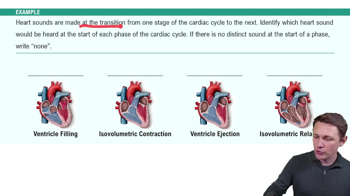
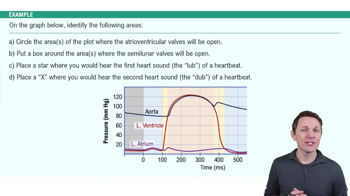
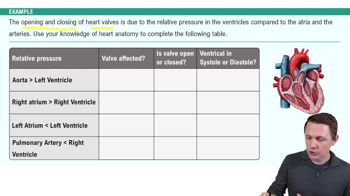
Ventricles contract, AV valves close causing the "lub" sound, pressure rises, semilunar valves open, and blood ejects into the aorta (left ventricle) and pulmonary trunk (right ventricle).
Systole means squeeze (contraction), and diastole means relax/fill (relaxation).
Contractile cells that contract and autorhythmic cells that create electrical signals.
They connect cardiac muscle cells so the heart contracts as one unit.
Atria fill, atrial systole, ventricular filling, ventricular systole, and relaxation (diastole).
CO = HR × SV, where HR is heart rate and SV is stroke volume.
Increased heart rate, increased venous return, and stronger contractions.
Exchange of gases, nutrients, wastes, and hormones due to their thin walls and pressure gradients.
Skeletal muscle pump, respiratory pump, valves in veins, and vasoconstriction.
Increased venous return leads to increased stroke volume, which increases cardiac output.
Cardiac output, blood volume, peripheral resistance, and vessel elasticity.
BP = CO × PR, where PR is peripheral resistance.
Vessels narrow, resistance increases, and blood pressure rises.
Vessels widen, resistance decreases, and blood pressure falls.
Physical and chemical barriers like skin, mucus, tears, and stomach acid that prevent pathogen entry.
Innate defenses including inflammation, fever, phagocytes, and complement proteins.
Adaptive immunity involving B cells, T cells, and antibodies.
Increased blood flow to tissue causing redness and heat, often during inflammation.
IgG crosses the placenta providing passive immunity to the fetus temporarily.
Activates complement proteins causing inflammation, cell lysis, and opsonization.
Attachment, penetration, replication, assembly, and release using host cells.
Pathogens are coated to make phagocytosis easier, effectively "tagging enemies for destruction."
The ability of the immune system to recognize self versus nonself; T and B cells become immunocompetent before activation.
Erythropoietin from kidneys and low oxygen levels stimulate red blood cell production.
Antibodies clump pathogens together to make them easier to destroy.
White blood cells squeezing through capillary walls into tissues during inflammation.
Neutrophils: bacteria/phagocytosis; Lymphocytes: adaptive immunity; Monocytes: macrophages; Eosinophils: parasites/allergies; Basophils: histamine/inflammation.
How easily lungs stretch; high compliance means lungs expand easily, low compliance means stiff lungs and harder breathing.
Pressure gradients, membrane thickness, and surface area.
Reduces surface tension to prevent alveolar collapse, very important for lung function.
Between 7.35 and 7.45; below is acidosis, above is alkalosis.
Medulla and pons control breathing rate and depth, stimulated mainly by increased CO₂.