 Back
Anatomy & Physiology: Cell Biology and Membrane Transport
 02:21

Terms in this set (25)
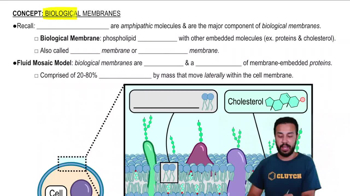
Biological membranes are lipid bilayers that separate the cell from its environment and regulate the passage of substances.
Membrane proteins include integral (embedded) and peripheral (surface) proteins, involved in transport, signaling, and structural support.
A concentration gradient is the difference in the concentration of a substance across a space or membrane, driving diffusion.
Diffusion is the passive movement of molecules from an area of higher concentration to lower concentration.
Passive transport moves substances across membranes without energy, following the concentration gradient.
Active transport requires energy (ATP) to move substances against their concentration gradient.
Simple diffusion is the direct movement of small or nonpolar molecules through the lipid bilayer.
Facilitated diffusion uses membrane proteins to help polar or large molecules cross membranes without energy.
Osmosis is the passive diffusion of water across a selectively permeable membrane toward higher solute concentration.
Endocytosis is the process by which cells engulf external substances by forming vesicles from the plasma membrane.
Exocytosis is the process of vesicles fusing with the plasma membrane to release contents outside the cell.
Mitochondria are organelles responsible for ATP production through cellular respiration.
Chloroplasts are organelles in plant cells that conduct photosynthesis to convert light energy into chemical energy.
The endomembrane system includes the ER and Golgi apparatus, which synthesize, modify, and secrete proteins.
Digestive organelles like lysosomes contain enzymes to break down macromolecules and cellular debris.
The cytoskeleton is a network of protein fibers that maintain cell shape, enable movement, and organize organelles.
DNA is organized into chromatin within the nucleus, compacted into chromosomes during cell division.
The central dogma describes the flow of genetic information: DNA → RNA → Protein.
Transcription is the process of copying DNA into messenger RNA (mRNA).
Translation is the synthesis of proteins from mRNA by ribosomes.
The cell cycle includes interphase (growth and DNA replication) and mitosis (cell division).
Mitosis consists of prophase, metaphase, anaphase, and telophase, leading to equal chromosome separation.
Cytokinesis is the division of the cytoplasm, completing cell division after mitosis.
Cell cycle regulation involves checkpoints and proteins that ensure proper division and prevent uncontrolled growth.
Cancer results from uncontrolled cell division due to failures in cell cycle regulation.