 Back
Anatomy & Physiology: Cell Structure and Membrane Transport
 03:45

Terms in this set (21)
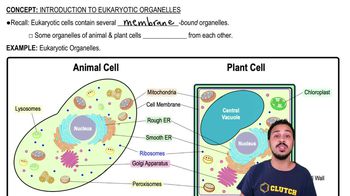
The control center of the cell where all DNA is stored.
Structure inside the nucleus that creates ribosomes needed for protein synthesis.
A protective double membrane surrounding the nucleus.
Made of approximately 30% DNA, 60% proteins, and 10% RNA.
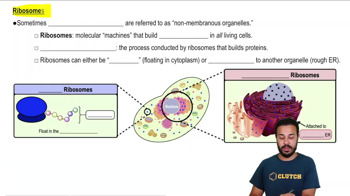
Sites where proteins are synthesized by linking amino acids into polypeptides.
Has ribosomes on its surface and helps fold proteins properly.
Lacks ribosomes; functions in carbohydrate breakdown and lipid synthesis.
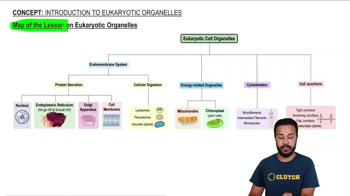
The cell's packaging center that modifies, sorts, and ships proteins from the ER.
Known as the powerhouse of the cell, they generate energy needed for cellular functions.
Organelles that engulf and digest unwanted or toxic molecules inside the cell.
Break down fatty acids into hydrogen peroxide, then convert it into water and oxygen.
Centrioles form mitotic spindle fibers for cell division; centrosomes organize microtubules.
Provides support, shape, and movement for the cell.
Membrane-bound sacs used for transporting, organizing, and storing substances within the cell.
The flexible outer boundary of the cell that controls what enters and exits.
Membrane is hydrophilic and hydrophobic; molecule charge and size affect ability to cross.
Hypotonic causes cell swelling, hypertonic causes shrinking, isotonic causes no change.
Specialized connections between cells that control communication and adhesion.
Active transport requires energy; passive transport does not and moves substances down their gradient.
Pumps 3 Na+ out and 2 K+ in using ATP to maintain cell potential.
Pinocytosis (cell drinking), phagocytosis (cell eating), and receptor-mediated endocytosis.