 Back
Anatomy & Physiology: Cell, Tissue & Microscopy
 03:45

Terms in this set (20)
Cytology is the study of cellular structure and function.
Histology is the study of normal cell structure and function.
Pathology is the study of abnormal cell structure and function.
Microscopy allows visualization of cells and tissues, essential for diagnosis, research, and understanding microscopic anatomy.
Tissue collection → Fixation → Dehydration → Clearing → Paraffin infiltration → Embedding → Sectioning → Mounting → Staining → Coverslipping → Microscopic examination.
LM uses visible light, magnifies up to ~1000×, common stains like H&E; EM uses electron beams, magnifies up to millions×, shows ultrastructure (TEM) or surface detail (SEM).
LM resolution is ~0.2 µm; EM resolution is ~0.2 nm, allowing visualization of finer structural details.
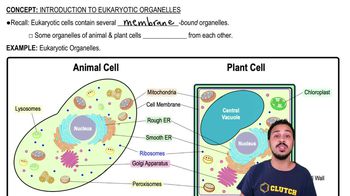
Plasma membrane (boundary and transport), cytoplasm (fluid and organelles), and nucleus (genetic control center).
Phospholipid bilayer with hydrophilic heads and hydrophobic tails, proteins (channels, carriers, receptors), and cholesterol for membrane fluidity.
Selective transport, communication, enzymatic activity, cell recognition, and structural support.
Passive transport requires no ATP (diffusion, facilitated diffusion, osmosis); active transport requires ATP to move substances against concentration gradients.
Osmosis is water movement through a selectively permeable membrane from low to high solute concentration, crucial for water balance and cell volume regulation.
Tonicity describes extracellular solute concentration effects: isotonic (no volume change), hypertonic (cell shrinks), hypotonic (cell swells and may burst).
Active transport pump that moves Na+ out and K+ into the cell against their concentration gradients using ATP.
Transport of substances in vesicles requiring ATP; includes endocytosis (phagocytosis, pinocytosis, receptor-mediated) and exocytosis.
Epithelial, connective, muscle, and nervous tissues.
Protection, absorption, secretion, filtration, and sensory reception.
Connective tissue has more extracellular matrix than cells and supports, binds, protects, stores energy, and transports nutrients.
Nervous tissue transmits electrical impulses; muscle tissue contracts to produce movement.
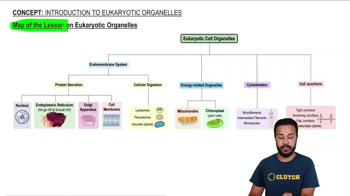
Provides structural support, maintains cell shape, assists in movement, and organizes organelles.