 Back
BackAnatomy & Physiology Chapter 1 Key Concepts
 3:06
3:06
Terms in this set (22)
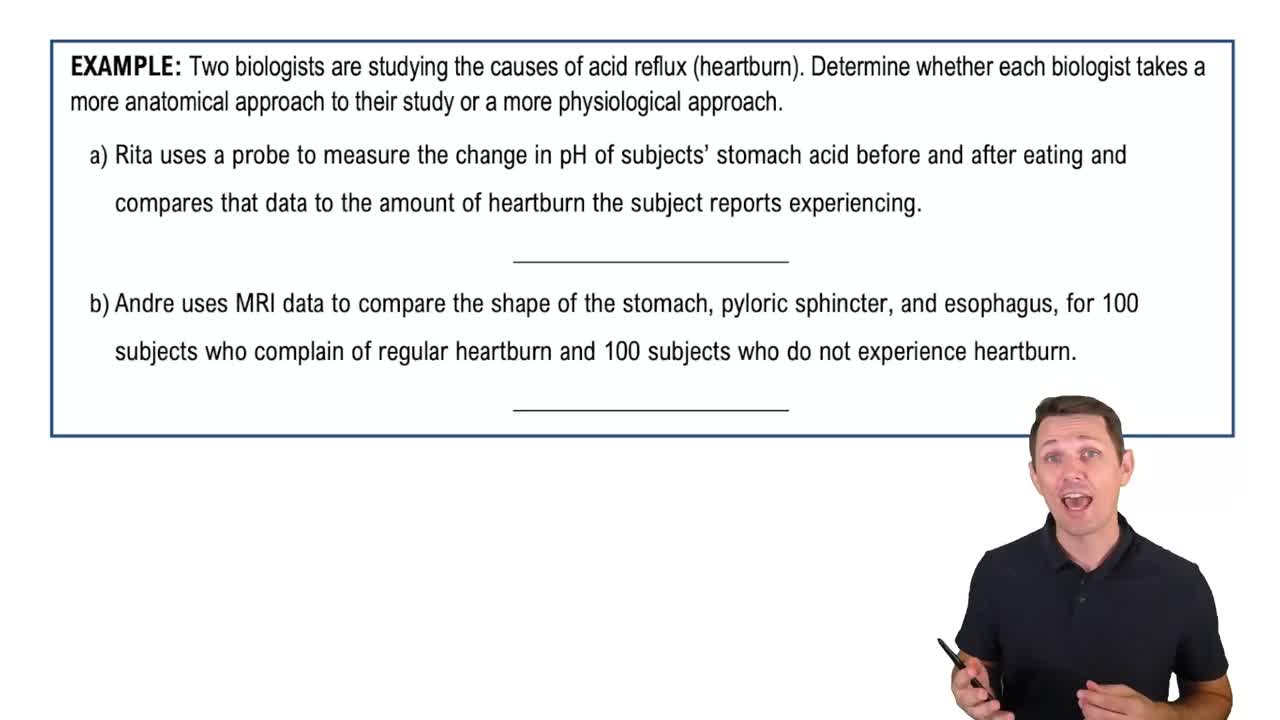
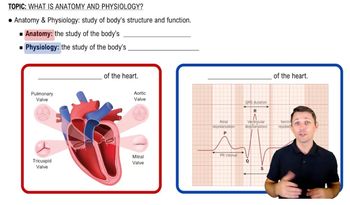
Anatomy is the study of the form or structure of body parts and how they relate to one another. It focuses on static images.
Physiology is the study of the functioning of the body's structural machinery and how body parts carry out life-sustaining activities. It involves dynamic processes.
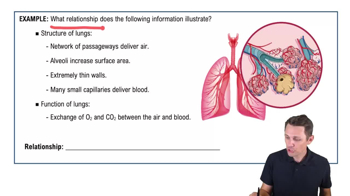
This concept means function always reflects structure. What a structure can do depends on its specific form.
The body is organized from simple to complex levels: atoms, molecules, organelles, cells, tissues, organs, organ systems, organism.
Homeostasis is the ability to maintain relatively stable internal conditions despite changing external environments, a dynamic state of equilibrium.
Gross anatomy includes regional anatomy (all structures in one body part) and systemic anatomy (study of body systems).
Microscopic anatomy includes cytology (study of cells) and histology (study of tissues).
Includes maintenance of boundaries, movement, responsiveness, digestion, metabolism, excretion, reproduction, and growth.
Essential needs include nutrients, oxygen, water, normal body temperature, and atmospheric pressure.
Homeostasis control involves three components: receptor (monitors environment), control center (sets set point), and effector (responds to stimulus).
Negative feedback reduces or shuts off the original stimulus to maintain homeostasis, e.g., blood glucose regulation.
Positive feedback enhances the original stimulus, accelerating the response, e.g., blood clotting and labor contractions.
The body is erect, feet together, palms facing forward, thumbs pointing away from the body. This is the reference for anatomical terms.
Superior means toward the head; inferior means away from the head or toward the lower part of the body.
Anterior means toward the front of the body; posterior means toward the back.
Medial means toward the midline; lateral means away from the midline.
Proximal means nearer to the trunk or point of attachment; distal means farther from the trunk.
Major planes: sagittal (divides right and left), frontal (divides front and back), transverse (divides top and bottom).
Located near the back, includes the cranial cavity (brain) and vertebral cavity (spinal cord).
Located anteriorly, subdivided into the thoracic cavity (lungs, heart) and abdominopelvic cavity (digestive and reproductive organs).
Double-layered membranes with a parietal layer lining the cavity walls and a visceral layer covering organs, separated by lubricating serous fluid.
The abdomen is divided into four quadrants: right upper, right lower, left upper, left lower for locating organs.