 Back
BackAnatomy & Physiology Chapter 2 & 3 Key Concepts
 02:13
02:13
Terms in this set (36)
Matter is anything that occupies space and has mass. It exists in three states: solid (has shape and volume), liquid (definite volume but shape conforms to container), and gas (neither shape nor definite volume).
Energy is the capacity to do work or move matter. It has no mass or volume but can be measured by its effects. Forms include chemical, electrical, mechanical, and radiant energy.
ATP is the primary energy-transferring molecule in cells, providing immediately usable energy for cellular functions. It consists of an adenine-containing nucleotide plus three phosphate groups.
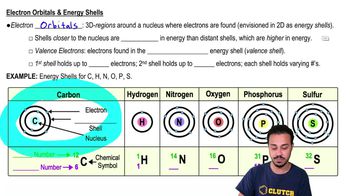
An atom consists of a dense nucleus containing protons (positive charge) and neutrons (neutral), surrounded by electrons (negative charge) orbiting in shells. Atoms are electrically neutral overall.
Isotopes are different atomic forms of the same element that vary in neutron number. Some isotopes are radioactive and decay over time.
A molecule is two or more atoms bonded together. A compound is a molecule made of different kinds of atoms chemically bonded.
Mixtures are physical combinations of substances without chemical bonding. Types include solutions (homogeneous), colloids (heterogeneous, scatter light), and suspensions (large particles, settle out).
An ionic bond forms when electrons are transferred from one atom to another, creating oppositely charged ions that attract each other.
A covalent bond forms when atoms share electrons. Single, double, or triple bonds depend on the number of shared electron pairs.
Polar molecules have unequal electron sharing, creating partial charges. Nonpolar molecules share electrons equally and have no charge poles.
Hydrogen bonds are weak attractions between a hydrogen atom covalently bonded to an electronegative atom and another electronegative atom, important in water properties and biomolecule structure.
Three main types: synthesis (building larger molecules), decomposition (breaking molecules down), and exchange (both making and breaking bonds). Redox reactions involve electron transfer.
Water maintains homeostasis by distributing heat, acts as a solvent, and participates in cooling via sweating. It is essential for life and must be replenished regularly.
Acids release hydrogen ions and are proton donors; bases release hydroxyl ions and are proton acceptors. Both conduct electricity and affect pH balance.
The pH scale ranges from 0 to 14: 7 is neutral, below 7 is acidic, above 7 is basic. Blood pH is tightly regulated between 7.35 and 7.45.
Buffers resist changes in pH by releasing or absorbing hydrogen ions. The lungs and kidneys are key physiological buffers maintaining blood pH.
Macromolecules are large complex molecules formed by joining monomers into polymers, including carbohydrates, lipids, proteins, and nucleic acids.
Dehydration synthesis joins monomers by removing water. Hydrolysis breaks bonds by adding water, releasing monomers.
Lipids are hydrophobic molecules including triglycerides (energy storage), phospholipids (cell membranes), and steroids (cholesterol and hormones).
Proteins have four structure levels: primary (amino acid sequence), secondary (alpha-helix or beta-sheet), tertiary (3D folding), and quaternary (multiple polypeptides combined).
Enzymes are globular proteins that catalyze biochemical reactions by lowering activation energy without being consumed.
DNA stores genetic information in the nucleus as a double helix with deoxyribose sugar and bases A, T, C, G. RNA is single-stranded, contains ribose sugar, and uses uracil instead of thymine.
Nucleotides are the building blocks of nucleic acids, composed of a pentose sugar, nitrogenous base, and phosphate group.
In DNA, adenine pairs with thymine, and guanine pairs with cytosine. In RNA, uracil replaces thymine pairing with adenine.
Cell theory states all living things are made of cells, cells are the smallest unit of life, and all cells arise from preexisting cells.
The plasma membrane is a phospholipid bilayer with embedded proteins, cholesterol, and carbohydrates forming a fluid mosaic that controls selective permeability.
Tight junctions seal cells to prevent leakage, desmosomes anchor cells mechanically, and gap junctions allow communication via channels.
Passive transport moves substances down concentration gradients without energy. Active transport requires ATP to move substances against gradients.
Vesicular transport moves large substances via membrane-bound vesicles using energy, including exocytosis (out), endocytosis (in), and transcytosis (through cells).
Lysosomes are membrane-bound organelles containing digestive enzymes that break down waste, damaged organelles, and pathogens.
The cytoskeleton includes microfilaments (actin), intermediate filaments (tension resistance), and microtubules (organelle movement and shape).
The cell cycle includes interphase (G1, S, G2 phases for growth and DNA replication) and mitotic phase (mitosis and cytokinesis for cell division).
DNA replication involves uncoiling, strand separation, complementary base assembly by DNA polymerase, and strand restoration by DNA ligase, producing two identical DNA molecules.
Protein synthesis includes transcription (DNA to mRNA in nucleus) and translation (mRNA decoded to protein at ribosomes in cytoplasm).
Transcription is the process where RNA polymerase builds mRNA from a DNA template, including initiation, elongation, and termination phases.
Translation is decoding mRNA into a polypeptide chain at ribosomes, involving initiation, elongation, and termination steps with tRNA delivering amino acids.