 Back
Anatomy & Physiology: Chapter 3 Cell Structure and Function
 03:45

Terms in this set (30)
Nucleoli are responsible for ribosome production.
Nuclei store DNA (organized as chromosomes and genes) and are the site of RNA transcription.
The nuclear membrane and pores provide protection and allow communication between the nucleus and cytoplasm.
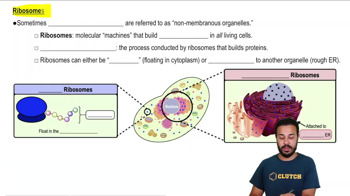
Ribosomes perform RNA translation to synthesize proteins.
RNA bases pair as Adenine with Uracil (A+U) and Guanine with Cytosine (G+C).
RNA is a single strand copied in an antiparallel orientation to the original DNA strand.
mRNA carries genetic information copied from DNA; tRNA carries amino acids for protein construction.
Transcription: DNA is converted to mRNA; Translation: mRNA is converted to protein by ribosomes and tRNA.
A codon is a 3-nucleotide sequence on mRNA; an anticodon is the complementary 3-nucleotide sequence on tRNA representing specific amino acids.
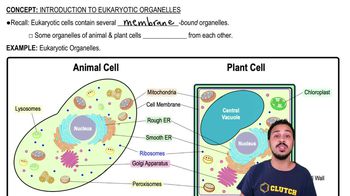
The rough endoplasmic reticulum is the site of RNA translation and protein synthesis.
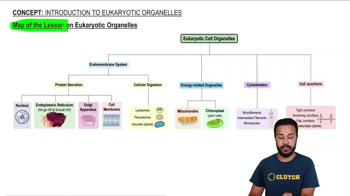
The Golgi apparatus modifies proteins and packages them into vesicles for transport.
Lysosomes are responsible for waste removal and cellular digestion.
The smooth endoplasmic reticulum synthesizes lipids and detoxifies harmful substances.
Mitochondria produce energy through cellular respiration.
ADP + P + energy <> ATP represents the reversible conversion of energy in cellular respiration.
Anaerobic respiration occurs without oxygen outside mitochondria; aerobic respiration requires oxygen inside mitochondria.
Glycolysis is the initial breakdown of glucose during anaerobic respiration.
The citric acid cycle is an anabolic reaction followed by catabolic reactions inside mitochondria during aerobic respiration.
The electron transport chain uses electron movement to drive the synthesis of most ATP via oxidative phosphorylation.
Microvilli increase surface area for absorption in cells.
Cilia and flagella enable movement of cells or substances across cell surfaces.
The cell membrane is a phospholipid bilayer that provides selective permeability and protection.
Diffusion (facilitated) moves solutes; osmosis moves water across membranes toward equilibrium.
Hypertonic: cell loses water; hypotonic: cell gains water; isotonic: no net water movement.
Active transport moves substances against their concentration gradient using energy, often via ion pumps.
Endocytosis packages substances into vesicles to enter the cell; exocytosis expels substances from the cell.
Mitosis phases: Interphase, Prophase, Metaphase, Anaphase, Telophase.
Mitosis produces two cells with identical DNA from one original cell.
DNA consists of two cross-linked strands in an antiparallel orientation with nucleotides A+T and G+C.
Semi-conservative replication means one original DNA strand acts as a template for the new complementary strand.