 Back
BackAnatomy & Physiology: Chapter One Key Concepts
 3:06
3:06
Terms in this set (26)
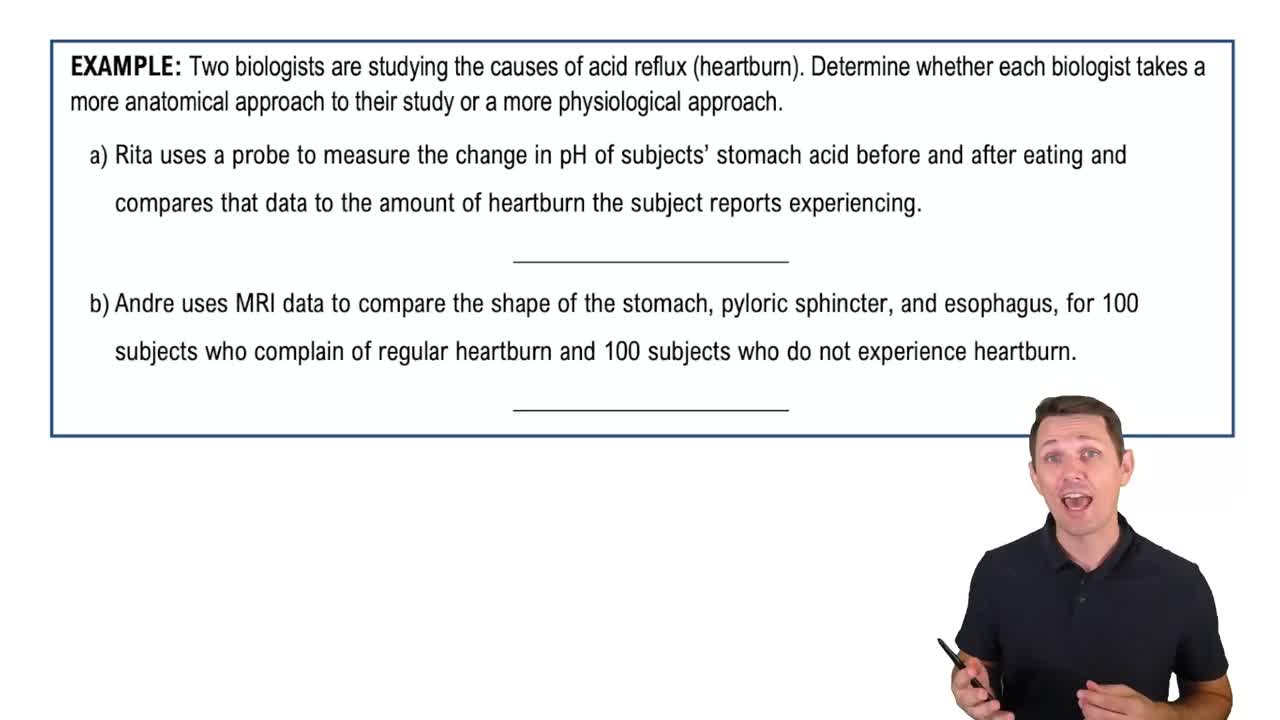
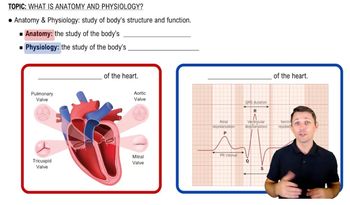
Anatomy is the study of the form of living things, including gross (macroscopic) and microscopic anatomy.
Physiology is the study of the function of the parts that make up living things.
Surface anatomy, regional anatomy, and systemic anatomy.
Cytology is the study of cells and their functions; histology is the study of tissues and their functions.
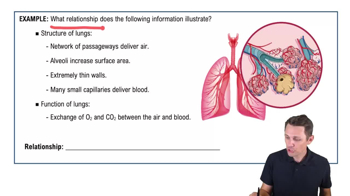
Anatomy and physiology are interrelated; structure affects function, and physiological mechanisms depend on anatomical structures.
Chemical, cellular, tissue, organ, organ system, organism.
Composed of atoms and molecules with specific functional properties and shapes, e.g., water, glucose, proteins.
Cells are the smallest units capable of performing all vital life functions, formed by organelles interacting.
Specialized groups of cells working together to perform specific functions, e.g., muscle, nerve, connective, epithelial tissues.
Two or more tissues combined to perform several functions, e.g., heart, lungs, stomach.
Organs interacting to form systems that perform vital life functions, e.g., circulatory, respiratory, nervous systems.
Integumentary (protection), Skeletal (support), Muscular (movement), Respiratory (gas exchange), Nervous (response), Circulatory (transport), Lymphatic/Immune (protection), Endocrine (hormone regulation), Urinary (waste removal), Digestive (nutrient absorption), Reproductive (reproduction).
Organization, metabolism, responsiveness, movement, development, growth, and reproduction.
Metabolism includes all chemical reactions; anabolism builds complex molecules (requires energy), catabolism breaks down molecules (releases energy).
ATP stores and releases energy; converting ADP to ATP is anabolic, ATP to ADP is catabolic.
A dynamic state of equilibrium where internal conditions remain relatively constant despite external changes.
Receptor (detects stimulus), control center (processes info), effector (responds to oppose stimulus).
It reduces or shuts off the original stimulus to stabilize the system, e.g., body temperature regulation.
It amplifies the original stimulus to complete a process, e.g., blood clotting and labor contractions.
Terms describing location: superior, inferior, anterior, posterior, medial, lateral, proximal, distal, superficial, deep.
Sagittal (divides left/right), frontal (anterior/posterior), transverse (superior/inferior).
Dorsal cavity (cranial, vertebral) and ventral cavity (thoracic: pleural, pericardial; abdominopelvic: abdominal, pelvic).
They line body cavities and secrete lubricating fluid to reduce friction on organs.
CT uses X-rays for detailed images with radiation; MRI uses magnets and radio waves without radiation, better for soft tissues.
Physiological activity by detecting radioactive tracers in areas of high metabolic activity.
Uses high-frequency sound waves to create images; commonly used for monitoring pregnancy and is non-invasive.