Matter is anything that has mass and occupies space, and it is composed of elements, which are made up of atoms.
What are the main subatomic particles in an atom and where are they located?
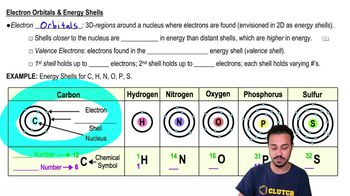
Protons and neutrons are in the nucleus; electrons orbit outside the nucleus.
What defines a neutral atom?
A neutral atom has an equal number of protons and electrons, resulting in a total charge of zero.
What is an ion?
An ion is an atom that has gained or lost electrons, resulting in a net positive or negative charge.
What are covalent bonds?
Covalent bonds form when atoms share electrons, such as in CH4, O2, and N2 molecules.
What are ionic bonds?
Ionic bonds form when one atom loses and another atom gains electrons, creating oppositely charged ions that attract, e.g., NaCl.
What are inorganic substances and give examples?
Inorganic substances generally lack carbon and include water (H2O), acids, and bases.
Why is water important in the body?
Water is a polar molecule that acts as a solvent, participates in chemical reactions, maintains body temperature, lubricates joints, and cushions organs.
What happens when acids dissociate in water?
Acids release H+ ions when dissociated, increasing the concentration of hydrogen ions and lowering the pH.
What happens when bases dissociate in water?
Bases release OH- ions, which bind to H+ ions, increasing pH and making the solution more basic.
Describe the pH scale.
The pH scale ranges from 0 to 14: 7 is neutral, below 7 is acidic, and above 7 is basic.
What are organic substances?
Organic substances contain carbon and include carbohydrates, lipids, proteins, and nucleic acids.
What is the general formula for carbohydrates?
Carbohydrates have the formula \(C_nH_{2n}O_n\), with carbon, hydrogen, and oxygen in a 1:2:1 ratio.
What are monosaccharides?
Monosaccharides are single sugar units and basic carbohydrate building blocks, e.g., glucose and fructose.
What are disaccharides?
Disaccharides consist of two monosaccharides covalently bonded, e.g., sucrose (glucose + fructose).
What are polysaccharides?
Polysaccharides are long chains of monosaccharides, e.g., glycogen in animals and starch in plants.
What are proteins made of?
Proteins are made of amino acids linked by peptide bonds; they contain carbon, hydrogen, oxygen, and nitrogen.
What is the difference between dipeptides, polypeptides, and proteins?
Dipeptides have two amino acids, polypeptides have many, and proteins are one or more polypeptides folded into a functional shape.
What are lipids and their common types?
Lipids are fats including glycerides (mono-, di-, triglycerides), phospholipids, and steroids.
Describe the structure of phospholipids.
Phospholipids have a glycerol backbone, two nonpolar fatty acid tails (hydrophobic), and a polar phosphate head (hydrophilic).
What are nucleic acids compoased of?
Nucleic acids are made of nucleotides containing a phosphate group, a sugar (ribose or deoxyribose), and an organic base.
What bases are found in DNA and RNA?
DNA has adenine, guanine, cytosine, and thymine; RNA has adenine, guanine, cytosine, and uracil.
How do base pairs form in DNA?
Adenine pairs with thymine via 2 hydrogen bonds; cytosine pairs with guanine via 3 hydrogen bonds.
What is ATP and its function?
ATP (adenosine triphosphate) stores energy in high-energy phosphate bonds used to power cellular processes.
What happens when ATP loses phosphate groups?
ATP becomes ADP when one phosphate is removed, and AMP when two phosphates are removed, releasing energy.