 Back
BackAnatomy & Physiology: Chemistry for Human Physiology
 02:13
02:13
Terms in this set (28)
Matter is anything that has mass and occupies volume.
Mass, volume, density, physical properties, and chemical properties.
Solid, liquid, and gas.
An element is a substance composed of atoms with the same number of protons.
Carbon (C), Hydrogen (H), Oxygen (O), Nitrogen (N), Calcium (Ca), Phosphorus (P), Sodium (Na), Potassium (K), Chloride (Cl).
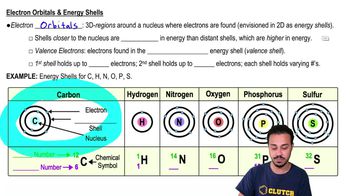
Protons (positive, nucleus), Neutrons (neutral, nucleus), Electrons (negative, orbitals around nucleus).
The number of protons in an atom; unique to each element and determines its identity.
The sum of protons and neutrons in the nucleus of an atom.
Atoms of the same element with the same number of protons but different numbers of neutrons; can be stable or radioactive.
Atoms tend to gain, lose, or share electrons to achieve a stable valence shell with eight electrons.
Formed by the transfer of electrons, creating cations and anions that attract each other.
Formed by sharing electrons between atoms; can be nonpolar or polar.
Weak bonds between partially charged regions of molecules; important in water, DNA base pairing, and protein structure.
Nonpolar substances aggregate in water, important for protein folding and membrane formation.
Water absorbs large amounts of heat with little temperature change, helping stabilize body temperature.
Water dissociates into H⁺ and OH⁻ ions: H₂O ⇌ H⁺ + OH⁻; at neutral pH, [H⁺] = 10⁻⁷ M.
pH is the negative logarithm of hydrogen ion concentration, indicating acidity or alkalinity.
Buffers resist changes in pH, maintaining homeostasis; examples include bicarbonate, phosphate, and protein buffers.
Carbohydrates, lipids, proteins, and nucleic acids.
Central carbon, amino group, carboxyl group, hydrogen, and variable R group.
Primary (sequence), secondary (α-helix, β-sheet), tertiary (3D folding), quaternary (multiple subunits).
Nitrogenous base, pentose sugar, and phosphate group(s).
DNA has deoxyribose sugar and thymine; RNA has ribose sugar and uracil instead of thymine.
Hydrophilic heads face aqueous environments; hydrophobic tails face inward, forming the plasma membrane.
Maintains plasma membrane structure and fluidity; precursor for steroid hormones, bile acids, and vitamin D.
Saturated have no double bonds and are linear; unsaturated have one or more double bonds causing kinks.
Involve electron transfer; essential for cellular respiration, electron transport, ATP production, and metabolism.
Na⁺, K⁺, Ca²⁺, Mg²⁺, Cl⁻, PO₄³⁻, Fe²⁺/Fe³⁺; involved in membrane potential, muscle contraction, bone formation, oxygen transport, ATP production, acid-base balance.