 Back
BackAnatomy & Physiology Core Concepts
 3:06
3:06
Terms in this set (29)
Living organisms carry out processes such as metabolism, growth, reproduction, responsiveness, and homeostasis.
Levels include chemical, cellular, tissue, organ, organ system, and organism, each building on the previous.
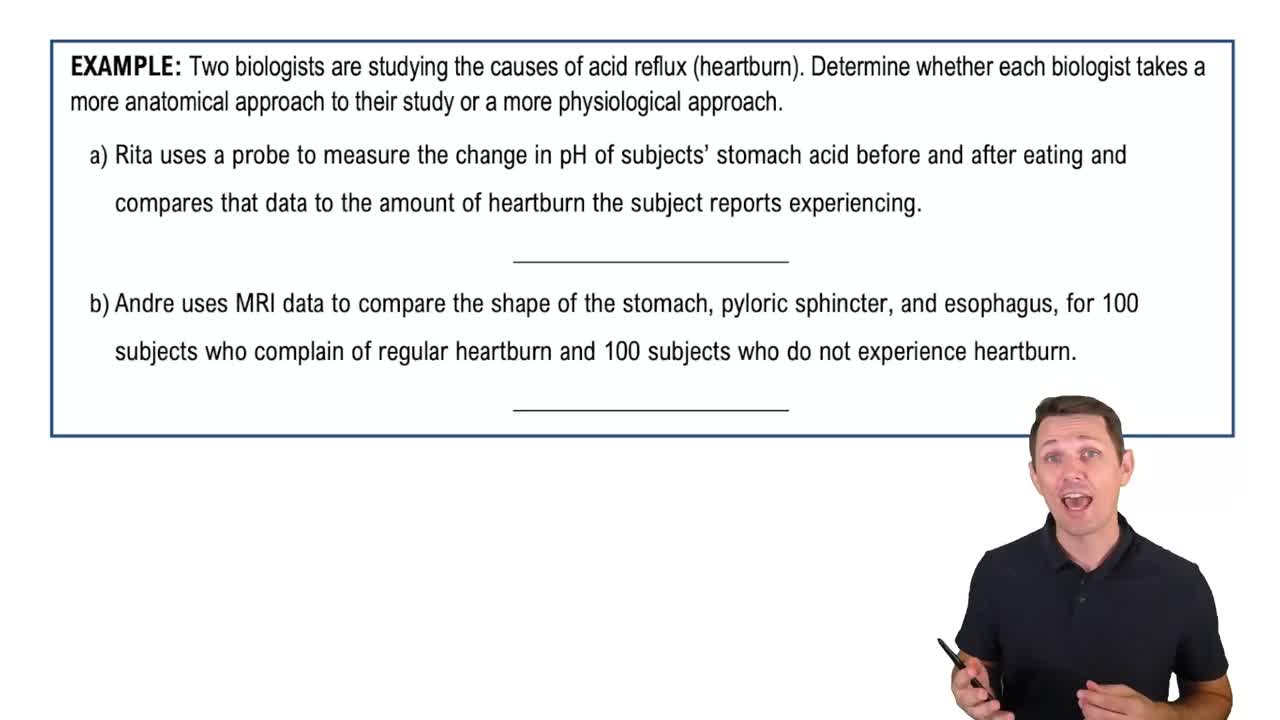
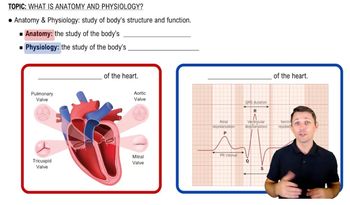
Includes gross anatomy, microscopic anatomy, systemic physiology, and cell physiology.
Body standing upright, facing forward, feet flat and slightly apart, arms at sides with palms facing forward.
Terms like anterior/posterior, superior/inferior, medial/lateral, and proximal/distal describe locations.
Include sagittal (divides left/right), frontal (coronal) (divides front/back), and transverse (divides top/bottom).
Major cavities: cranial, vertebral, thoracic, abdominal, and pelvic. Each contains specific organs.
Divided into four quadrants and nine regions to locate organs precisely.
Thin membranes lining body cavities and organs, reducing friction via parietal and visceral layers.
The body's ability to maintain a stable internal environment despite external changes.
Include receptor, control center, and effector, which work together to maintain homeostasis.
Negative feedback reverses a change; positive feedback amplifies it. Negative feedback is more common for homeostasis.
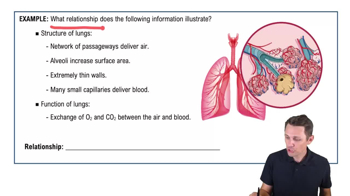
Structure of a body part is directly related to its function.
A difference in chemical concentration, electrical charge, temperature, or pressure that drives processes in the body.
Cells communicate via chemical signals to coordinate functions essential for multicellular life.
An atom is the smallest unit of matter; an element is a pure substance made of one type of atom.
Oxygen, carbon, hydrogen, and nitrogen make up most of the body's mass.
Ionic bonds transfer electrons; covalent bonds share electrons; hydrogen bonds are weak attractions important for water properties.
Water is polar, a solvent, has high heat capacity, and exhibits surface tension due to hydrogen bonding.
pH measures acidity/basicity; buffers maintain stable pH by neutralizing acids or bases.
Monomers are single units; polymers are chains of monomers formed by dehydration synthesis and broken by hydrolysis.
Composed of a lipid bilayer with embedded proteins and carbohydrates, described by the fluid mosaic model.
Simple diffusion moves solutes down concentration gradients without energy; facilitated diffusion uses proteins but no energy.
Movement of water across a membrane from low to high solute concentration.
Hypertonic shrinks cells, isotonic causes no change, hypotonic swells cells.
Examples: nucleus (DNA storage), mitochondria (energy), ribosomes (protein synthesis).
Epithelial, connective, muscle, and nervous tissues each have distinct structures and functions.
Classified by cell shape and layers: squamous, cuboidal, columnar; simple or stratified.
Skeletal (voluntary), cardiac (heart), and smooth (involuntary) muscle tissues.