 Back
Anatomy & Physiology Core Concepts
 01:59

Terms in this set (20)
Directional terms describe the location of one body part relative to another, such as anterior, posterior, superior, and inferior.
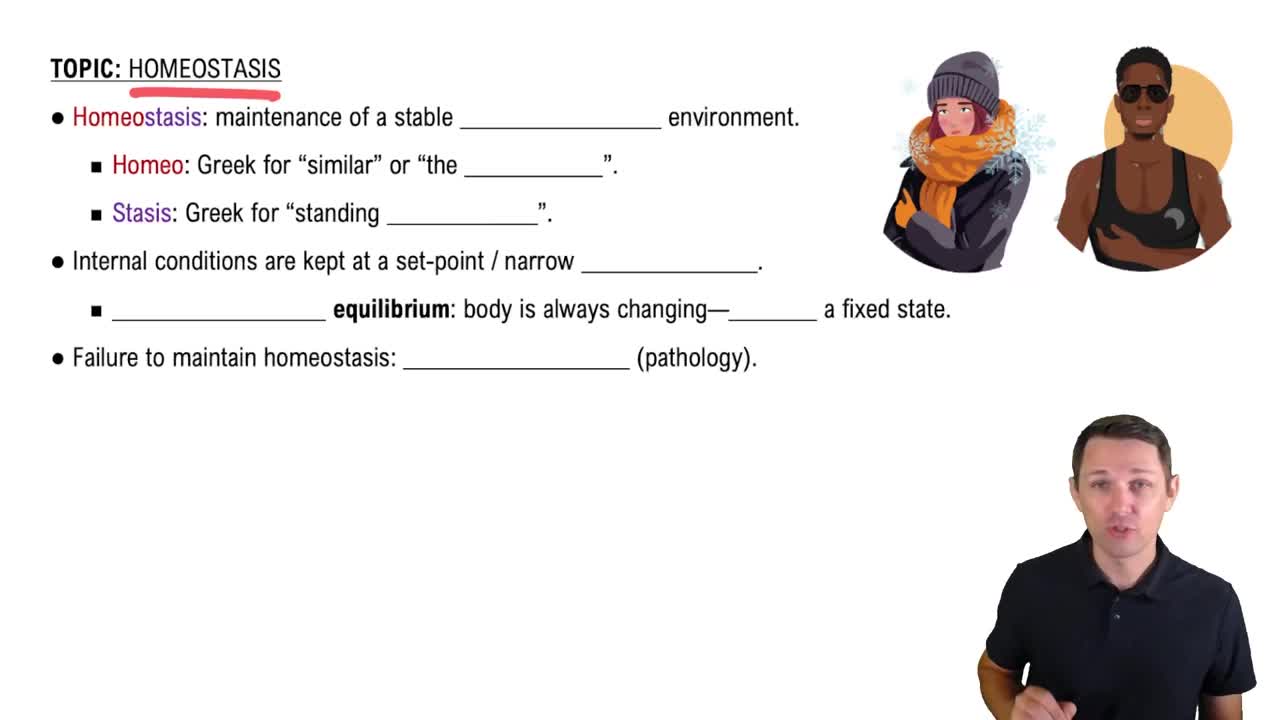
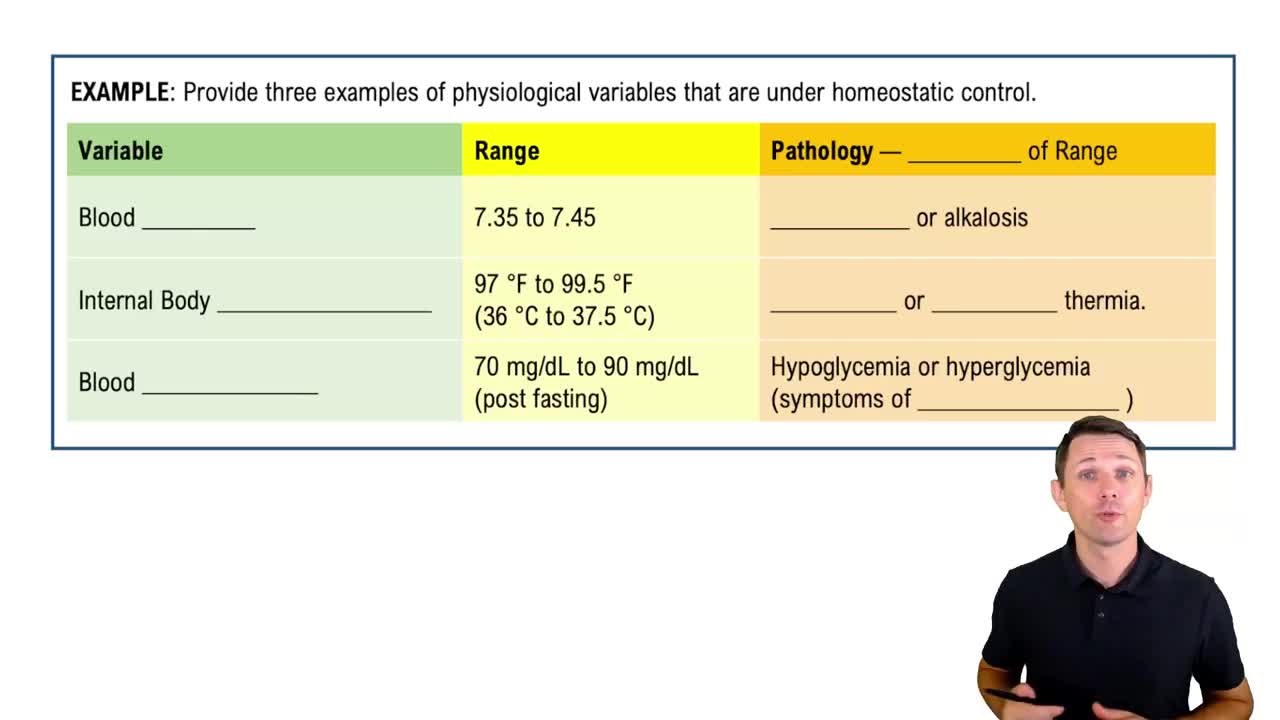
Homeostasis is the body's ability to maintain a stable internal environment despite external changes.
The plasma membrane controls the movement of substances in and out of the cell and provides protection and communication.
The plasma membrane is mainly composed of a phospholipid bilayer, proteins, cholesterol, and carbohydrates.
Phospholipids form a bilayer that creates a semi-permeable barrier, with hydrophilic heads facing outward and hydrophobic tails inward.
Tissues are groups of similar cells that perform a common function in the body.
The four basic tissue types are epithelial, connective, muscle, and nervous tissue.
Epithelial tissue covers body surfaces, lines cavities, and forms glands for protection, absorption, and secretion.
Connective tissue supports, binds, and protects organs and other tissues.
Biochemistry studies the chemical processes and substances that occur within living organisms.
Regions are specific areas of the body used to describe locations, such as the abdominal or thoracic regions.
Superior means above or toward the head end of the body.
Inferior means below or toward the feet.
Anterior refers to the front or belly side of the body.
Posterior refers to the back side of the body.
Cholesterol stabilizes the membrane's fluidity and integrity across temperature changes.
Membrane proteins assist in transport, signal reception, and cell recognition.
Carbohydrates on the membrane surface aid in cell recognition and adhesion.
Negative feedback is a control mechanism that reverses a change to maintain homeostasis.
Regulation of body temperature by sweating or shivering is an example of homeostasis.