 Back
BackAnatomy & Physiology Core Concepts and Overview
 3:06
3:06
Terms in this set (28)
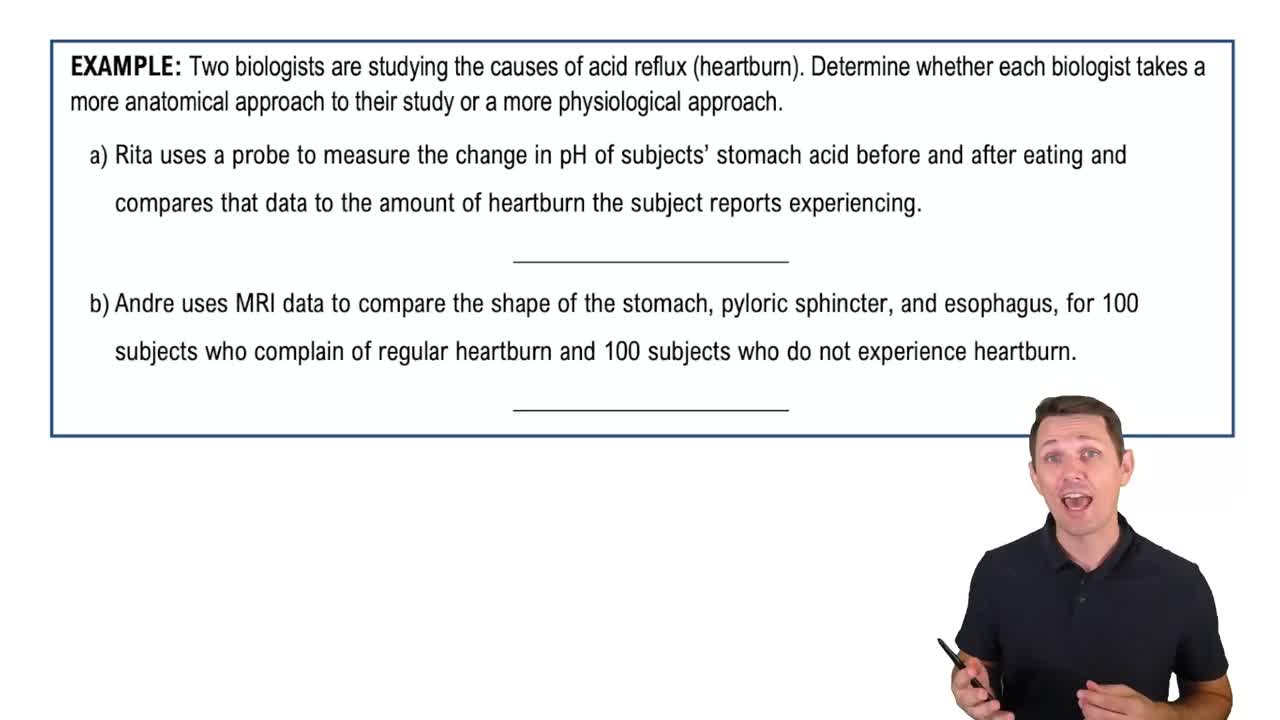
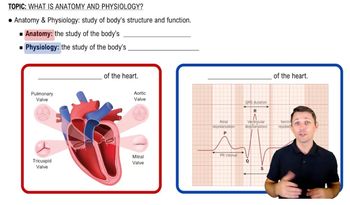
Human Anatomy is the study of the structure or form of the human body.
Human Physiology is the study of the functions of the human body.
Bring it Back, Space It Out, and Mix It Up improve retention and comprehension.
Retrieving stored information into conscious mind via self-quizzing, summarizing, diagramming, or teaching to prevent illusions of knowing.
Metabolism is the range of chemical processes in living organisms, including anabolism (building up) and catabolism (breaking down).
Anabolism builds larger chemicals from smaller ones; Catabolism breaks down larger chemicals into smaller ones.
Cellular composition, metabolism, growth, excretion, responsiveness, movement, and reproduction.
The cell is the smallest unit that carries out functions of life.
Chemical, cellular, tissue, organ, organ system, and organism levels.
Integumentary, skeletal, muscular, nervous, endocrine, cardiovascular, lymphatic, respiratory, digestive, urinary, male reproductive, female reproductive.
Body standing upright, feet shoulder-width apart, arms at sides, palms and face forward; used as reference for directional terms.
Anterior means toward the front of the body or body part.
Proximal means closer to the point of origin; distal means farther from the point of origin.
Axial region (head, neck, trunk) and appendicular region (upper and lower limbs).
Sagittal (right and left), frontal (anterior and posterior), and transverse (superior and inferior) planes.
Body's ability to maintain a relatively stable internal environment despite external changes.
A mechanism where a change in a regulated variable triggers responses that reverse the change to maintain homeostasis.
A mechanism where effectors amplify the initial stimulus, causing rapid change, usually to complete a process quickly.
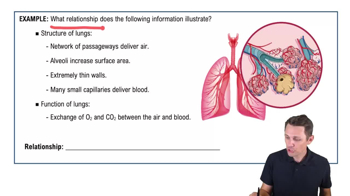
Form follows function: the shape of a structure suits its function, seen clearly at the organ level.
A difference in concentration, temperature, or pressure between two connected areas that drives many physiological processes.
Through chemical messengers and electrical signals that trigger responses in other cells.
They produce serous fluid to lubricate organs and reduce friction within body cavities.
Pleural (lungs), pericardial (heart), and peritoneal (abdominal organs) membranes.
Right upper, left upper, right lower, and left lower quadrants.
Survey, Question, Read, Recite, and Review to improve comprehension and retention.
Describe, Overview, Other chapters, Review, and Synthesize information to solve problems.
Systemic anatomy studies body by organ systems; regional anatomy studies specific body regions.
Separates the thoracic cavity (above) from the abdominopelvic cavity (below) and aids in breathing.