 Back
BackAnatomy & Physiology Core Concepts
 3:06
3:06
Terms in this set (30)
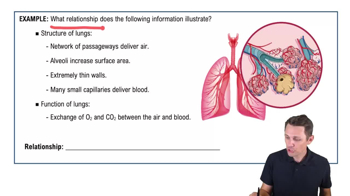
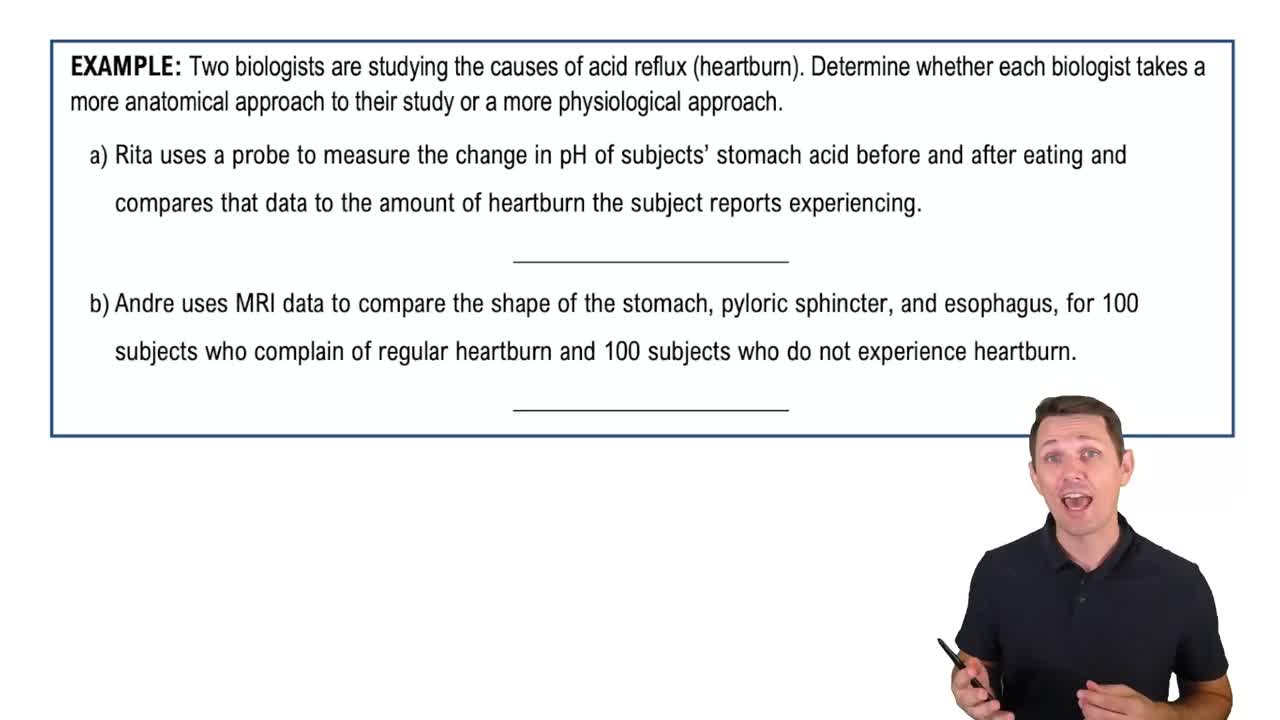
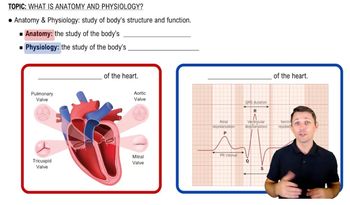
Anatomy is the study of structure. Physiology is the study of function. They are related because structure often determines function.
It means that the way something is built helps explain what it does; structure and function are connected.
Chemical, Cellular, Tissue, Organ, Organ system, Organism levels.
Systems include integumentary, skeletal, muscular, nervous, endocrine, cardiovascular, lymphatic, respiratory, digestive, urinary, and reproductive; each has specific organs and functions.
Homeostasis is maintaining a stable internal environment despite external changes.
Negative feedback reverses a change to restore normal conditions. Positive feedback amplifies a change until a specific endpoint is reached.
Stimulus, Receptor, Control center, Effector, Response.
Atoms are the smallest units of matter. Elements are pure substances made of one type of atom. Ions are charged atoms or molecules.
Ionic bonds form by electron transfer. Covalent bonds share electrons. Hydrogen bonds are weak attractions between polar molecules.
Acids release H+, bases accept H+, and buffers stabilize pH by neutralizing excess acids or bases.
Carbohydrates, Lipids, Proteins, Nucleic acids.
Cell membrane (barrier), Cytoplasm (fluid), Nucleus (DNA storage), Ribosomes (protein synthesis), ER (protein/lipid processing), Golgi apparatus (packaging), Mitochondria (energy), Lysosomes (waste), Peroxisomes (detox), Cytoskeleton (structure), Centrioles (cell division).
Passive transport moves substances down concentration gradients without energy. Active transport requires energy to move substances against gradients.
Diffusion is movement of solutes from high to low concentration. Osmosis is diffusion of water across a membrane.
An active transport protein that moves 3 Na+ out and 2 K+ into the cell, maintaining membrane potential.
DNA stores genetic information; RNA helps convert DNA code into proteins.
Mitosis produces two identical diploid cells for growth/repair. Meiosis produces four haploid cells for reproduction.
Epithelial, Connective, Muscle, Nervous tissues.
Protection, temperature regulation, sensation, vitamin D production, excretion, and water balance.
Support, protection, movement, mineral storage, blood cell formation, fat storage, calcium homeostasis.
Fibrous (immovable), Cartilaginous (slightly movable), Synovial (freely movable with joint cavity and fluid).
Muscle, Fascicle, Muscle fiber, Myofibril, Sarcomere, Myofilaments (actin and myosin).
Calcium binds troponin to expose binding sites; ATP powers myosin head attachment, power stroke, detachment, and re-cocking.
Sensory input, integration, motor output.
CNS includes brain and spinal cord; PNS includes all nerves outside CNS.
Sclera, Cornea, Choroid, Iris, Lens, Retina, Optic disk, Optic nerve.
Outer ear, Middle ear, Inner ear, Tympanic membrane, Auditory tube, Ossicles, Cochlea, Semicircular canals, Organ of Corti, Vestibulocochlear nerve.
Secretes hormones to regulate body processes and maintain homeostasis.
Steroid hormones are lipid-soluble and enter cells; nonsteroid hormones bind to cell surface receptors.
Hypothalamus, Pituitary, Thyroid, Parathyroid, Adrenal, Pancreas, Gonads; hormones include insulin, glucagon, thyroxine, ADH, oxytocin.