Back

Anatomy & Physiology Core Concepts

Control buttons has been changed to "navigation" mode.
1/27
  • What is the difference between anatomy and physiology?

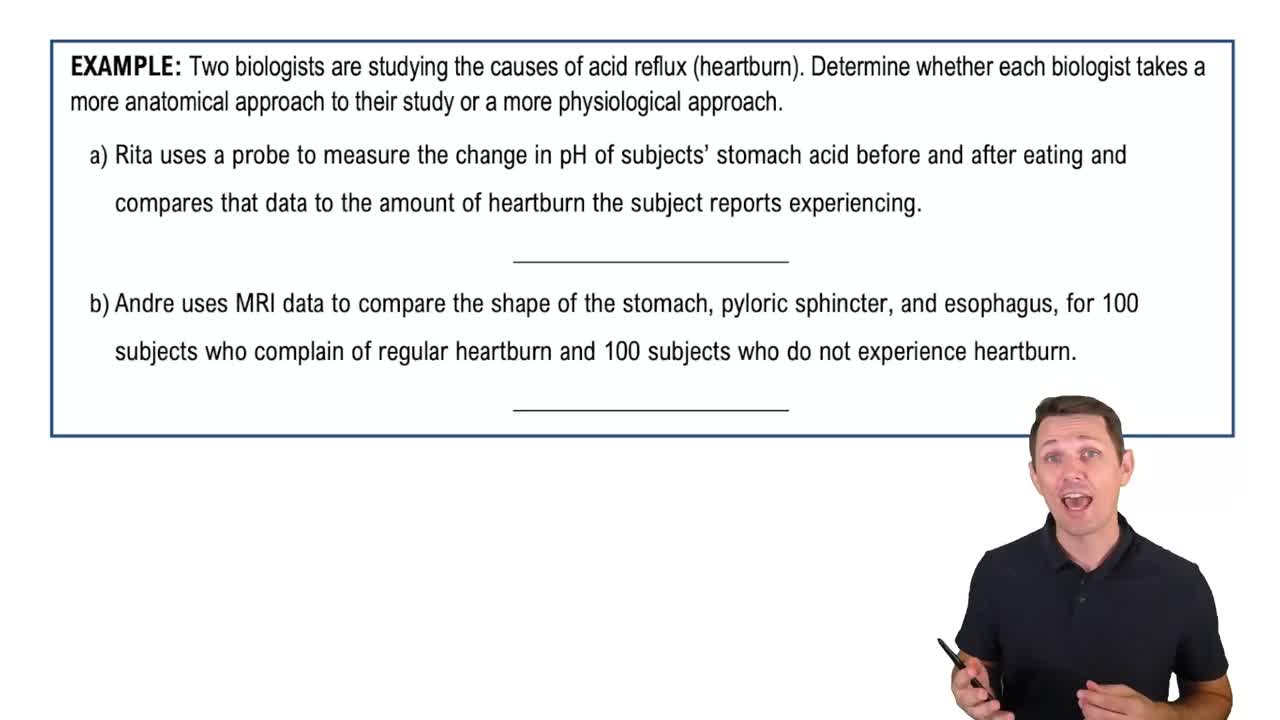
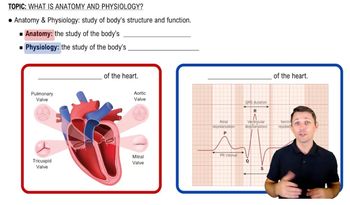
    Anatomy is the study of body structure, while physiology focuses on how the body functions.
  • What are the key characteristics shared by all living organisms?

    Cellular composition, metabolism, growth, excretion, responsiveness, movement, and reproduction.
  • List the levels of structural organization in the human body from simplest to most complex.

    Chemical, cellular, tissue, organ, organ system, organism.

  • Name the 11 organ systems of the human body.

    Integumentary, skeletal, muscular, nervous, endocrine, cardiovascular, lymphatic, respiratory, digestive, urinary, reproductive.
  • What is the anatomical position?

    Body standing upright, feet shoulder-width apart, arms at sides, palms facing forward; 'right' and 'left' refer to the subject's sides.
  • Define the directional term 'anterior (ventral)'.

    Toward the front of the body.
  • Define the directional term 'posterior (dorsal)'.

    Toward the back of the body.
  • What does 'proximal' mean in anatomical terms?

    Closer to the origin of a body part or point of attachment.
  • What does 'distal' mean in anatomical terms?

    Further from the origin of a body part or point of attachment.
  • What are the three main body planes used to study internal structures?

    Sagittal (divides right and left), frontal/coronal (divides front and back), transverse/horizontal (divides top and bottom).
  • What are the major body cavities and their subdivisions?

    Posterior cavity: cranial and vertebral; Anterior cavity: thoracic (pleural, mediastinum, pericardial) and abdominopelvic (abdominal, pelvic).
  • What is homeostasis?

    Maintenance of a stable internal environment within a normal range.
  • Describe the components of a negative feedback loop.

    Stimulus → receptor → control center → effector → response to return variable to normal.
  • Give an example of a positive feedback loop.

    Blood clotting, where the response amplifies the change until the process is complete.
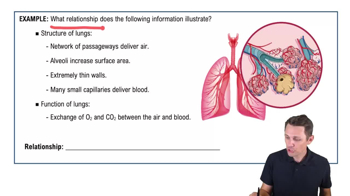
  • What is the principle of complementarity in anatomy and physiology?

    Structure is suited to function at all levels of organization.
  • What is the function of the integumentary system?

    Protects the body, produces vitamin D, retains water, and regulates temperature.
  • What is the primary role of the cardiovascular system?

    Pumps and delivers oxygen-poor blood to the lungs and oxygen-rich blood to tissues; transports nutrients, wastes, and hormones.
  • What does the lymphatic system do?

    Returns excess tissue fluid to the cardiovascular system and provides immunity.
  • What is the function of the respiratory system?

    Delivers oxygen to the body, removes carbon dioxide, and maintains acid-base balance.
  • What is the function of the digestive system?

    Digests food, absorbs nutrients, removes waste, and maintains fluid, electrolyte, and acid-base balance.
  • What is the function of the urinary system?

    Removes metabolic wastes, maintains fluid, electrolyte, and acid-base balance, and stimulates blood cell production.
  • What is the function of the reproductive system?

    Produces gametes and hormones; supports sexual function and development.
  • What are serous membranes and their layers?

    Thin sheets forming cavities and surrounding organs; include visceral layer (contacts organ) and parietal layer (attached to surrounding structures).
  • What is the role of serous fluid?

    Lubricates serous membranes and prevents friction between organs and cavity walls.
  • What is the difference between systemic and regional anatomy?

    Systemic anatomy studies organ systems; regional anatomy studies specific body regions.
  • What is the significance of gradients in physiology?

    Differences in temperature, concentration, or pressure that drive physiological processes.
  • How do cells communicate to maintain homeostasis?

    Via chemical messengers or electrical signals coordinating body functions.