 Back
BackAnatomy & Physiology Exam 1 Study Guide (Chapters 1-4)
 3:06
3:06
Terms in this set (29)
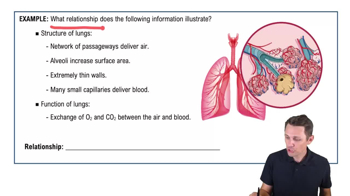
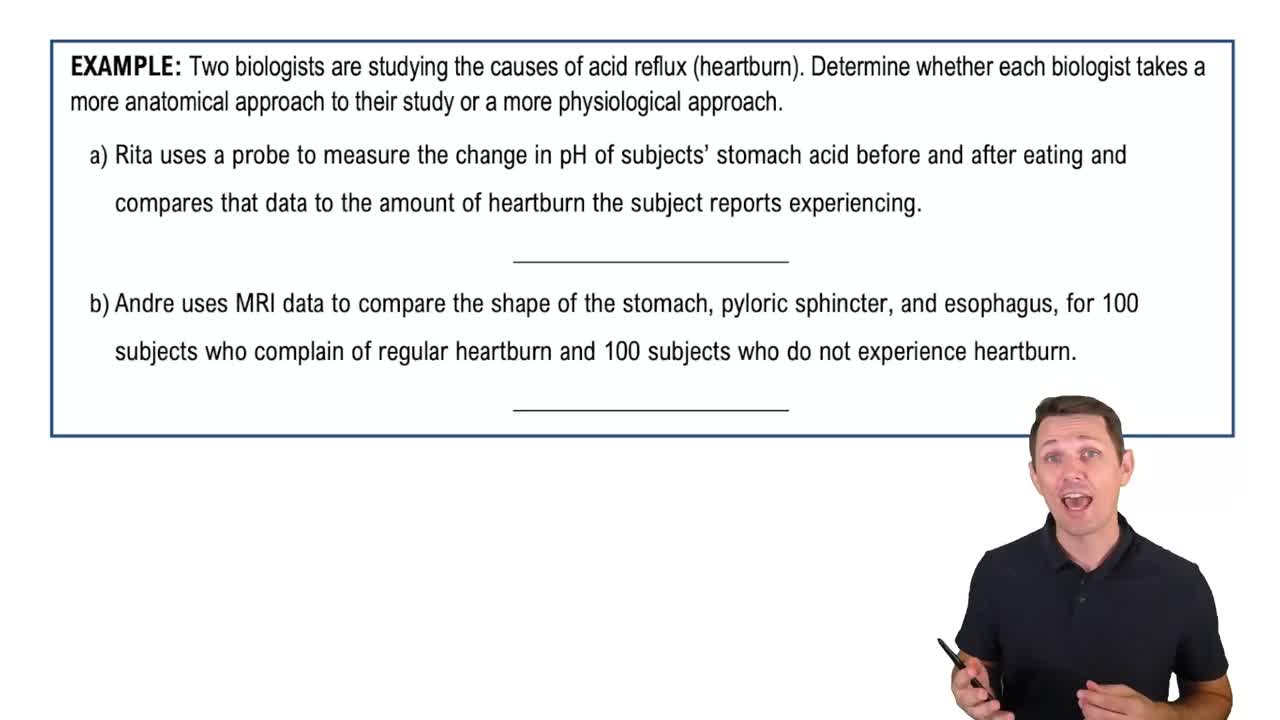
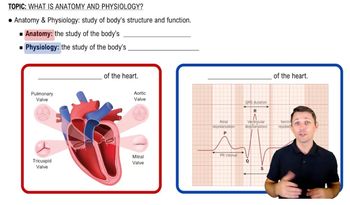
Anatomy is the study of the structure of body parts and their relationships to one another.
Gross/macroscopic, regional, systemic, surface, microscopic (cytology, histology), developmental (embryology), pathological, and radiographic anatomy.
Physiology is the study of the function of the body and its parts.
Function depends on structure; e.g., sharp incisors are ideal for cutting because of their shape.
Chemical, cellular, tissue, organ, organ system, and organismal levels.
Maintaining boundaries, movement, responsiveness, digestion, metabolism, excretion, reproduction, and growth.
Nutrients, oxygen, water, normal body temperature, and appropriate atmospheric pressure.
Body's ability to maintain a dynamic internal equilibrium despite external changes.
Receptor (senses stimulus), afferent pathway, control center, efferent pathway, effector (produces response).
Negative feedback reverses a stimulus to maintain homeostasis; positive feedback amplifies a stimulus, often causing imbalance.
Standing erect, feet flat, arms at sides, palms facing forward.
Vertical plane dividing the body into right and left sections; midsagittal divides equally.
Contains the cranial cavity (brain) and vertebral/spinal cavity (spinal cord).
Thoracic cavity (pleural cavities for lungs, mediastinum with pericardial cavity for heart) and abdominopelvic cavity (abdominal and pelvic cavities).
Double-layered membranes that reduce friction between organs and cavity walls by secreting serous fluid.
Epithelial, connective, muscle, and nervous tissues.
Tightly packed cells, avascular, polarity with apical and basal surfaces, supported by basement membrane.
Tight junctions (impermeable), desmosomes (anchoring), and gap junctions (communication).
Passive transport requires no ATP and moves substances down concentration gradients; active transport requires ATP and moves substances against gradients.
Movement of water across a membrane from high to low water concentration.
Active transport pump that moves 3 Na+ ions out and 2 K+ ions into the cell to maintain resting membrane potential.
Powerhouse of the cell; produces ATP through cellular respiration.
Sites of protein synthesis; contain ribosomal RNA.
Cell division producing two daughter cells; phases include prophase, metaphase, anaphase, and telophase.
Process of making mRNA from a DNA template in the nucleus.
Synthesizing a protein from mRNA at the ribosome.
Skeletal (striated, voluntary), smooth (nonstriated, involuntary), and cardiac (striated, involuntary).
Ground substance, fibers (collagen, elastic, reticular), and cells (fibroblasts, chondroblasts, osteoblasts, hematopoietic stem cells).
Supports cells and fibers, acts as a medium for nutrient diffusion.