 Back
Anatomy & Physiology Exam 2 Review: Bone Tissue, Skeletal System, and Joints
 3:56

Terms in this set (33)
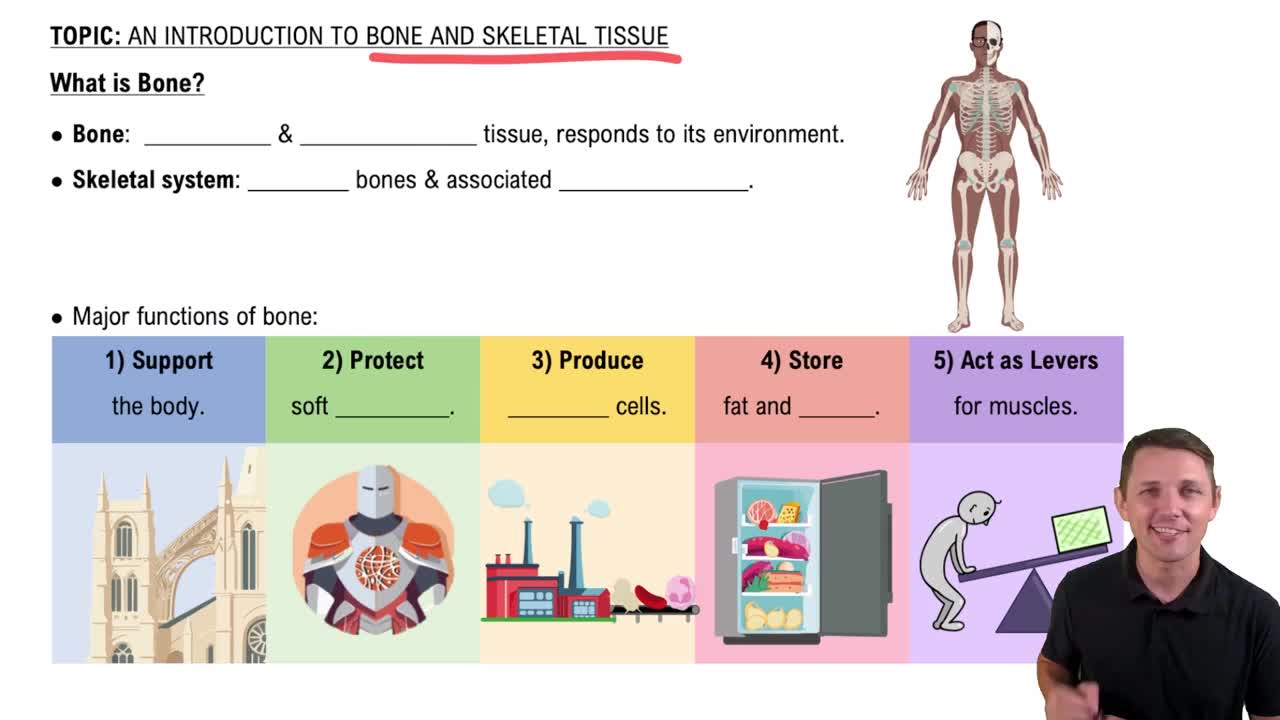
Support, protection, movement, mineral storage, and blood cell formation are the five main functions of bones.
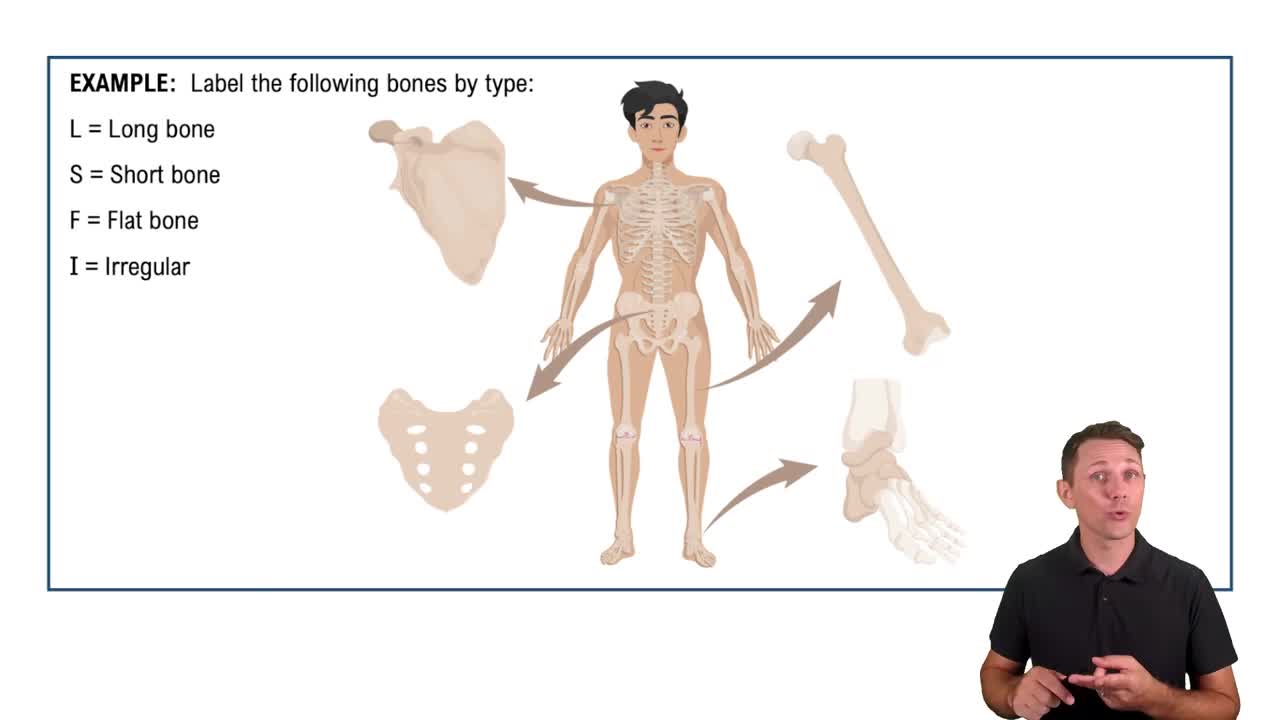
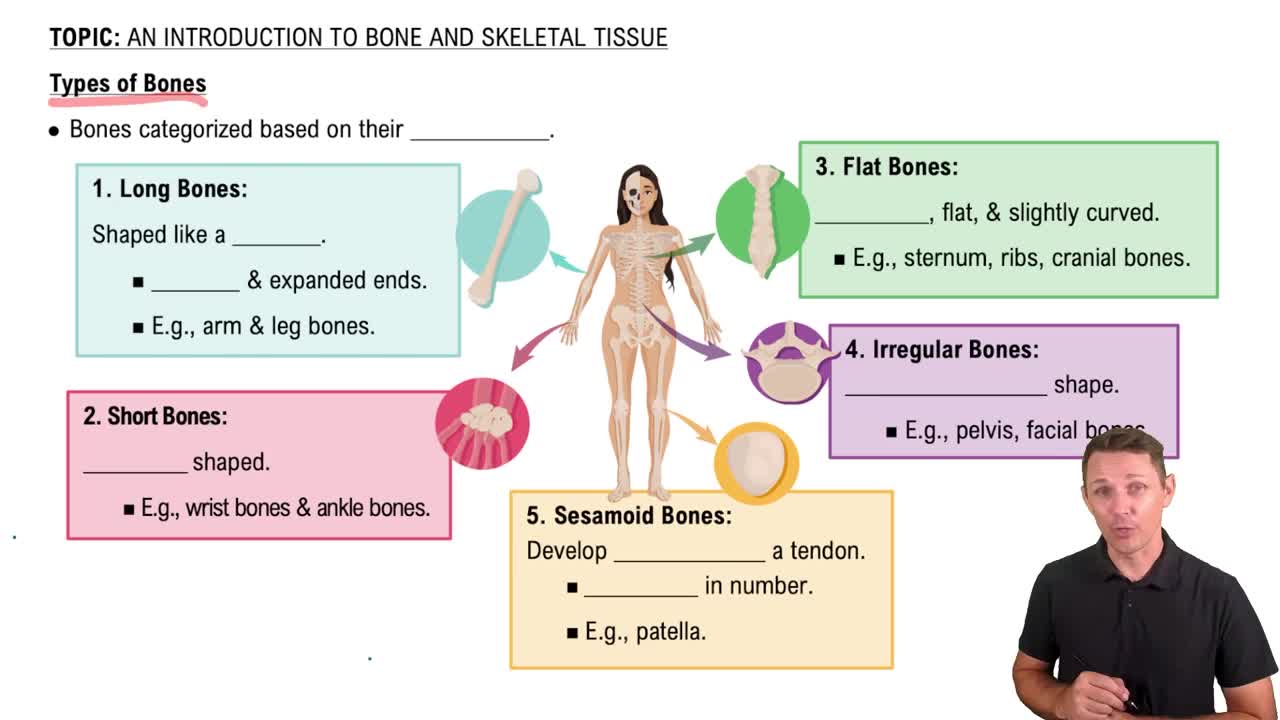
Bones are classified by shape into long, short, flat, irregular, and sesamoid bones.
Bones are organs because they contain multiple tissue types including bone tissue, cartilage, blood vessels, and nerves.
Bone markings are surface features like projections, depressions, and openings that serve as attachment points or passageways for vessels and nerves.
Compact bone is dense and provides strength; spongy bone is porous and houses marrow for blood cell production.
Includes diaphysis (shaft), epiphyses (ends), metaphysis, medullary cavity, periosteum, and endosteum.
Osteoblasts build bone, osteocytes maintain bone, osteoclasts resorb bone, and osteogenic cells are stem cells.
Found in red bone marrow within spongy bone of flat bones and epiphyses of long bones.
Hematopoiesis is the process of blood cell formation occurring in red bone marrow.
Includes osteons (Haversian systems), Haversian canals, lacunae, canaliculi, and lamellae.
Bone matrix is made of organic components (collagen) and inorganic minerals (hydroxyapatite).
Bone develops directly from mesenchymal tissue, forming flat bones like the skull.
Bone develops by replacing hyaline cartilage, typical for long bones with primary and secondary ossification centers.
Interstitial growth increases length; appositional growth increases thickness.
Continuous process of bone resorption by osteoclasts and bone deposition by osteoblasts to maintain strength and calcium balance.
Parathyroid hormone (chief), calcitonin, and calcitriol regulate blood calcium levels.
Includes hematoma formation, fibrocartilaginous callus, bony callus formation, and bone remodeling.
Include simple, compound, comminuted, greenstick, spiral, and impacted fractures.
Includes skull, vertebral column, and thoracic cage.
Protect the brain, form facial structure, and provide attachment for muscles.
Formed by frontal, sphenoid, ethmoid, and maxillary bones.
Contains the lacrimal sac for tear drainage.
It does not articulate with any other bone and supports the tongue.
Cervical, thoracic, lumbar, sacral, and coccygeal regions.
Consists of a nucleus pulposus surrounded by an annulus fibrosus.
When the nucleus pulposus protrudes through the annulus fibrosus, compressing nerves.
Includes thoracic vertebrae, ribs, and sternum.
Consists of the clavicle and scapula.
Supports upper limbs and allows a wide range of motion.
Six types: plane, hinge, pivot, condyloid, saddle, and ball-and-socket.
Include gliding, angular, rotation, flexion, extension, abduction, adduction, inversion, eversion, and opposition.
A fluid-filled sac that reduces friction between tissues near joints.
Include sprains, dislocations, and arthritis.