 Back
Anatomy & Physiology Exam 2 Study Guide
 3:56

Terms in this set (24)
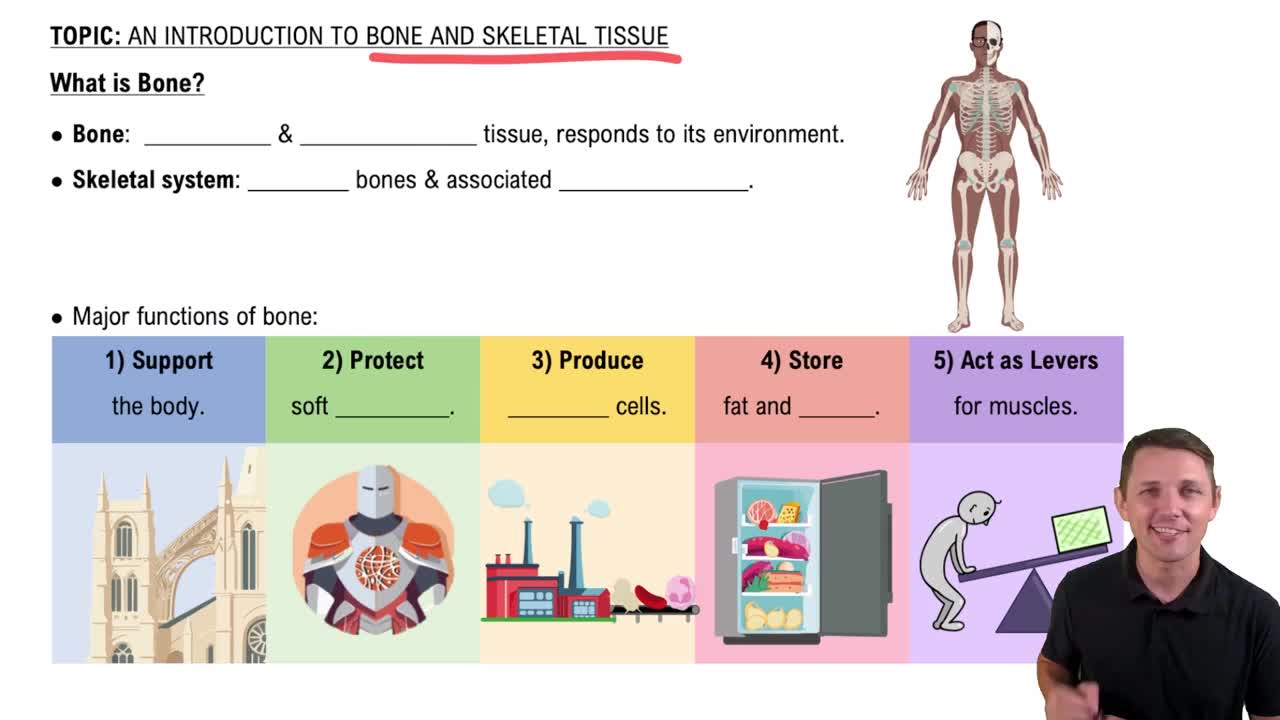
The skeletal system provides support, protection, movement, mineral storage, blood cell production, and energy storage.
The skeletal system includes bones, cartilage, and ligaments.
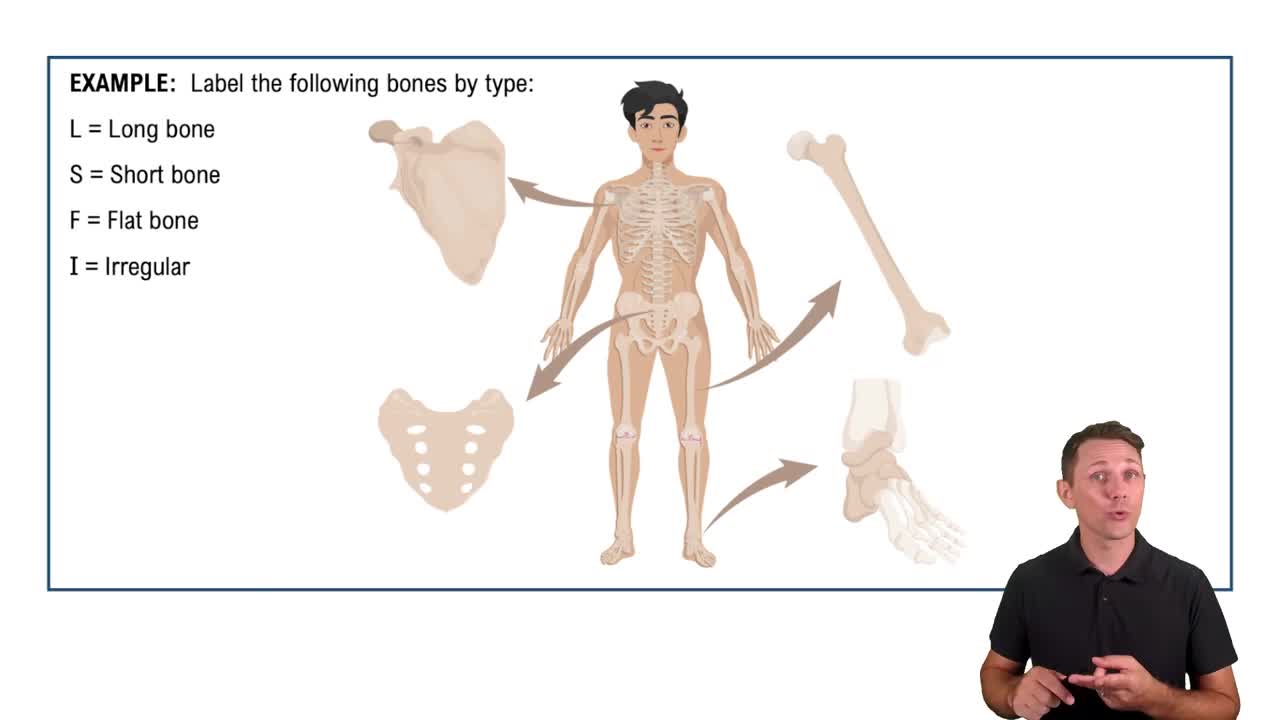
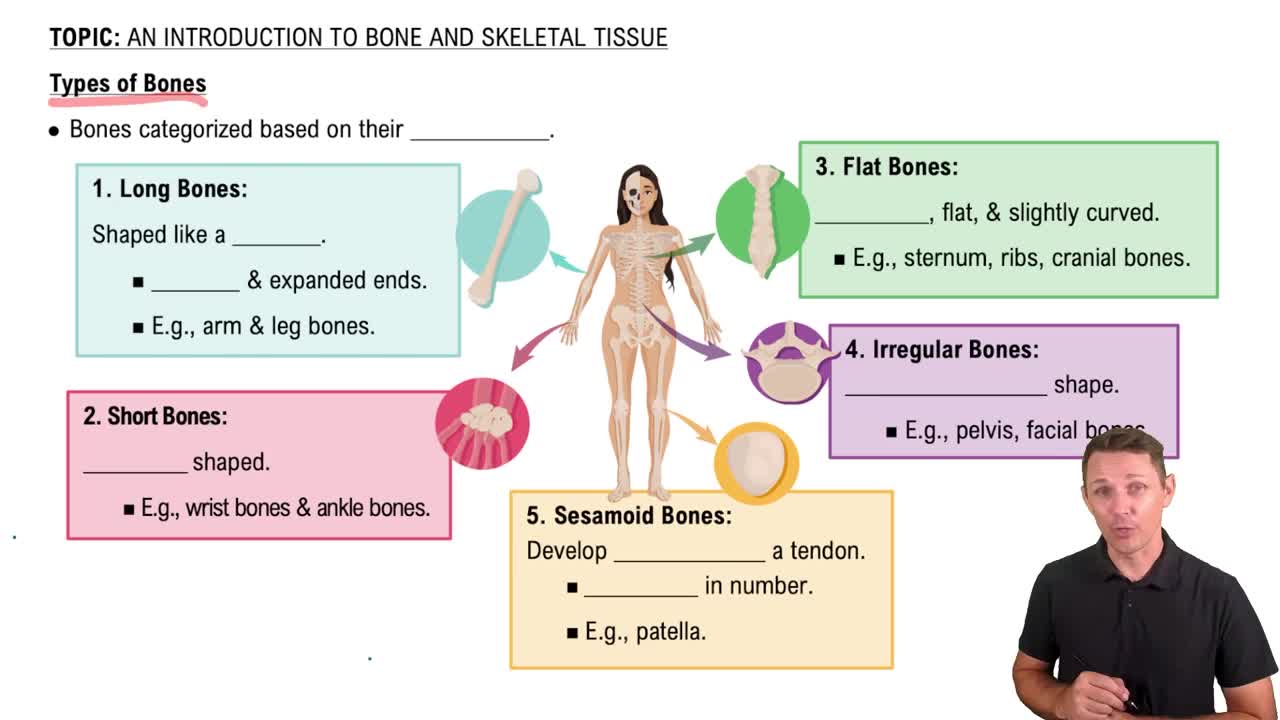
Bones are classified as long, short, flat, or irregular.
The axial skeleton includes the skull, vertebral column, and rib cage; the appendicular skeleton includes limbs and girdles.
1. Cartilage model forms
2. Cartilage calcifies
3. Primary ossification center forms
4. Secondary ossification centers form
5. Bone replaces cartilage
6. Epiphyseal plate ossifies
Examples include nutrition (e.g., calcium, vitamin D) and hormones (e.g., growth hormone, thyroid hormone).
Conditions include rickets (vitamin D deficiency), osteoporosis, and arthritis.
1. Hematoma formation
2. Fibrocartilaginous callus formation
3. Bony callus formation
4. Bone remodeling
Includes decreased bone density, joint stiffness, and reduced calcium absorption.
Includes fibrous (suture, syndesmosis, gomphosis), cartilaginous (symphysis, synchondrosis), and synovial joints.
Includes synarthrosis (immovable), amphiarthrosis (slightly movable), and diarthrosis (freely movable) joints.
Movements include flexion/extension, abduction/adduction, and rotation.
Examples: ball & socket (shoulder, hip), hinge (knee, elbow, fingers).
Functions include movement, posture maintenance, heat production, and joint stabilization.
From smallest to largest: muscle fiber, endomysium, fascicle, perimysium, muscle, epimysium.
Includes Z discs, actin (thin) filaments, myosin (thick) filaments, A band, and I band.
Includes axon terminal, synaptic cleft, and motor end plate.
1. Nerve impulse triggers acetylcholine release
2. Action potential generated on muscle fiber
3. Calcium released from sarcoplasmic reticulum
4. Cross-bridge cycling occurs
5. Muscle fiber contracts
Twitch: single muscle contraction
Unfused tetanus: partial relaxation between stimuli
Fused tetanus: no relaxation, sustained contraction
Wave summation: increased tension from repeated stimuli
Isotonic: muscle changes length (concentric shortens, eccentric lengthens)
Isometric: muscle length stays the same, tension changes
Agonist: prime mover
Synergist: assists agonist
Antagonist: opposes agonist
Origin: fixed attachment
Insertion: movable attachment
ATP is generated by creatine phosphate, anaerobic glycolysis, and aerobic respiration.
Fast fibers: quick, fatigue fast, white
Slow fibers: slow, fatigue resistant, red
Aerobic endurance: sustained by oxygen
Anaerobic endurance: short bursts without oxygen
Skeletal: voluntary, striated, multinucleated
Cardiac: involuntary, striated, intercalated discs
Smooth: involuntary, non-striated, spindle-shaped