 Back
Anatomy & Physiology Exam 3 Study Guide
 02:40

Terms in this set (27)
Chondroblasts are cells that produce cartilage matrix and are responsible for cartilage growth.
The epiphyseal plate is the growth plate where new bone is produced during childhood and adolescence, allowing bones to lengthen.
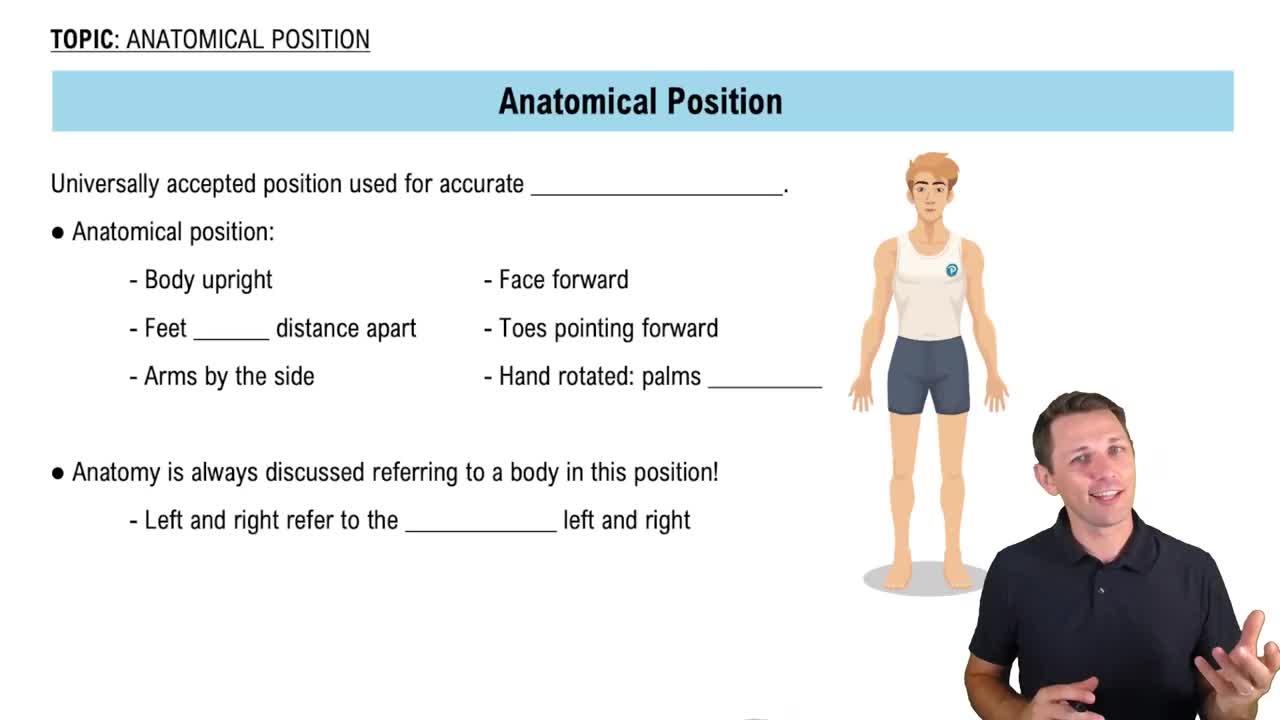
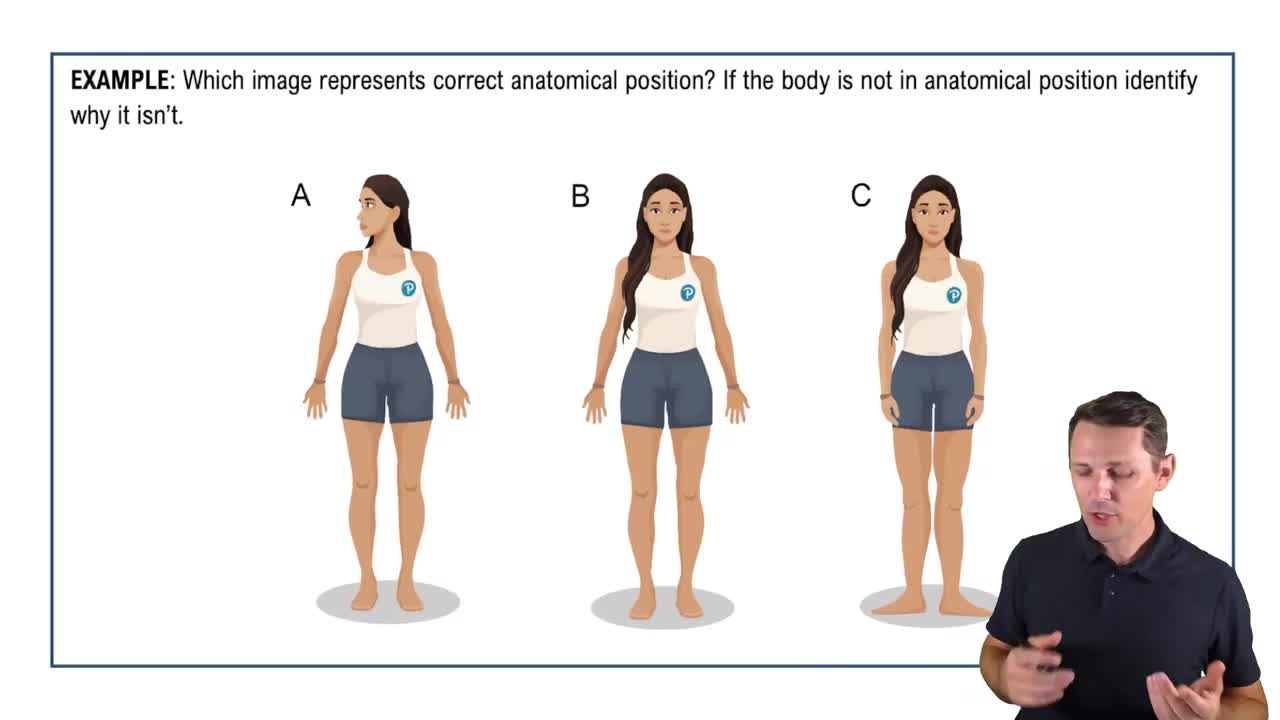
In the anatomical position, the body stands upright, facing forward, arms at the sides with palms facing forward, and feet flat and directed forward.
Osteoporosis is a condition of decreased bone density leading to fragile bones. Prevention includes adequate calcium, vitamin D, weight-bearing exercise, and avoiding smoking.
Hydroxyapatite is the mineral component of bone, mainly calcium phosphate crystals, that provides hardness and strength.
Spongy bone consists of a network of trabeculae (thin plates) with spaces filled with bone marrow, making it lighter and providing support.
The axial skeleton includes the skull, vertebral column, ribs, and sternum, supporting the central axis of the body.
Osteoclasts break down bone tissue, while osteoblasts build new bone by producing matrix and facilitating mineralization.
A typical bone has a dense outer layer (compact bone) and inner spongy bone. The Haversian canal is a central channel in osteons containing blood vessels and nerves.
The femur is the largest and strongest bone in the human body.
The shoulder joint stability is provided by the rotator cuff muscles, ligaments, and the shallow glenoid cavity.
Parathyroid hormone increases blood calcium by stimulating osteoclasts to break down bone and releasing calcium into the bloodstream.
Calcitonin lowers blood calcium levels by inhibiting osteoclast activity and promoting calcium deposition in bone.
The hyoid bone is unique because it does not articulate with any other bone and supports the tongue and neck muscles.
The lacrimal bone is a small, thin bone forming part of the medial wall of the orbit, containing the lacrimal sac for tear drainage.
The periosteum is a dense connective tissue membrane covering the outer surface of bones, containing nerves and blood vessels for nourishment and repair.
Bone formation occurs via intramembranous or endochondral ossification, where osteoblasts produce bone matrix that mineralizes to form bone.
Flexion decreases the angle between bones, while extension increases the angle, straightening the joint.
The pituitary gland sits in the sella turcica, a depression of the sphenoid bone at the base of the skull.
The sphenoid bone is a butterfly-shaped bone at the base of the skull that helps form the floor of the cranium and the orbits.
Compact bone is dense and solid, forming the outer layer of bones, while spongy bone is porous and found inside bones, containing marrow.
The vertebral column has five regions: cervical, thoracic, lumbar, sacrum, and coccyx.
Bone develops through ossification, where cartilage is replaced by bone tissue during growth and healing.
Cartilage is nourished by diffusion of nutrients from surrounding blood vessels since it lacks its own blood supply.
Increased lordosis is an exaggerated inward curve of the lumbar spine; scoliosis is a lateral curvature of the spine.
The hearing and equilibrium apparatus is located in the inner ear within the temporal bone.
Wolff’s law states that bone remodels and adapts in response to the mechanical stresses placed on it.