 Back
BackAnatomy & Physiology Final Exam Key Concepts
 02:21
02:21
Terms in this set (30)
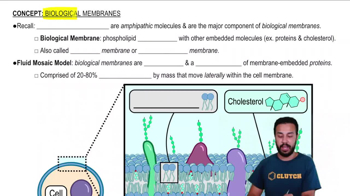
The plasma membrane is composed of a phospholipid bilayer, proteins, cholesterol, and carbohydrates that contribute to its structure and function.
Cell junctions include tight junctions, desmosomes, and gap junctions, which connect cells and facilitate communication or adhesion.
Primary active transport uses ATP to move molecules against their concentration gradient via transport proteins like the Na+/K+ pump.
RMP is the electrical potential difference across the membrane at rest, typically around -70 mV, maintained by ion gradients and membrane permeability.
ET is avascular, has tightly packed cells, exhibits polarity, and rests on a basement membrane.
Includes simple squamous, stratified squamous, cuboidal, columnar, and transitional epithelium, each with distinct functions and locations.
CT has abundant extracellular matrix, varying vascularity, and functions in support, protection, and binding tissues.
Includes loose CT, dense CT, cartilage, bone, and blood, each with unique structure and function.
The epidermis has five layers: stratum basale, stratum spinosum, stratum granulosum, stratum lucidum (only in thick skin), and stratum corneum.
The dermis consists of the papillary layer (loose CT) and the reticular layer (dense irregular CT).
Skin functions include protection, temperature regulation, sensation, vitamin D synthesis, and excretion.
Cartilage is avascular with chondrocytes in lacunae; types include hyaline, elastic, and fibrocartilage.
Bone provides support, protection, movement, mineral storage, blood cell production, and energy storage.
Bone has gross anatomy (diaphysis, epiphysis), microscopic anatomy (osteons), and chemical composition (organic matrix and mineral salts).
Process where bone develops by replacing hyaline cartilage, forming most bones of the body.
Bone develops directly from mesenchymal tissue, forming flat bones like the skull.
Bone remodeling involves osteoclasts resorbing bone and osteoblasts forming bone, regulated by hormones and mechanical stress.
Muscle types include skeletal, cardiac, and smooth muscle, each with distinct structure and control.
Skeletal muscle contains myofibrils, sarcoplasmic reticulum, and T tubules essential for contraction.
Includes neuromuscular junction activation, action potential generation, excitation-contraction coupling, and cross-bridge cycling.
Muscle contraction strength varies by frequency and strength of stimuli, allowing fine control of force.
Include number of muscle fibers recruited, fiber size, frequency of stimulation, and muscle length.
Neuroglia support neurons by maintaining homeostasis, forming myelin, and providing protection.
Neurons have a cell body, , and an axon for transmitting electrical signals.
Typically around -70 mV, established by ion gradients and selective permeability.
Rapid, temporary changes in membrane potential that propagate along neurons to transmit signals.
EPSPs depolarize the membrane, increasing likelihood of firing; IPSPs hyperpolarize, decreasing firing likelihood.
Sympathetic prepares body for fight or flight, parasympathetic promotes rest and digest functions.
Includes acetylcholine and norepinephrine as primary neurotransmitters.
Includes nicotinic, muscarinic, alpha, and beta adrenergic receptors.