Skip to main content
Anatomy & Physiology
My Course
Learn
Exam Prep
AI Tutor
Study Guides
Textbook Solutions
Flashcards
Explore
Try the app
My Course
Learn
Exam Prep
AI Tutor
Study Guides
Textbook Solutions
Flashcards
Explore
Try the app
Back
Anatomy & Physiology Foundations
You can tap to flip the card.
What is the primary goal of learning anatomy and physiology in healthcare?
You can tap to flip the card.
👆
What is the primary goal of learning anatomy and physiology in healthcare?
To understand medical terminology by dissecting medical terms and relating them to body systems.
Track progress
Control buttons has been changed to "navigation" mode.
1/29
Recommended videos
Guided course
06:54
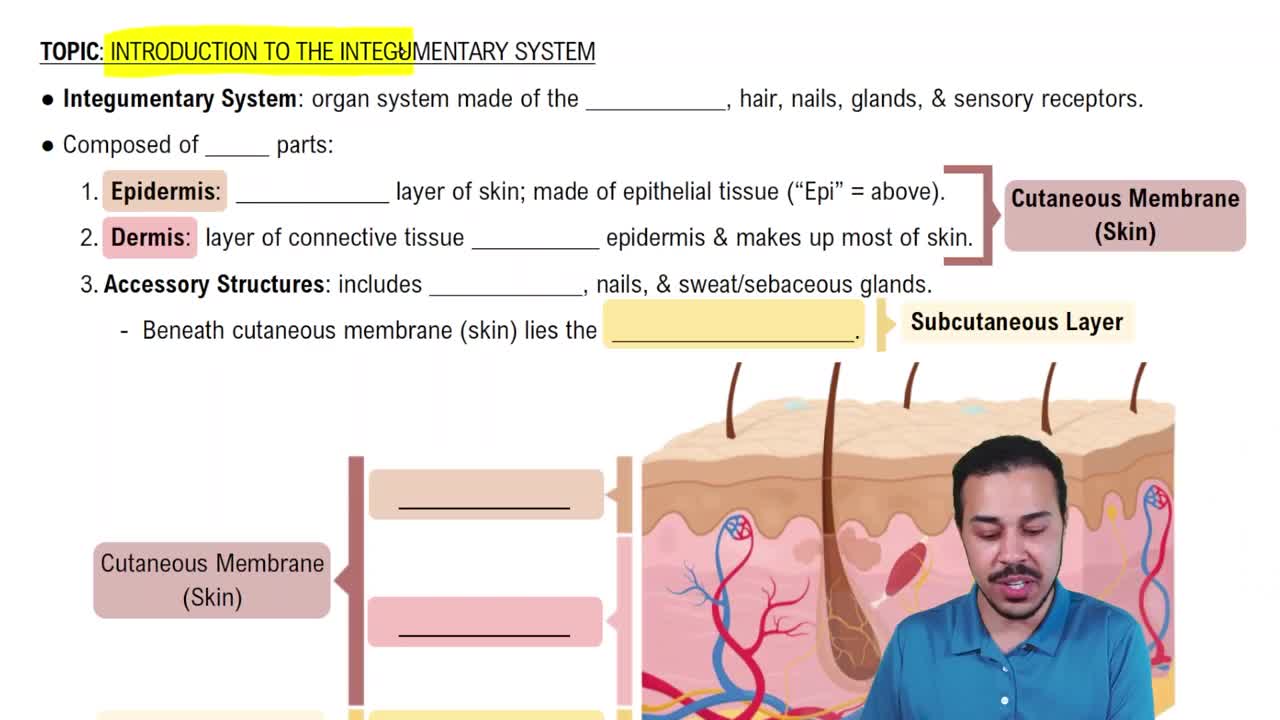
Introduction to the Integumentary System
24075
views
820
rank
3
comments
Guided course
03:40
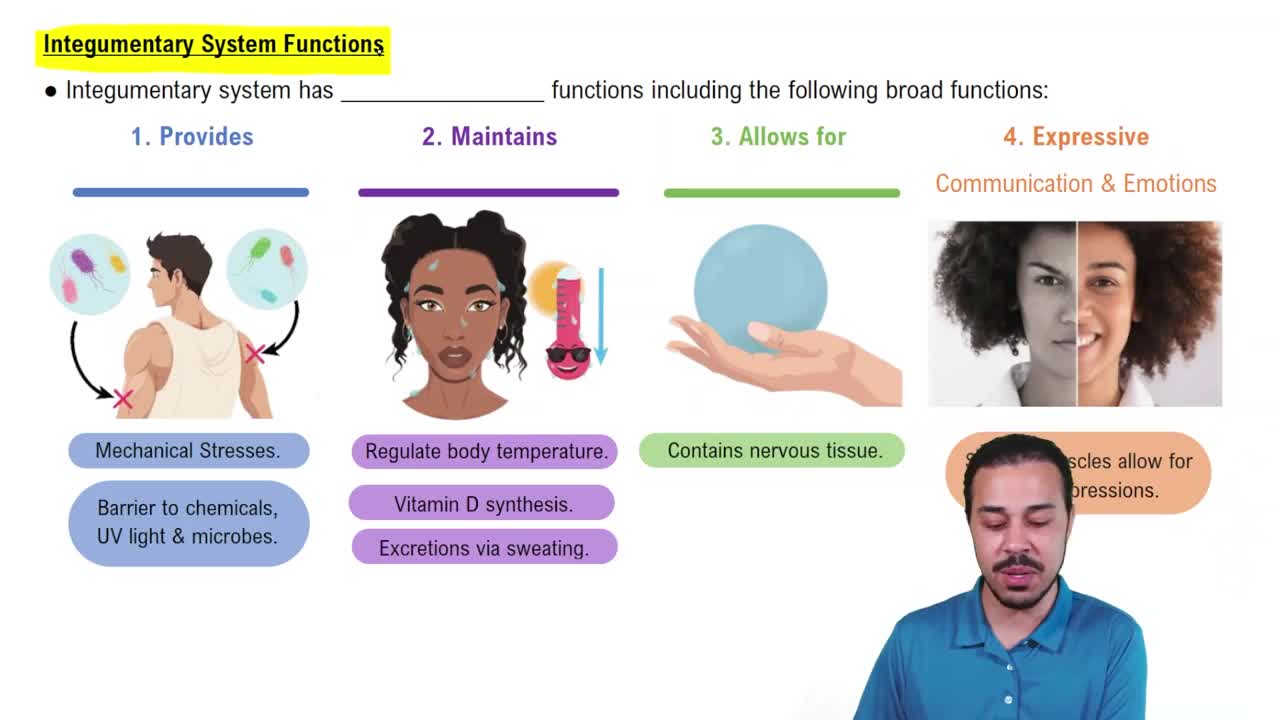
Integumentary System Functions
15631
views
394
rank
1
comments
Guided course
02:47
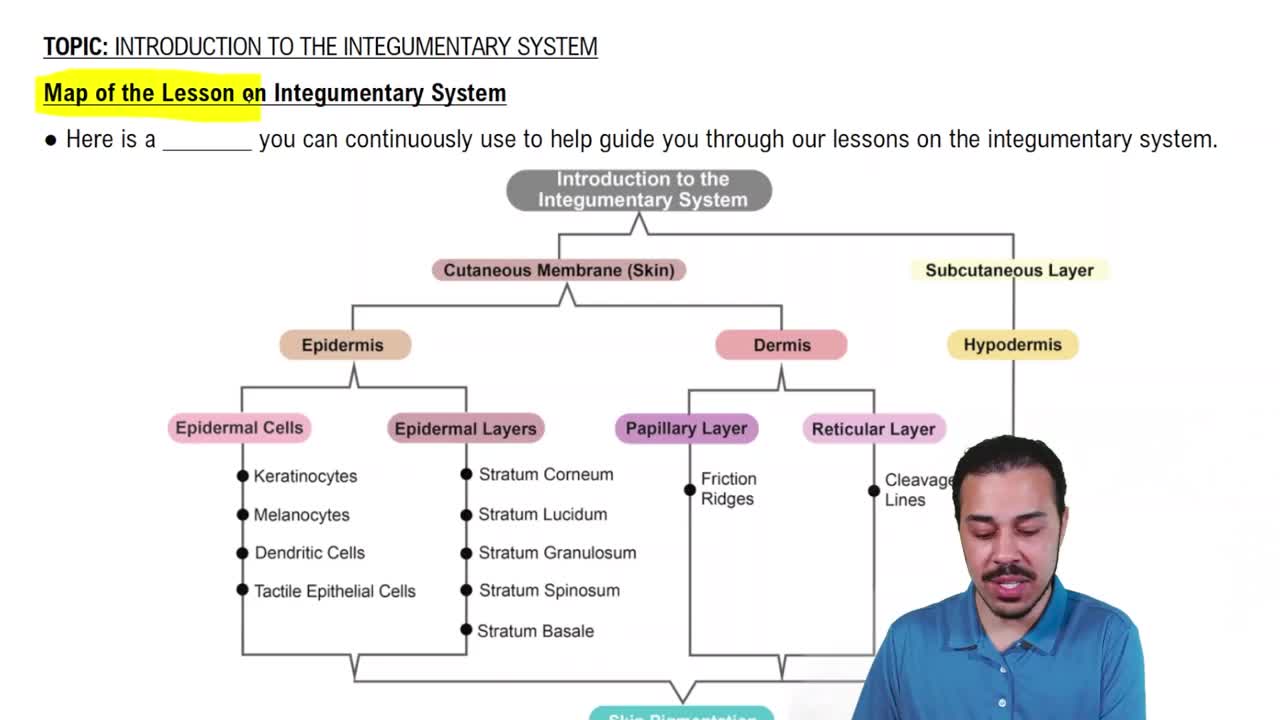
Map of the Lesson on Integumentary System
13779
views
649
rank
6
comments
Terms in this set (29)
Hide definitions
What is the primary goal of learning anatomy and physiology in healthcare?
To understand medical terminology by dissecting medical terms and relating them to body systems.
What are the four main parts of a medical term?
Prefix, word root, suffix, and combining vowel.
What does the word root 'cardi' refer to?
The heart, part of the cardiovascular system.
What is the function of the integumentary system?
Protects the body, houses nerve receptors, secretes fluids, and regulates temperature.
Name the three main layers of the skin.
Epidermis, dermis, and subcutaneous tissue.
What are the two types of glands in the skin?
Sebaceous (oil) glands and sudoriferous (sweat) glands.
What are the primary functions of the muscular system?
Movement of bones, protection of organs, and heat production.
How many bones compose the adult human skeletal system?
270 bones.
What are the two subsystems of the skeletal system?
Axial skeleton (skull and spinal column) and appendicular skeleton (other bones).
What is the primary function of the cardiovascular system?
To pump blood, delivering oxygen and nutrients to cells and removing waste.
What is the role of the SA node in the heart?
It is the normal pacemaker that initiates electrical impulses causing heart contractions.
Name the three types of formed elements in blood.
Erythrocytes (red blood cells), leukocytes (white blood cells), and platelets.
What is the primary function of the lymphatic system?
To filter blood, remove pathogens, and support the immune system.
What organs are part of the lymphatic system?
Lymph nodes, spleen, thymus gland, and tonsils.
What is the main function of the respiratory system?
To bring oxygen into the body and remove carbon dioxide.
Name the three parts of the small intestine.
Duodenum, jejunum, and ileum.
What is the primary function of the digestive system?
To digest food into nutrients for absorption and energy.
What organs are included in the urinary system?
Kidneys, ureters, urinary bladder, and urethra.
What is the main function of the urinary system?
To filter blood, form urine, and eliminate waste.
What are the main organs of the female reproductive system?
Uterus, fallopian tubes, ovaries, vagina, vulva, and breasts.
What hormones regulate the female menstrual cycle?
Follicle-stimulating hormone (FSH), luteinizing hormone (LH), estrogen, and progesterone.
What is the primary function of the male reproductive system?
To produce sperm cells and male sex hormones.
Name the main glands of the endocrine system.
Pituitary, pineal, thyroid, parathyroid, adrenal, ovaries, testes, and pancreas (Islets of Langerhans).
What is the role of the hypothalamus in the endocrine system?
It links the nervous and endocrine systems and controls pituitary gland hormone release.
What is the primary function of the nervous system?
To receive, process, and respond to electrical impulses controlling body functions.
What are the three divisions of the ear?
External ear, middle ear, and inner ear.
What is the function of the cochlea in the ear?
To convert sound vibrations into nerve impulses for hearing.
What are the main structures of the eye involved in vision?
Cornea, pupil, lens, retina (rods and cones), and optic nerve.
What is the function of rods and cones in the retina?
Rods detect dim light for night vision; cones detect bright light and color.
 BackBack
 06:54