 Back
BackAnatomy & Physiology Fundamentals
 3:06
3:06
Terms in this set (29)
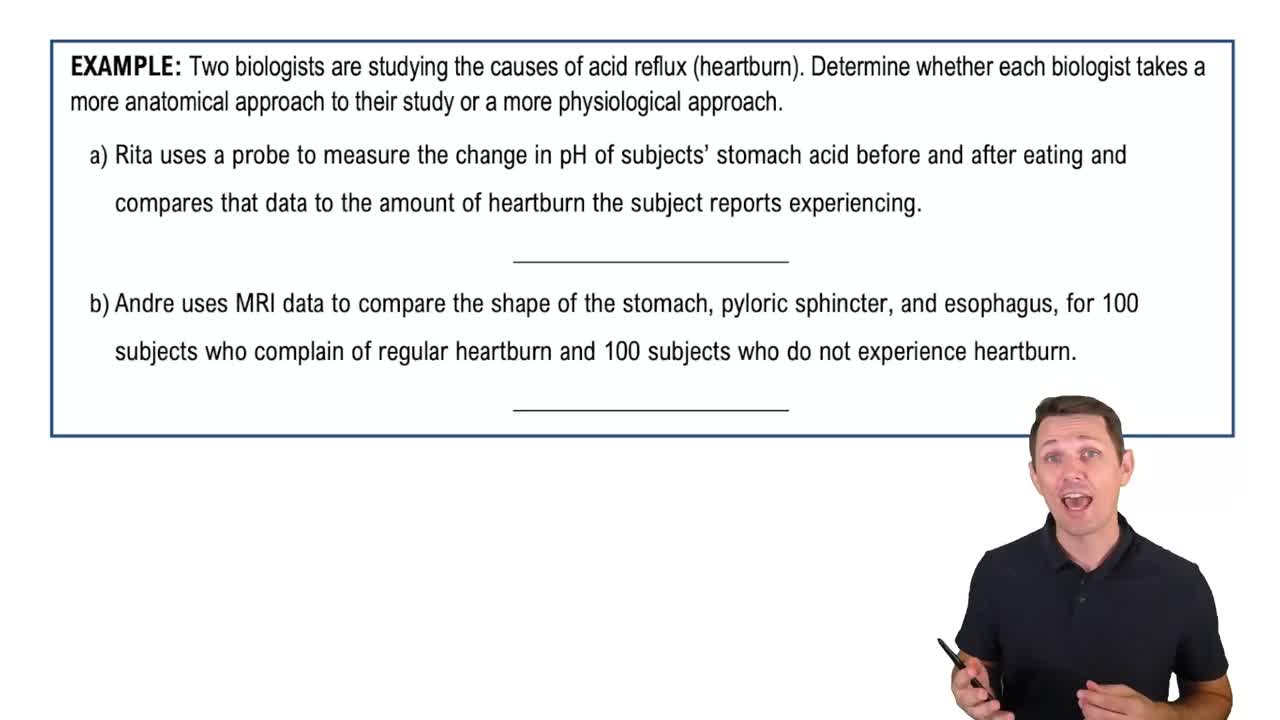
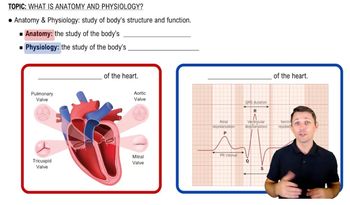
Anatomy is the study of the structures of the body and the relationships among those structures.
Physiology is the study of how body structures function and perform their roles.
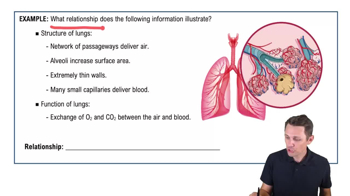
Structure determines function; the way a body part is structured allows it to perform its specific function.
Chemical → Cellular → Tissue → Organ → Organ System → Organism
Epithelial, connective, muscle, and nervous tissue.
An organ consists of two or more tissue types working together to perform specific functions.
Organization, metabolism, responsiveness, movement, development, growth, and reproduction.
Maintaining boundaries, movement, responsiveness, digestion, metabolism, excretion, reproduction, and growth.
Nutrients, oxygen, water, normal body temperature, and appropriate atmospheric pressure.
Standing upright, facing forward, head level, eyes forward, feet together or slightly apart, arms at sides with palms facing forward.
Toward the head or upper part of the body.
Away from the head or toward the lower part of the body.
Anterior means toward the front; posterior means toward the back of the body.
Medial means toward the midline; lateral means away from the midline.
Proximal means closer to the point of attachment; distal means farther from the point of attachment.
Axial region (head, neck, trunk) and appendicular region (limbs and attachments).
Dorsal body cavity (cranial and vertebral cavities) and ventral body cavity (thoracic and abdominopelvic cavities).
Heart, lungs, trachea, esophagus, and major blood vessels.
They line closed body cavities, cover organs, produce serous fluid to reduce friction during organ movement.
Pleura (lungs), pericardium (heart), and peritoneum (abdominopelvic organs).
Sagittal (left/right), frontal/coronal (front/back), transverse/horizontal (top/bottom), and oblique (angled).
Right Upper Quadrant (RUQ), Left Upper Quadrant (LUQ), Right Lower Quadrant (RLQ), Left Lower Quadrant (LLQ).
Integumentary, skeletal, muscular, nervous, endocrine, cardiovascular, lymphatic/immune, respiratory, digestive, urinary, reproductive.
Protection, temperature regulation, sensation, vitamin D production, and waste elimination through sweat.
Support, protection, muscle attachment, movement, blood cell production, mineral storage, and energy storage.
Skeletal muscle, cardiac muscle, and smooth muscle.
Central Nervous System (brain and spinal cord) and Peripheral Nervous System (nerves and ganglia).
By releasing hormones into the bloodstream that regulate growth, metabolism, reproduction, and other processes.
To transport blood carrying oxygen, carbon dioxide, nutrients, hormones, and wastes throughout the body.