 Back
BackAnatomy & Physiology Fundamentals
 3:06
3:06
Terms in this set (27)
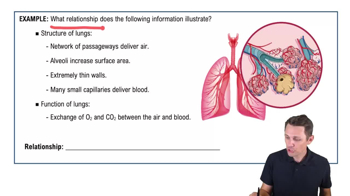
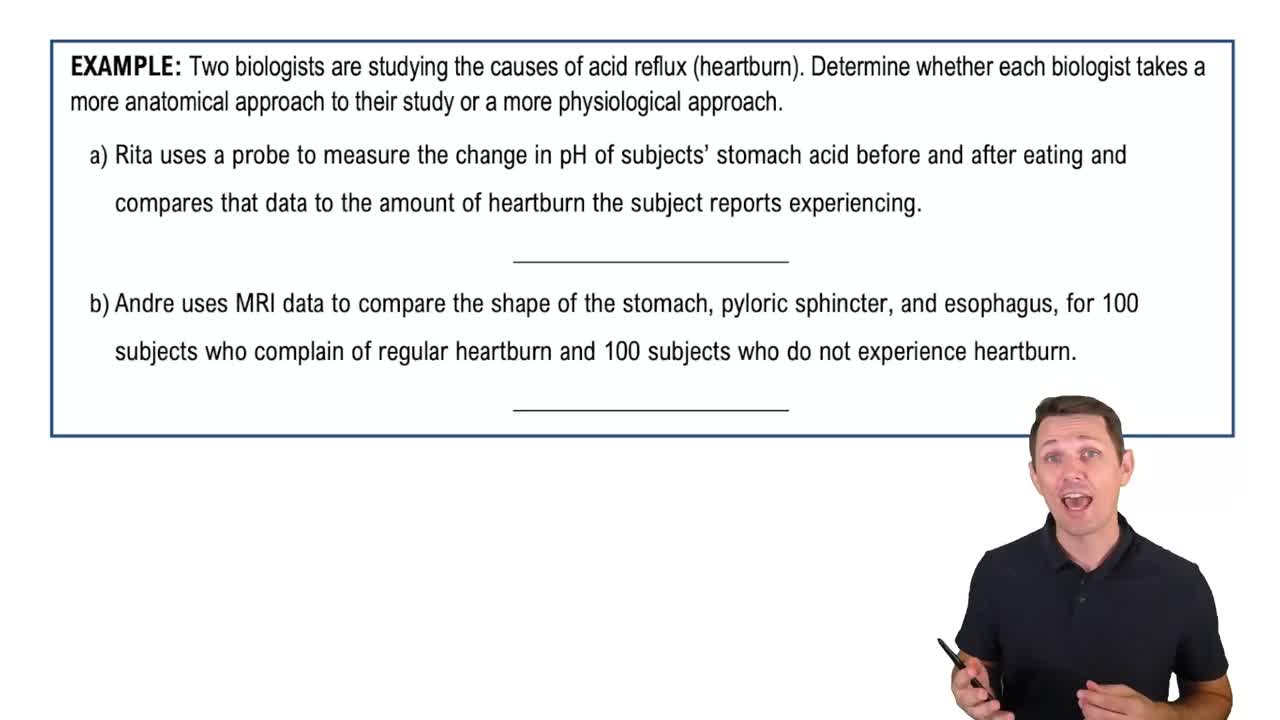
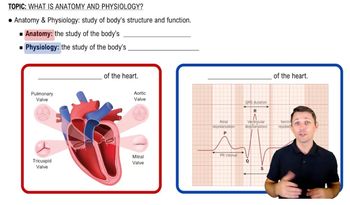
Anatomy is the study of the structures of the body, including their composition and location.
Physiology is the study of the functions of anatomical structures and how they work.
The relationship is fundamental: the structure of a body part determines its function, e.g., skeletal muscle fibers are long and striated to enable contraction and movement.
Chemical, Cellular, Tissue, Organ, Organ System, Organism levels.
Atoms and molecules that form the chemical foundation of the body.
Cells, the smallest living units, composed of molecules.
Groups of similar cells working together to perform specific functions.
Structures composed of two or more tissue types working together.
Groups of organs that perform related functions.
Protection, temperature regulation, and sensory information.
Support, protection, mineral storage, and blood cell formation.
Brain, spinal cord, nerves, sense organs; responsible for immediate response to stimuli and coordination.
Transport of nutrients, gases, wastes, and temperature regulation.
Maintenance of a stable internal environment despite external and internal changes.
Receptor (detects stimulus), Control Center (processes info), Effector (carries out response).
The effector's response negates the stimulus to restore balance, e.g., body temperature regulation.
The response amplifies the original stimulus, moving the body away from homeostasis temporarily, e.g., childbirth.
Standard reference: standing upright, feet forward, arms at sides, palms facing forward.
Frontal (coronal), Sagittal, and Transverse (horizontal) planes.
Thoracic cavity (lungs, heart) and abdominopelvic cavity (digestive, reproductive organs).
Membranes lining body cavities and covering organs; parietal layer lines cavity, visceral layer covers organ.
Defense against infection and fluid return to the bloodstream.
Medial means toward the midline; Lateral means away from the midline.
Proximal is closer to the point of attachment; Distal is farther from it.
Superficial means near the body surface; Deep means farther from the surface.
They divide the abdomen into four parts (RUQ, LUQ, RLQ, LLQ) to localize pain or disease.
A name derived from a person, often replaced by descriptive terms, e.g., Achilles tendon is now calcaneal tendon.