 Back
Anatomy & Physiology Fundamentals Ch 1 & Ch 2
 04:21

Terms in this set (28)
Anatomy is the study of the structure of body parts and their relationships to one another.
Physiology is the study of the function of the body and how body parts work to carry out life-sustaining activities.
Function always reflects structure; what a structure can do depends on its specific form.
Chemical, Cellular, Tissue, Organ, Organ system, Organismal levels.
Integumentary, Skeletal, Muscular, Nervous, Endocrine, Cardiovascular, Lymphatic, Respiratory, Digestive, Urinary, Reproductive.
External body covering that protects deeper tissues from injury (e.g., skin, nails, hair).
Fast-acting control system that responds to internal and external changes by activating muscles and glands.
Maintenance of relatively stable internal conditions despite continuous environmental changes; a dynamic state of equilibrium.
Receptor (sensor), Control center, and Effector.
Response reduces or shuts off the original stimulus, returning the variable to its set point.
Enhancement of labor contractions by oxytocin or platelet plug formation during blood clotting.
Maintaining boundaries, movement, responsiveness, digestion, metabolism, excretion, reproduction, and growth.
Contain carbon, hydrogen, and oxygen with hydrogen and oxygen in a 2:1 ratio.
Simple sugars and monomers of carbohydrates, containing 3 to 7 carbon atoms (e.g., glucose, ribose).
A molecule is two or more atoms bonded together; a compound is a molecule with two or more different kinds of atoms.
Triglycerides, phospholipids, steroids, and eicosanoids.
Glycerol backbone, two fatty acid tails (hydrophobic), and a phosphorus-containing head (hydrophilic).
Polymers of amino acids linked by peptide bonds; contain C, H, O, N, and sometimes S and P.
Most abundant inorganic compound; acts as a solvent, has high heat capacity, cushions organs, and participates in chemical reactions.
Ionic compounds that dissociate in water into cations and anions and conduct electrical current; essential for body functions.
All chemical reactions in body cells, including catabolism (breakdown) and anabolism (synthesis).
Sex is biological attributes based on chromosomes and hormones; gender is a psychosocial construct of behaviors and identities.
Returns leaked fluid to blood, disposes of debris, and houses immune cells for defense.
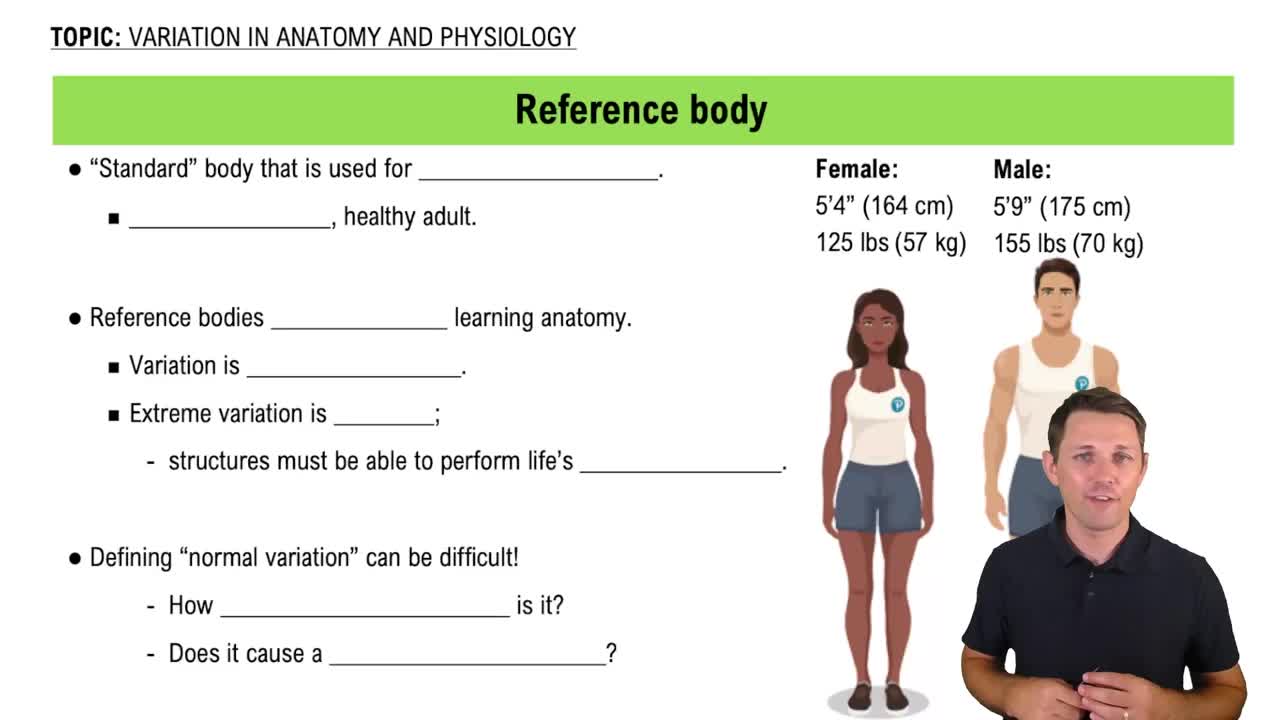
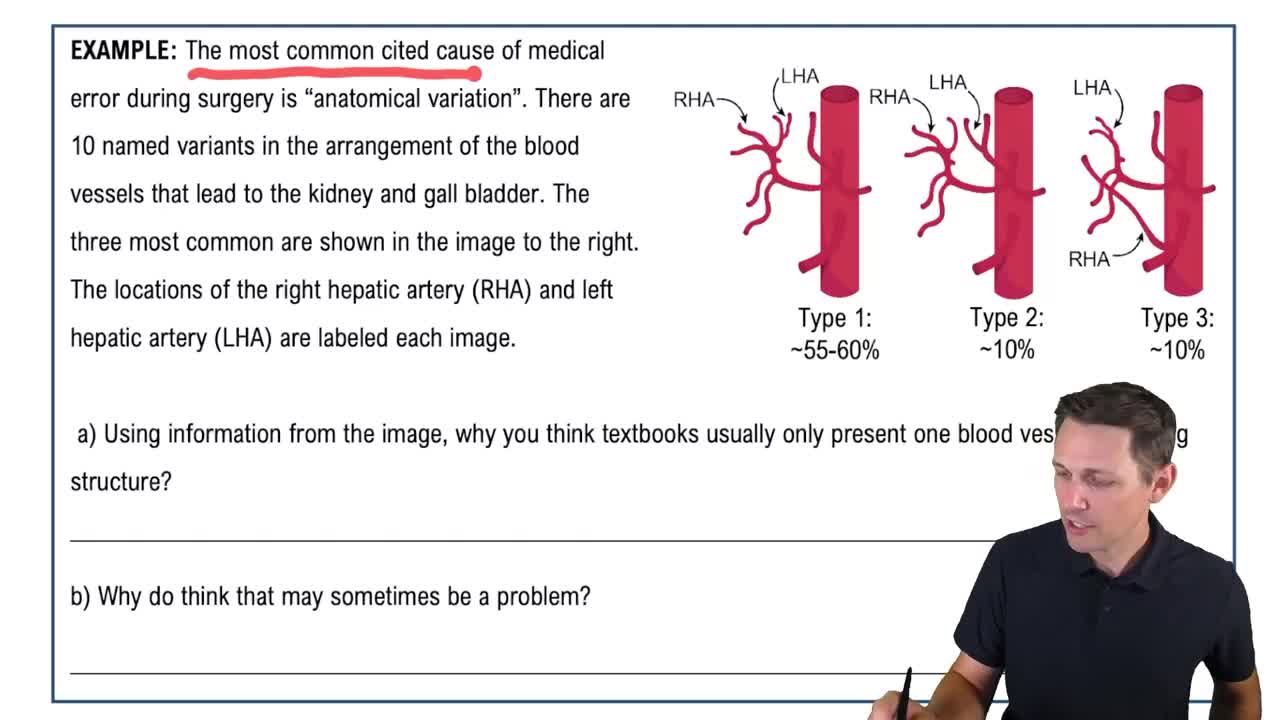
Humans vary slightly in anatomy; over 90% match textbook descriptions, but some structures may differ or be missing.
Observation, manipulation, palpation, auscultation, and medical imaging technologies like X-ray and MRI.
\((CH_2O)_n\), where n is the number of carbon atoms.
Essential for metabolic reactions to release energy from food; survival without oxygen is only a few minutes.
Eliminates nitrogenous wastes and regulates water, electrolyte, and acid-base balance of the blood.