Skip to main content
Anatomy & Physiology
My Course
Learn
Exam Prep
AI Tutor
Study Guides
Textbook Solutions
Flashcards
Explore
Try the app
My Course
Learn
Exam Prep
AI Tutor
Study Guides
Textbook Solutions
Flashcards
Explore
Try the app
Back
Anatomy & Physiology: Human Body Organization and Homeostasis
You can tap to flip the card.
What is the principle of complementarity of structure and function?
You can tap to flip the card.
👆
What is the principle of complementarity of structure and function?
Function always reflects structure; what a structure can do depends on its specific form.
Track progress
Control buttons has been changed to "navigation" mode.
1/22
Recommended videos
3:06
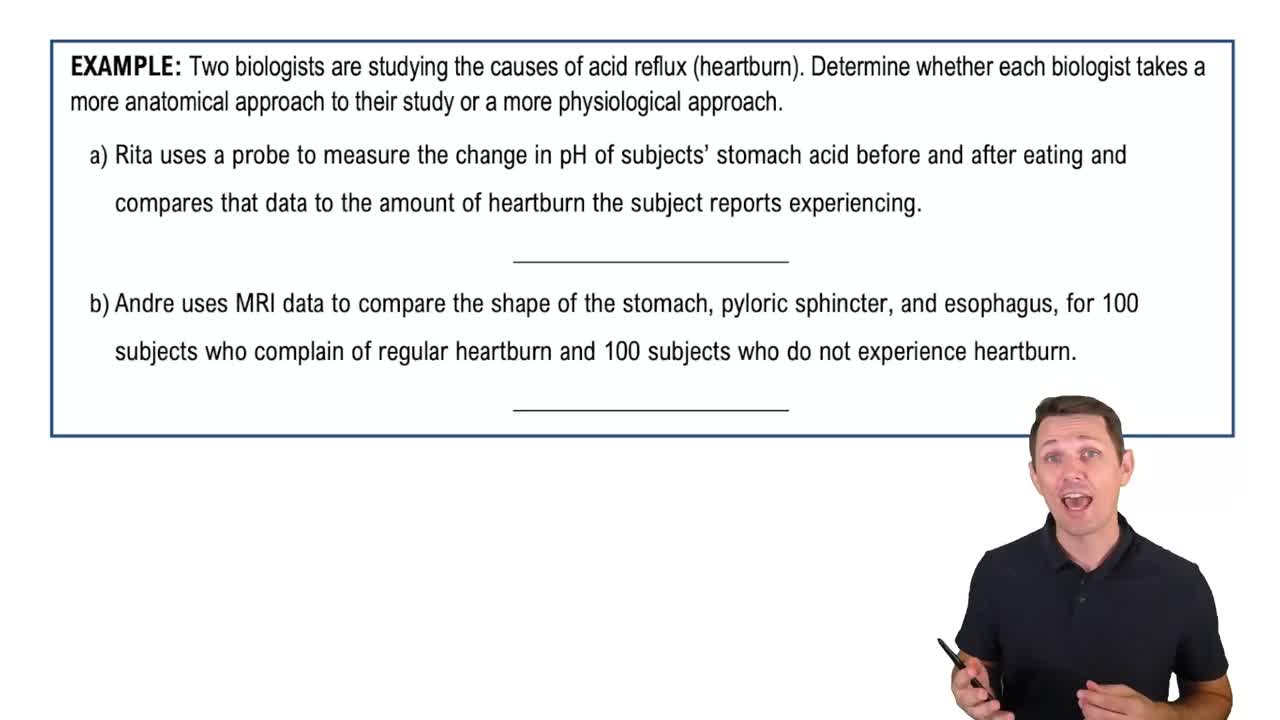
What is Anatomy & Physiology? Example 3
31537
views
739
rank
8
comments
01:58
What is Anatomy & Physiology? Example 2
42396
views
2367
rank
03:04
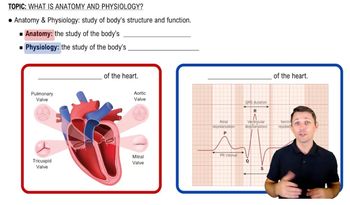
The Difference Between Anatomy and Physiology
83179
views
4028
rank
11
comments
Terms in this set (22)
Hide definitions
What is the principle of complementarity of structure and function?
Function always reflects structure; what a structure can do depends on its specific form.
What are the main subdivisions of anatomy?
Gross anatomy (regional, system, surface), microscopic anatomy (cytology, histology), and developmental anatomy (embryology).
What are the levels of structural organization in the human body?
Chemical, cellular, tissue, organ, organ system, and organismal levels.
Name the 11 organ systems of the human body.
Integumentary, Skeletal, Muscular, Nervous, Endocrine, Cardiovascular, Lymphatic, Respiratory, Digestive, Urinary, Reproductive.
List the necessary life functions for maintaining life.
Maintaining boundaries, movement, responsiveness, digestion, metabolism, excretion, reproduction, and growth.
What are the survival needs of the human body?
Nutrients, oxygen, water, normal body temperature, and appropriate atmospheric pressure.
Define homeostasis.
Maintenance of relatively stable internal conditions despite continuous environmental changes; a dynamic state of equilibrium.
What are the three components of a homeostatic control system?
Receptor (sensor), control center, and effector.
How does negative feedback maintain homeostasis?
Response reduces or shuts off original stimulus, causing variable to change in opposite direction.
Give an example of negative feedback in the body.
Regulation of blood glucose by insulin secretion from the pancreas.
How does positive feedback differ from negative feedback?
Positive feedback enhances or exaggerates the original stimulus, usually controlling infrequent events.
Give an example of positive feedback in the body.
Enhancement of labor contractions by oxytocin.
What is the standard anatomical position?
Body erect, feet slightly apart, palms facing forward with thumbs pointing away from the body.
Define the directional term 'proximal'.
Closer to the origin of the body part or point of attachment of a limb to the body trunk.
Define the directional term 'distal'.
Farther from the origin of a body part or point of attachment of a limb to the body trunk.
What are the three main body planes?
Sagittal (divides into right and left), frontal/coronal (divides into front and back), and transverse/horizontal (divides into top and bottom).
What cavities make up the dorsal body cavity?
Cranial cavity (encases brain) and vertebral/spinal cavity (encases spinal cord).
What cavities make up the ventral body cavity?
Thoracic cavity and abdominopelvic cavity, separated by the diaphragm.
What is the function of serous membranes?
Thin double-layered membranes that reduce friction by secreting serous fluid between organs and cavity walls.
Name the serous membranes associated with the heart, lungs, and abdominopelvic organs.
Pericardium (heart), pleurae (lungs), and peritoneum (abdominopelvic organs).
What are the four abdominopelvic quadrants?
Right upper quadrant (RUQ), left upper quadrant (LUQ), right lower quadrant (RLQ), left lower quadrant (LLQ).
What are the nine abdominopelvic regions?
Right hypochondriac, epigastric, left hypochondriac, right lumbar, umbilical, left lumbar, right iliac (inguinal), hypogastric, left iliac (inguinal).
 BackBack
 3:06
3:06