 Back
Anatomy & Physiology: Human Body Organization and Systems
 02:40

Terms in this set (31)
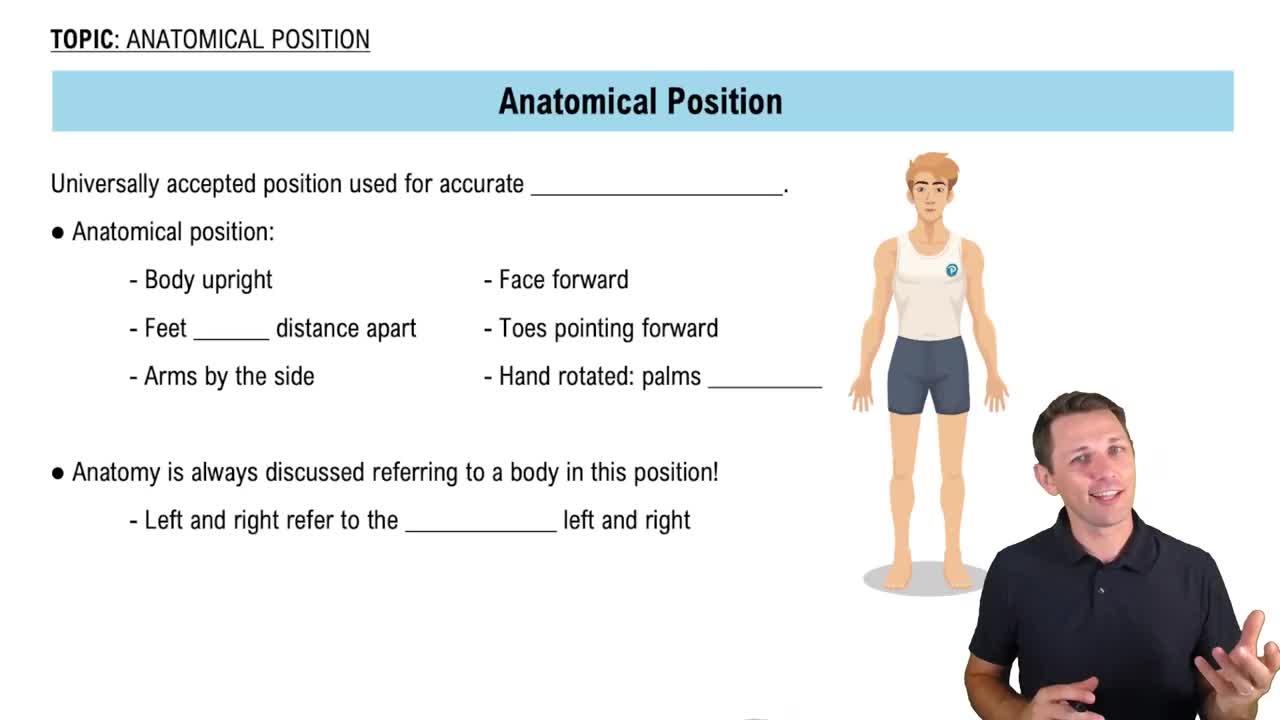
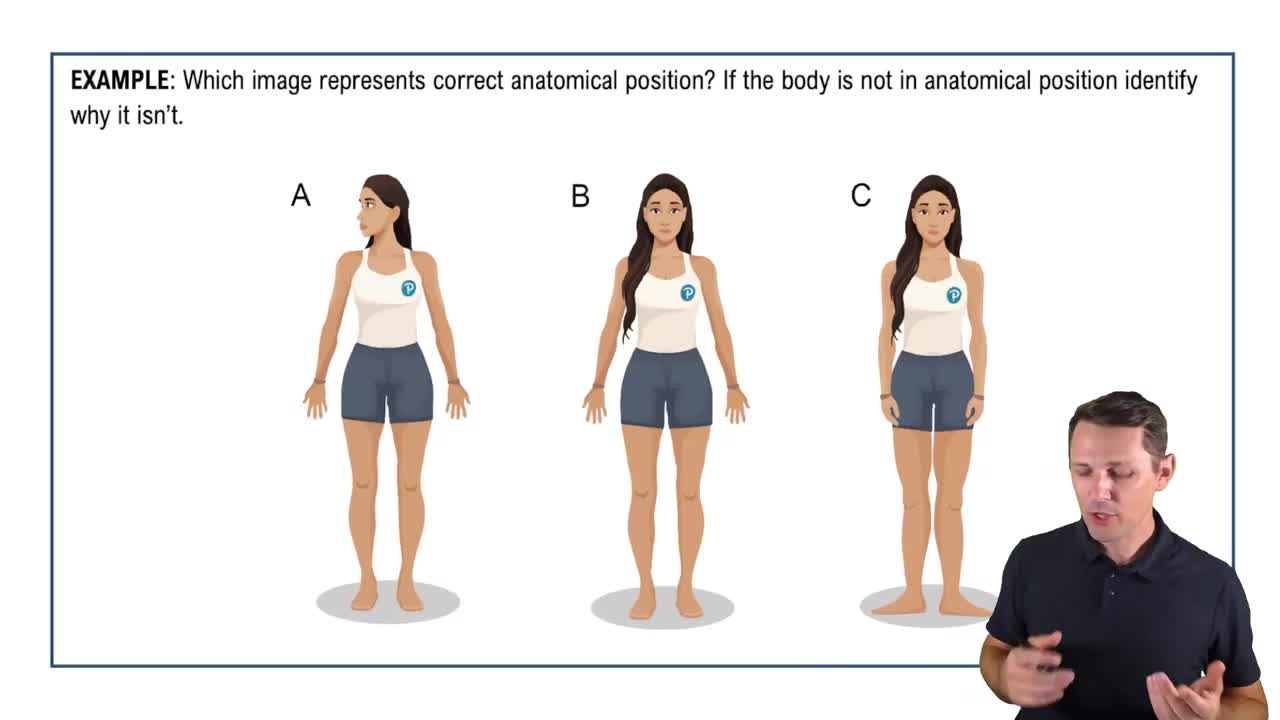
The anatomical position is standing erect with the head, eyes, and toes pointing forward, feet together, arms by the side, and palms facing forward.
Toward the head or upper part of a structure or the body.
Away from the head or toward the lower part of a structure or the body; below.
Toward or at the midline of the body, or the inner side of.
Away from the midline of the body; on the outer side of.
Close to the origin of the body part or the point of attachment of a limb to the body trunk.
Farther from the origin of a body part or the point of attachment of a limb to the body trunk.
Sagittal (divides left and right), Frontal (divides anterior and posterior), and Transverse (divides superior and inferior).
The brain is housed in the cranial cavity.
The heart, lungs, and other structures are housed in the thoracic cavity.
The digestive system and most urinary system organs are housed in the abdominopelvic cavity.
The pleura is a serous membrane that lines the lungs and thoracic cavity, reducing friction during breathing.
Right upper quadrant (RUQ), Left upper quadrant (LUQ), Right lower quadrant (RLQ), Left lower quadrant (LLQ).
Right hypochondriac, Epigastric, Left hypochondriac, Right lumbar, Umbilical, Left lumbar, Right iliac (inguinal), Hypogastric (pubic), Left iliac (inguinal).
Chemical, Cellular, Tissue, Organ, Organ System, Organism.
Integumentary, Skeletal, Muscular, Nervous, Endocrine, Cardiovascular, Lymphatic, Respiratory, Digestive, Urinary, Reproductive.
Protects against environmental hazards, helps regulate body temperature, and provides sensory information.
Provides support and protection, stores calcium and other minerals, and forms blood cells.
Provides movement, protection, support, and generates heat to maintain body temperature.
Directs immediate responses to stimuli, coordinates activities of other organ systems, and provides sensory information.
Directs long-term changes in other organ systems, adjusts metabolic activity and energy use, and controls structural changes during development.
Distributes blood cells, water, and dissolved materials including nutrients, waste products, oxygen, and carbon dioxide; distributes heat and assists in temperature control.
Defends against infection and disease, returns tissue fluids to the bloodstream.
Delivers air to alveoli, provides oxygen to bloodstream, removes carbon dioxide, and produces sounds for communication.
Processes and digests food, absorbs and conserves water, absorbs nutrients, and stores energy reserves.
Excretes waste products from the blood, controls water balance, stores urine, and regulates blood ion concentrations and pH.
Produces male sex cells (sperm), suspending fluids, hormones, and sexual intercourse.
Produces female sex cells (oocytes) and hormones, supports embryo development, provides milk for newborn, and sexual intercourse.
The meter (m) is the base unit. Subunits include kilometer (km), centimeter (cm), millimeter (mm), micrometer (µm), and nanometer (nm).
The liter (L) is the base unit. Subunits include milliliter (mL), centiliter (cL), deciliter (dL), and kiloliter (kL).
The gram (g) is the base unit. Subunits include milligram (mg), centigram (cg), decigram (dg), and kilogram (kg).