 Back
BackAnatomy & Physiology I: Cellular, Tissue, and Integumentary System Study Guide
 03:45
03:45
Terms in this set (32)
1) Cells are the building blocks of all organisms.
2) Cells are the smallest units that perform vital functions.
3) All cells arise from preexisting cells.
Physical isolation, regulation of exchange, sensitivity to the environment, and structural support.
Phospholipid bilayer with hydrophilic heads and hydrophobic tails, cholesterol for stabilization, integral and peripheral proteins, and glycocalyx for protection, recognition, receptors, and anchoring.
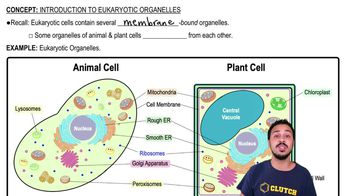
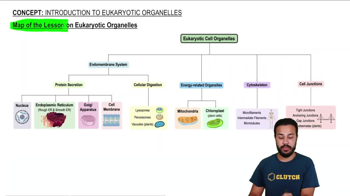
Stores DNA and controls cell activities.
Produces rRNA and ribosomal subunits.
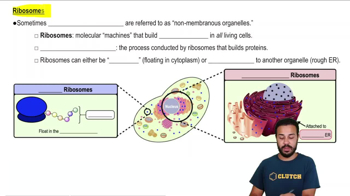
Protein synthesis.
Rough ER synthesizes proteins; smooth ER synthesizes lipids and glycogen.
Modifies, sorts, and packages proteins.
Intracellular digestion.
Break down fats and toxins.
ATP production.
Made of microfilaments like actin; supports cell structure, movement, and forms centrioles and cilia.
Increase surface area for absorption.
DNA uncoils → transcription produces mRNA → mRNA leaves nucleus → translation at ribosome → polypeptide/protein formed.
Passive transport requires no ATP and moves substances down concentration gradients; active transport requires ATP and moves substances against gradients.
Isotonic: no net water movement.
Hypotonic: cell swells, may burst.
Hypertonic: cell shrinks (crenation).
Endocytosis: vesicular transport into the cell.
Exocytosis: vesicular transport out of the cell.
Epithelial: covering, lining, glands.
Connective: support, protection, storage, transport.
Muscle: contraction and movement.
Nervous: communication and control.
Polarity, Cellularity, Attachment, Avascularity, Regeneration.
By shape: squamous (flat), cuboidal (cube), columnar (tall).
By layers: simple (one layer), stratified (multiple layers).
Gap junctions: communication.
Tight junctions: prevent leakage.
Desmosomes: strength and resistance to stress.
Endocrine glands have no ducts and secrete hormones into the bloodstream.
Exocrine glands use ducts to release secretions onto surfaces.
Merocrine: exocytosis (e.g., sweat glands).
Apocrine: loss of cytoplasm (e.g., mammary glands).
Holocrine: entire cell ruptures (e.g., sebaceous glands).
Protection, thermoregulation, excretion, vitamin D₃ synthesis, sensation, immune defense, lipid storage.
Epidermis: stratified squamous epithelium, avascular.
Dermis: connective tissue, blood vessels, sensory receptors.
Hypodermis: loose connective tissue, fat storage, anchors skin.
Keratinocytes: produce keratin.
Melanocytes: produce melanin.
Merkel cells: touch receptors.
Langerhans cells: immune defense.
"Before Signing, Get Legal Counsel": Stratum Basale, Spinosum, Granulosum, Lucidum, Corneum.
Stratum basale: stem cells for regeneration, melanocytes, Merkel cells.
Stratum corneum: dead keratinized cells, water-resistant barrier.
Thick skin has 5 layers including stratum lucidum and is found on palms and soles; thin skin has 4 layers, no stratum lucidum, and covers most of the body.
Papillary layer: areolar connective tissue, capillaries, sensory receptors.
Reticular layer: dense irregular connective tissue, collagen and elastic fibers.
Skin turgor is skin elasticity; it decreases with aging and dehydration.
Tension lines follow collagen fiber arrangement; incisions parallel to these lines heal better.