Skip to main content
Anatomy & Physiology
My Course
Learn
Exam Prep
AI Tutor
Study Guides
Textbook Solutions
Flashcards
Explore
Try the app
My Course
Learn
Exam Prep
AI Tutor
Study Guides
Textbook Solutions
Flashcards
Explore
Try the app
Back
Anatomy & Physiology I: Exam 1 Key Concepts
You can tap to flip the card.
Difference between Anatomy and Physiology
You can tap to flip the card.
👆
Difference between Anatomy and Physiology
Anatomy
studies body structures and their relationships;
Physiology
studies how those structures function.
Track progress
Control buttons has been changed to "navigation" mode.
1/30
Recommended videos
3:06
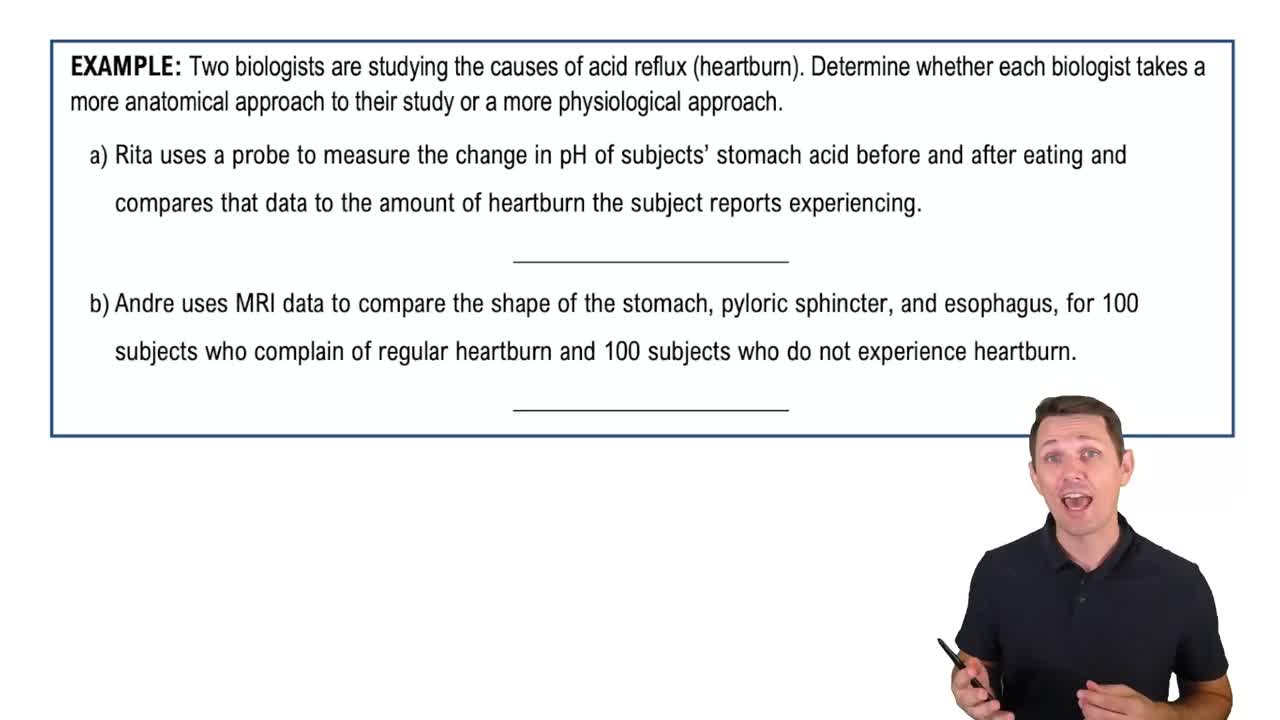
What is Anatomy & Physiology? Example 3
34284
views
843
rank
8
comments
01:58
What is Anatomy & Physiology? Example 2
46199
views
2561
rank
03:04
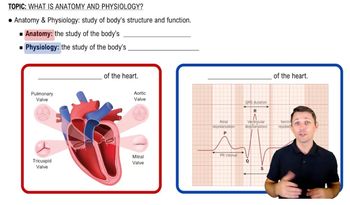
The Difference Between Anatomy and Physiology
88897
views
4367
rank
11
comments
Terms in this set (30)
Hide definitions
Difference between Anatomy and Physiology
Anatomy
studies body structures and their relationships;
Physiology
studies how those structures function.
Levels of Structural Organization in the Body
Hierarchy from simplest to complex:
Atom
/
Molecule
/
Cell
/
Tissue
/
Organ
/
System
/
Organism
.
Surface Anatomy
Study of the general form and superficial markings of an organism.
Sectional Anatomy
Study of structural relationships by examining cross-sections of tissues or organs.
Cytology
Microscopic study of individual cells and their internal structures.
Organ Physiology
Study of the function of specific organs, such as cardiovascular function.
Homeostasis
Maintenance of a relatively constant internal environment within an organism.
Autoregulation
Automatic adjustment of activities by cells, tissues, or organs in response to environmental changes.
Negative Feedback
A corrective mechanism where a response opposes the original stimulus to maintain homeostasis.
Positive Feedback
A mechanism where a response amplifies the effects of a stimulus, such as in blood clotting or labor.
Anatomical Position
Standard reference position: standing, facing forward, arms at sides, palms facing forward.
Anterior (Ventral) vs Posterior (Dorsal)
Anterior/Ventral
means toward the front;
Posterior/Dorsal
means toward the back.
Inferior
Position below or at a lower level (e.g., chin is inferior to the nose).
Distal
Away from the point of attachment or origin (e.g., wrist is distal to the elbow).
Prone vs Supine Body Postures
Prone
: lying face down;
Supine
: lying face up.
Sagittal Plane
Divides the body into right and left parts.
Diaphragm
Muscular sheet separating the thoracic cavity from the abdominopelvic cavity.
Pleural Cavities
Each contains a lung; the right pleural cavity contains the right lung.
Mediastinum
Connective tissue mass separating pleural cavities; contains the pericardial cavity around the heart.
Atomic Number
Number of protons in an atom; defines the element.
Isotopes
Atoms of the same element with different numbers of neutrons.
Chemical Behavior of Atoms
Determined by electrons in the outermost shell (valence electrons).
Covalent Bonds
Formed when atoms share electrons to complete outer shells.
Ionic Bonds
Formed when electrons transfer from one atom to another, creating charged ions.
Hydrogen Bonds
Weak attractions between a hydrogen atom and a negatively charged atom; important in water properties.
Hydrophilic vs Hydrophobic Molecules
Hydrophilic
molecules interact readily with water;
Hydrophobic
molecules do not.
Synthesis Reaction
Two or more atoms or molecules combine to form a larger molecule (A + B \(\rightarrow\) AB).
Decomposition Reaction
A molecule breaks down into smaller parts (AB \(\rightarrow\) A + B).
Potential Energy
Stored energy that can be used to do work.
Protein Denaturation
Loss of protein structure due to extreme pH or temperature changes.
 BackBack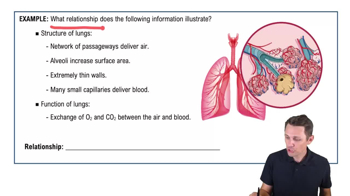
 3:06
3:06