 Back
Anatomy & Physiology I Exam 2 Study Guide (Chapters 5-8)
 06:54

Terms in this set (29)
Meissner’s corpuscles are sensory receptors in the skin responsible for detecting light touch.
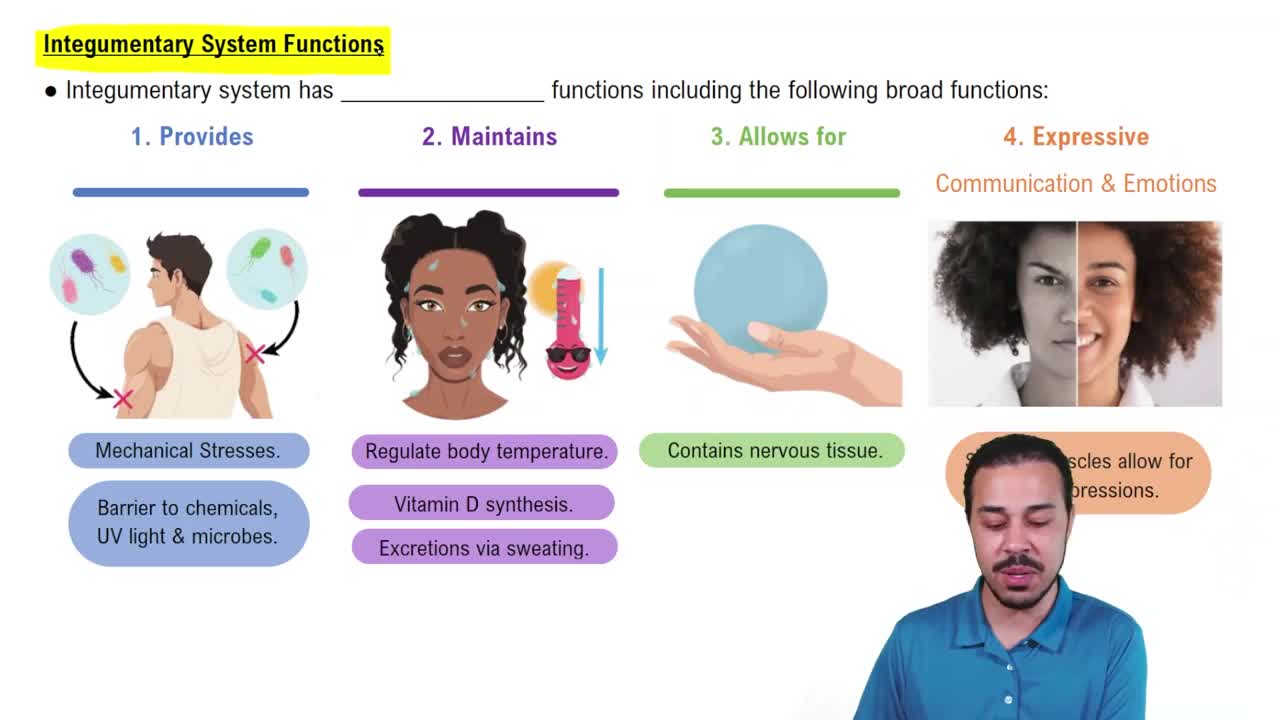
Sebaceous glands secrete sebum, an oily substance that lubricates and waterproofs the skin and hair.
Sudoriferous glands are sweat glands that help regulate body temperature through perspiration.
Ceruminous glands are modified sweat glands in the ear canal that produce earwax (cerumen) to protect the ear.
The arrector pili is a small muscle attached to hair follicles that causes hair to stand up (goosebumps) when contracted.
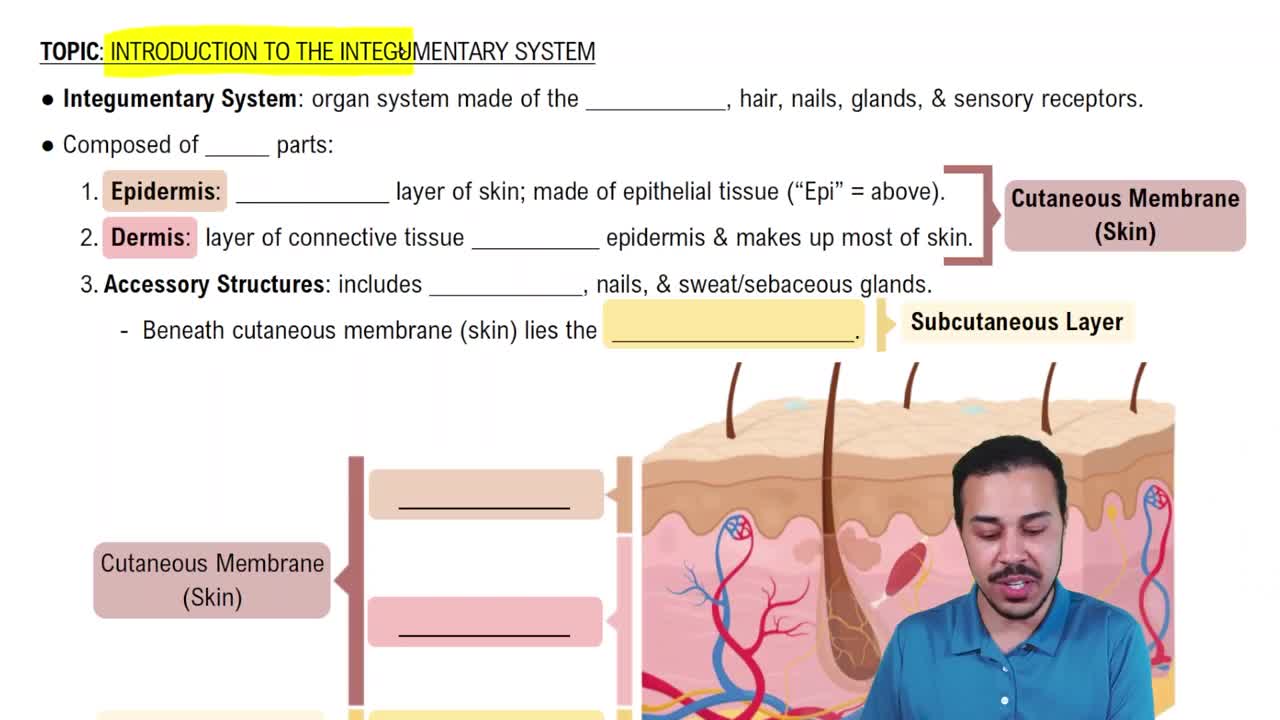
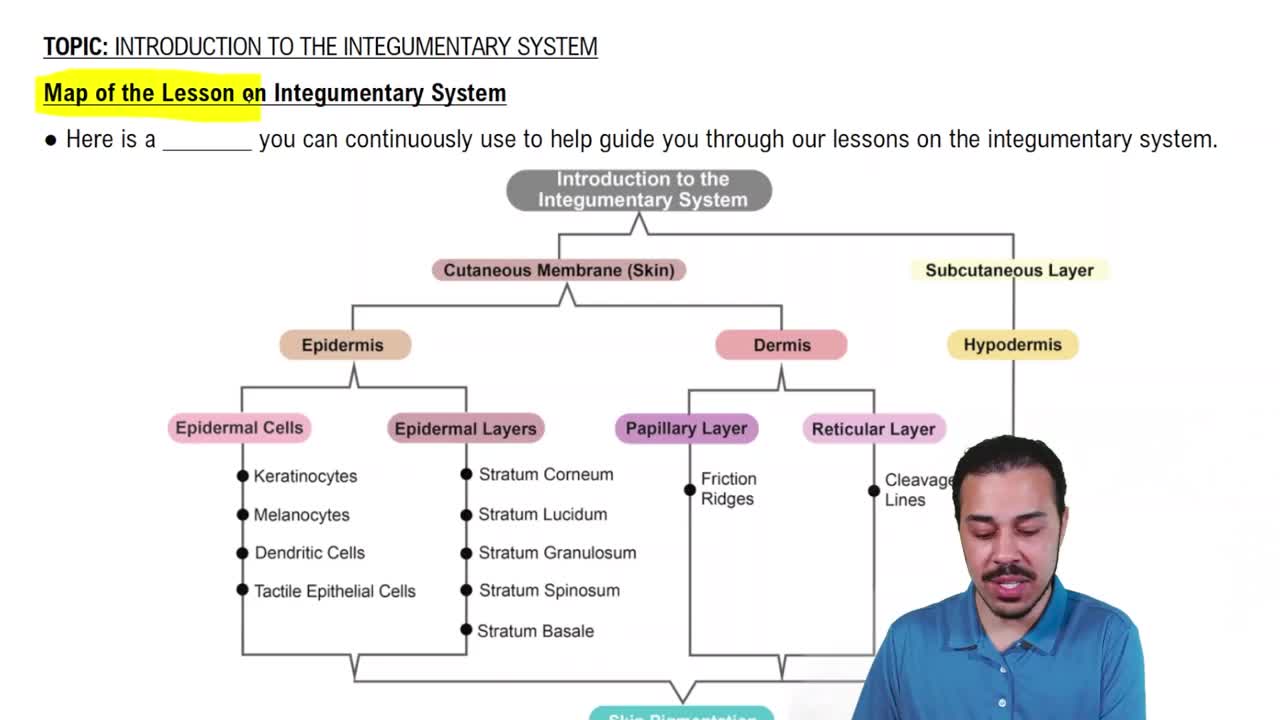
The dermis is the thick layer of skin beneath the epidermis containing blood vessels, nerves, hair follicles, and glands.
The hypodermis is the subcutaneous layer of fat and connective tissue that insulates and cushions the body.
Dermal papillae are finger-like projections of the dermis that increase surface area and strengthen the connection to the epidermis.
Keratinocytes are the primary cells in the epidermis that produce keratin, a protein that protects skin from damage.
Melanocytes produce melanin, the pigment responsible for skin color and protection against UV radiation.
The Rule of Nines is a method to estimate the percentage of body surface area affected by burns for treatment purposes.
Yellow marrow is found in the medullary cavity of long bones and stores fat.
Osteoblasts are bone cells responsible for bone formation by producing new bone matrix.
Osteoclasts are bone cells that break down bone tissue during bone resorption.
The diaphysis is the shaft or central part of a long bone.
The epiphysis is the rounded end of a long bone, usually covered with articular cartilage.
The epiphyseal plate is a cartilage growth plate in children; the epiphyseal line is the remnant after growth stops.
Hyaline cartilage is a smooth, glassy cartilage that covers bone ends in joints and forms the fetal skeleton.
Osteogenesis is the process of bone formation.
Fontanelles are soft spots on a baby's skull where bones have not yet fused.
The axial skeleton includes the skull, vertebral column, and rib cage.
The appendicular skeleton consists of the limbs and girdles (pelvic and pectoral).
The atlas is the first cervical vertebra supporting the skull; the axis is the second vertebra allowing head rotation.
The hyoid is a U-shaped bone in the neck that supports the tongue and is not attached to other bones.
Intervertebral discs are fibrocartilage pads between vertebrae that absorb shock and allow movement.
The pelvic girdle connects the lower limbs to the axial skeleton and supports body weight.
Scoliosis is an abnormal lateral curvature of the spine.
Kyphosis is an exaggerated outward curvature of the thoracic spine, causing a hunchback appearance.
Lordosis is an exaggerated inward curvature of the lumbar spine.