 Back
BackAnatomy & Physiology: Integumentary System
 06:54
06:54
Terms in this set (20)
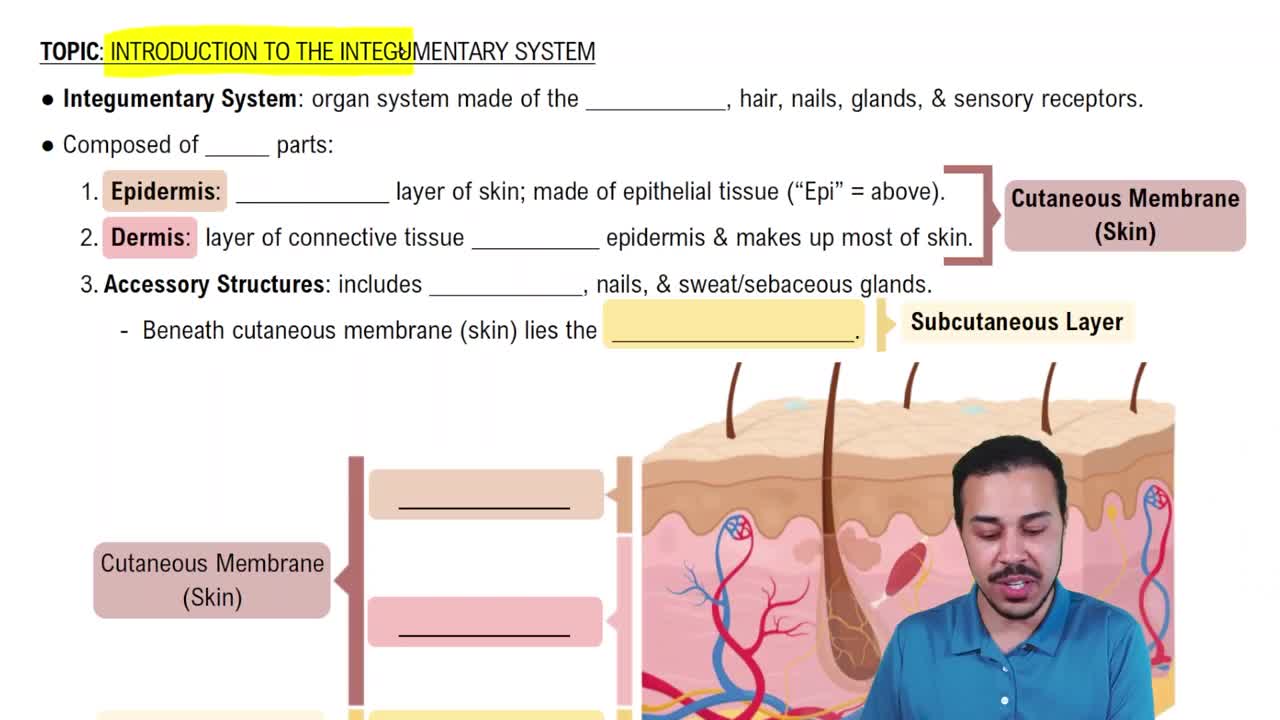
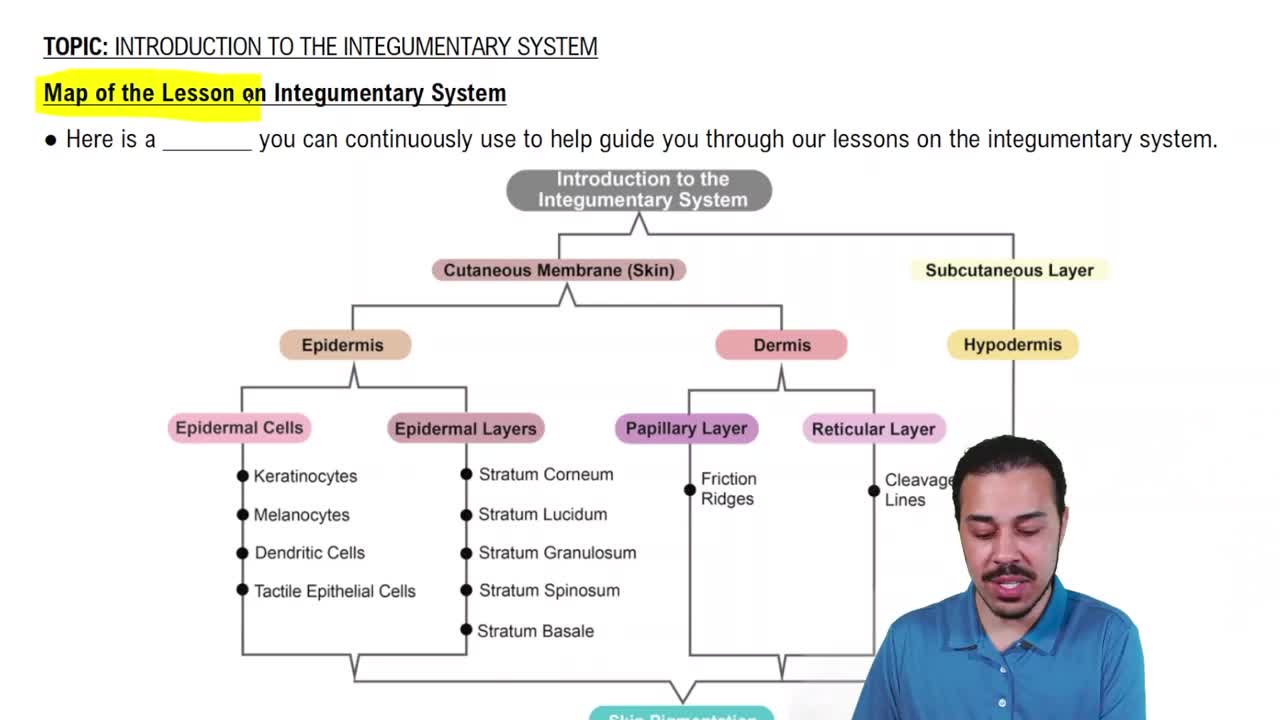
The integument consists of the cutaneous membrane (epidermis and dermis) and accessory structures such as hair, nails, and glands.
The epidermis is a keratinized stratified squamous epithelium, avascular, with layers including stratum basale, spinosum, granulosum, lucidum (thick skin only), and corneum.
Melanocytes synthesize melanin, a brown to black pigment that protects DNA by absorbing UV radiation.
Langerhans cells are macrophages in the epidermis that guard against microbes, pathogens, and toxins and alert the immune system.
Merkel cells are sensory cells in the stratum basale that provide the sense of touch.
Stratum basale, stratum spinosum, stratum granulosum, stratum lucidum (only in thick skin), and stratum corneum.
The dermis contains blood vessels, collagen fibers, hair follicles, sebaceous and sweat glands, nerve endings, and the erector pili muscle.
The papillary layer (upper 1/3, areolar connective tissue) and the reticular layer (bottom 2/3, dense irregular connective tissue).
The hypodermis, or subcutaneous layer, is not part of the skin and consists mainly of adipose and areolar connective tissue with blood vessels and nerves.
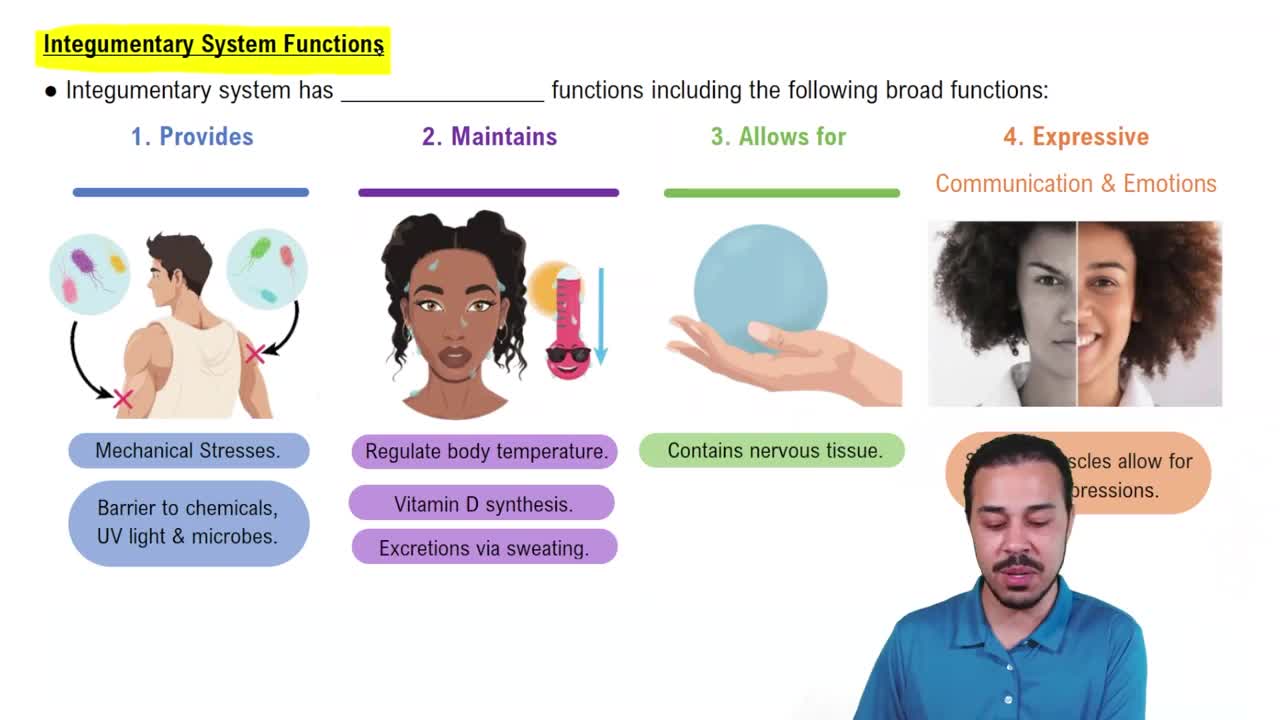
Protection, excretion, vitamin D synthesis, sensory reception, thermoregulation, and social functions like facial expression.
By vasoconstriction to reduce blood flow to the skin and shivering to generate heat through muscle contractions.
By vasodilation to increase blood flow to the skin and promote heat loss through sweating.
Keratin is a tough protein in keratinocytes that provides protection and waterproofing to the skin, hair, and nails.
Hair follicles have a hair bulb with a papilla and matrix for growth, surrounded by internal and external root sheaths and a connective tissue sheath.
The medulla (core), cortex (thick keratin layer), and cuticle (overlapping keratin cells, protective scale).
Eccrine (merocrine) glands produce watery sweat for thermoregulation; apocrine glands produce thicker sweat with lipids and proteins, found in axilla and genital regions.
Sebaceous glands secrete sebum to waterproof skin and hair, keep them pliable, and inhibit bacterial growth.
1st degree: epidermis only; 2nd degree: epidermis and dermis with blistering; 3rd degree: full thickness including hypodermis.
A method to estimate body surface area affected by burns, dividing the body into regions each representing 9% or multiples thereof.
Friction ridges formed by epidermal ridges and underlying dermal papillae create unique fingerprint patterns.