 Back
Anatomy & Physiology: Integumentary System and Histology
 06:54

Terms in this set (24)
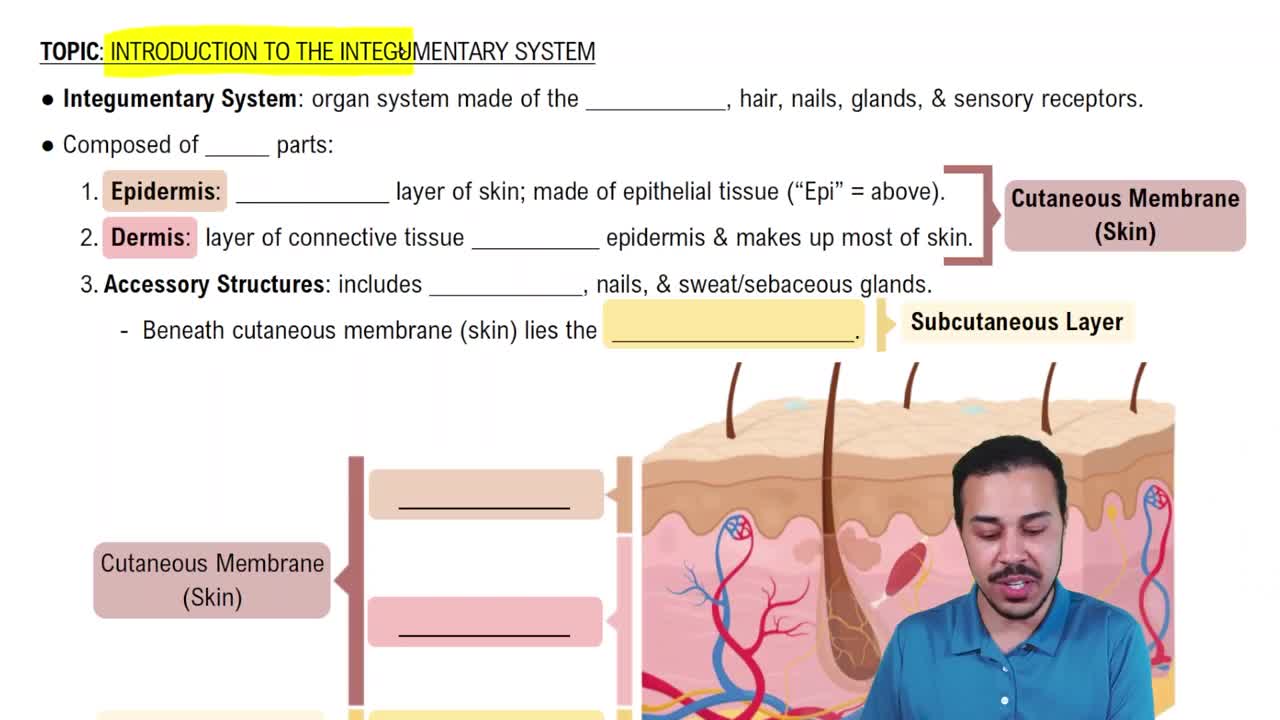
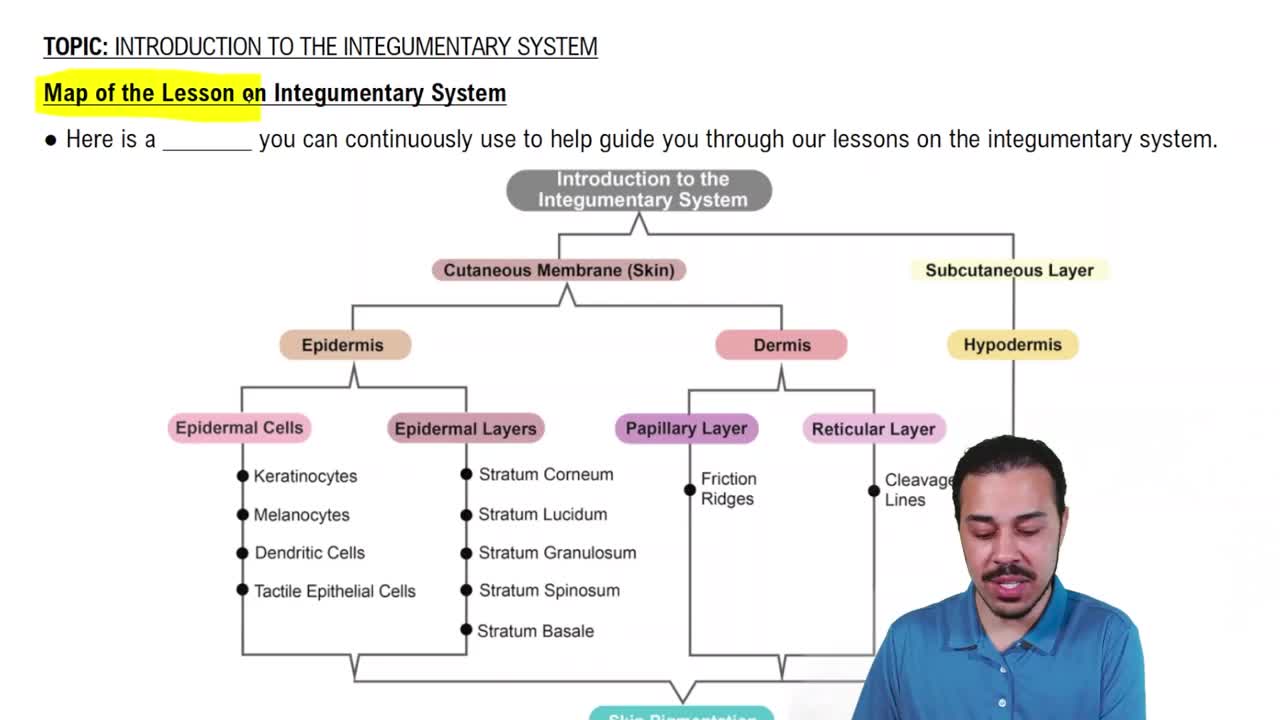
The skin consists of three main layers: epidermis (outer, avascular), dermis (dense irregular connective tissue), and hypodermis (subcutaneous tissue with fat).
Keratinocytes (barrier and immune defense), melanocytes (produce melanin), dendritic cells (immune antigen-presenting), and Merkel cells (touch sensation).
Deepest epidermal layer, single layer of cuboidal keratinocytes, site of mitosis, alive and anchored to dermis, most susceptible to UV damage and cancer.
Outermost epidermal layer, up to 25 layers of dead, keratinized cells, provides a flexible protective barrier, cells are sloughed off by desquamation.
Thick skin has all five epidermal layers including stratum lucidum and is found on palms and soles; thin skin lacks stratum lucidum and covers most of the body.
Papillary layer is superficial, loose connective tissue with capillaries; reticular layer is deeper, dense irregular connective tissue with collagen bundles and cleavage lines.
Produce sebum, an oily substance that lubricates skin and hair, protects against drying and some bacteria, usually connected to hair follicles.
Most common sweat glands, produce watery sweat for temperature regulation, release sweat directly onto skin surface via ducts.
Located in axilla, genital, and anal regions, open onto hair shafts, activated at puberty, produce odorless secretion metabolized by bacteria causing body odor.
Loose connective tissue and adipose, anchors skin to muscles/bones, stores about 50% of body fat, provides padding and insulation.
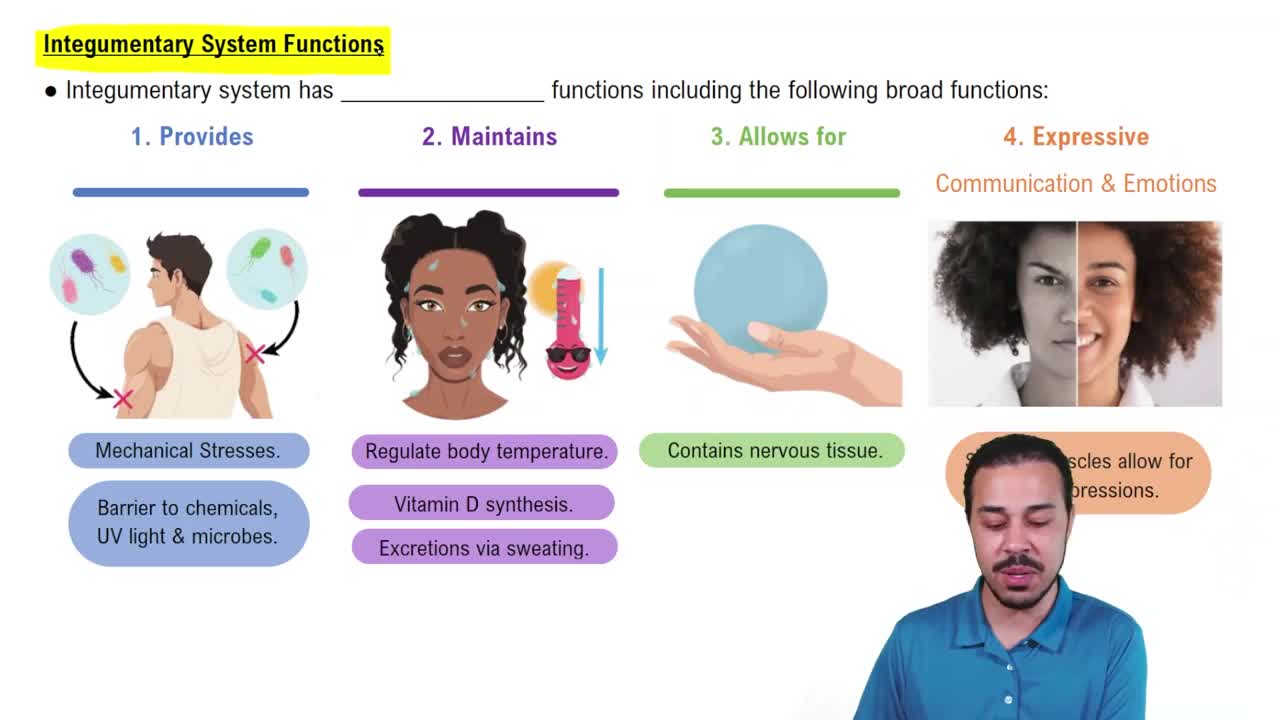
Arterioles dilate to release heat and constrict to conserve heat; sweat evaporates to cool skin; arrector pili muscles contract to raise hair and trap air.
Body divided into regions each representing 9% (or multiples) of total body surface area to estimate burn extent (e.g., anterior trunk 18%, each upper limb 9%).
1st degree: superficial; 2nd degree: partial thickness; 3rd degree: full thickness, complete skin destruction.
Cellularity, polarity (apical and basal surfaces), supported by connective tissue, avascular but innervated, high regeneration capacity.
Simple: one cell layer; stratified: multiple layers; pseudostratified: single layer with nuclei at different levels.
Squamous: flat; cuboidal: cube-shaped; columnar: tall and thin; transitional: changes shape (urinary tract).
Simple epithelium facilitates diffusion, filtration, secretion, absorption; stratified epithelium provides protection against abrasion.
Areolar: supports and binds tissues, found under skin; Adipose: stores fat, cushions, insulates.
Dense regular: collagen fibers aligned, found in tendons and ligaments; Dense irregular: collagen fibers in multiple directions, found in dermis and organ capsules.
Hyaline: supports and cushions joints; Elastic: flexible support (ear, epiglottis); Fibrocartilage: absorbs compressive forces (intervertebral discs).
Mineralized extracellular matrix with osteocytes in lacunae, highly vascular, supports and protects, heals readily.
Neurons with dendrites (receive signals), cell body (soma), and axon (conducts impulses); specialized for electrical signal transmission.
Skeletal: voluntary, striated, multinucleated; Cardiac: involuntary, striated, uninucleated; Smooth: involuntary, nonstriated, uninucleated.
1. Inflammation: clotting and immune response; 2. Organization: granulation tissue and collagen bridge; 3. Regeneration: scar formation and epithelial thickening.