Back

Anatomy & Physiology: Integumentary System and Skin Structure

Control buttons has been changed to "navigation" mode.
1/20
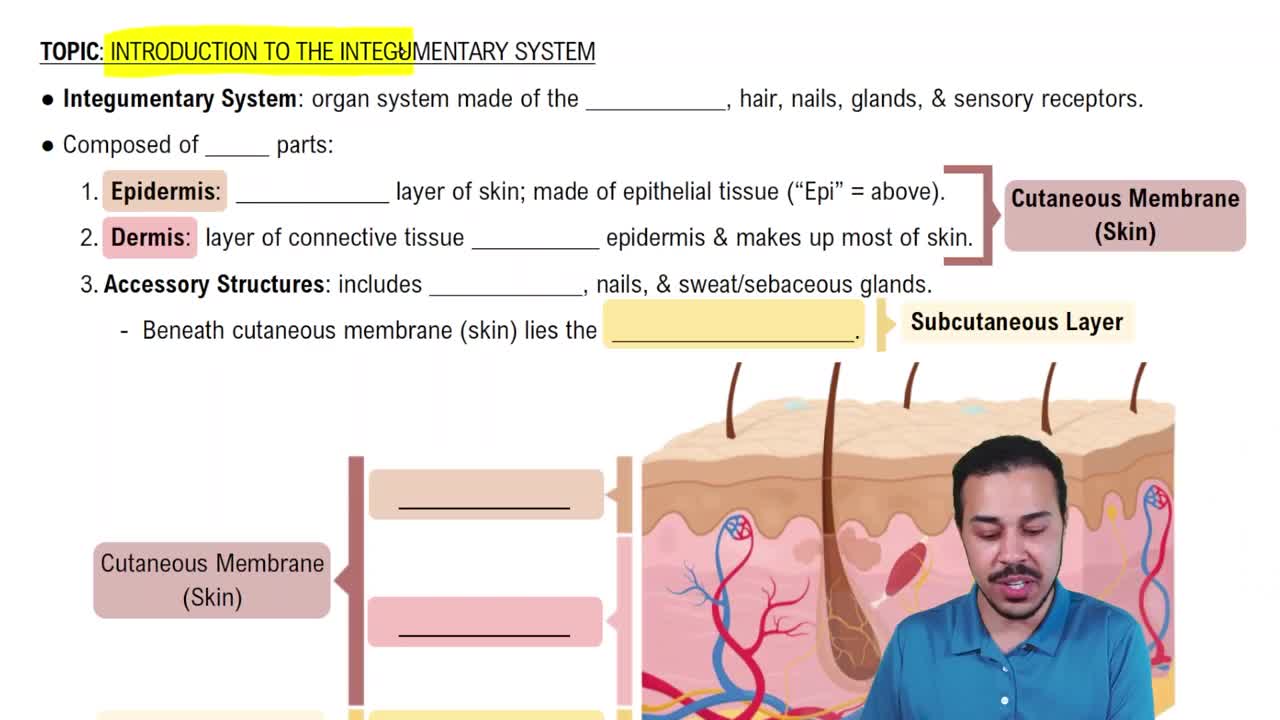
  • What are the two major components of the integumentary system?

    The cutaneous membrane (epidermis and dermis) and accessory structures such as hair, nails, and glands.
  • What are the main functions of the integumentary system?

    Protects underlying tissues, excretes wastes, maintains normal body temperature, produces vitamin D3, stores lipids, and detects touch, pressure, pain, and temperature.
  • What type of tissue composes the epidermis?

    The epidermis is composed of stratified squamous epithelium.
  • What are the two layers of the dermis?

    The papillary layer (areolar connective tissue) and the reticular layer (dense irregular connective tissue).
  • What is the subcutaneous layer and its function?

    Also called the hypodermis, it is not part of the skin but separates the integument from deep fascia and stores fat.
  • What is the difference between thin and thick skin?

    Thin skin has four epidermal layers and covers most of the body; thick skin has five layers and is found on palms and soles.
  • Name the five layers of the epidermis from superficial to deep.

    Stratum corneum, stratum lucidum (only in thick skin), stratum granulosum, stratum spinosum, and stratum basale.
  • What is the role of keratinocytes in the epidermis?

    They produce keratin, a protein that protects skin and underlying tissues.
  • What cells in the stratum basale respond to touch?

    Merkel cells.
  • What is the function of dendritic (Langerhans) cells in the stratum spinosum?

    They participate in immune response by defending against microorganisms and superficial skin cancers.
  • What pigments influence skin color?

    Carotene (orange-yellow) and melanin (brown, yellow-brown, or black).
  • How does melanin affect skin color?

    Differences in skin color are due to the amount and size of melanosomes produced by melanocytes, not the number of melanocytes.
  • How does blood supply affect skin color?

    Increased blood flow causes redness; decreased flow can cause paleness or cyanosis (bluish color).
  • What is basal cell carcinoma?

    The most common skin cancer originating in the stratum basale, usually caused by UV radiation, with low metastasis risk.
  • What is malignant melanoma?

    A dangerous skin cancer from melanocytes that grows rapidly and metastasizes through the lymphatic system.
  • What are the main sensory receptors in the skin?

    Free nerve endings, tactile (Meissner) corpuscles, lamellar (Pacinian) corpuscles, and bulbous (Ruffini) corpuscles.
  • What are tension (cleavage) lines in the skin?

    Patterns formed by collagen and elastic fibers; important in surgery because cuts parallel to these lines heal better.
  • Describe the three degrees of burns.

    First-degree: affects only epidermis; second-degree: affects epidermis and part of dermis; third-degree: destroys epidermis, dermis, and extends into subcutaneous layer.
  • What is the 'rule of nines' in burn assessment?

    A method to estimate the percentage of body surface area affected by burns.
  • What are the types of skin grafts?

    Autograft (patient's own skin), allograft (cadaver skin), and xenograft (animal skin). Autografts are best due to no immune rejection.