 Back
Anatomy & Physiology: Integumentary System Basics
 02:44

Terms in this set (10)
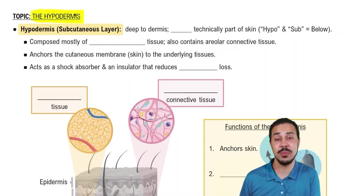
The hypodermis is the deepest layer of skin, composed mainly of fat and connective tissue, providing insulation and cushioning.
Melanin is the pigment produced by melanocytes that gives skin, hair, and eyes their color and protects against UV radiation.
Carotene is a yellow-orange pigment found in the skin that can accumulate from diet and contribute to skin color.
A sebaceous gland is a skin gland that secretes sebum to lubricate and waterproof the skin and hair.
Sebum is an oily substance produced by sebaceous glands that helps keep skin and hair moisturized and protected.
A sudoriferous gland is a sweat gland responsible for producing sweat to regulate body temperature and excrete waste.
The hair follicle is a sheath of cells and connective tissue that surrounds the hair root and anchors the hair into the skin.
The hair root is the part of the hair located below the skin surface, embedded in the hair follicle.
The hair shaft is the visible part of the hair that extends above the skin surface.
The arrector pili is a small muscle attached to hair follicles that contracts to cause hair to stand up, producing goosebumps.