 Back
BackAnatomy & Physiology: Integumentary System Review
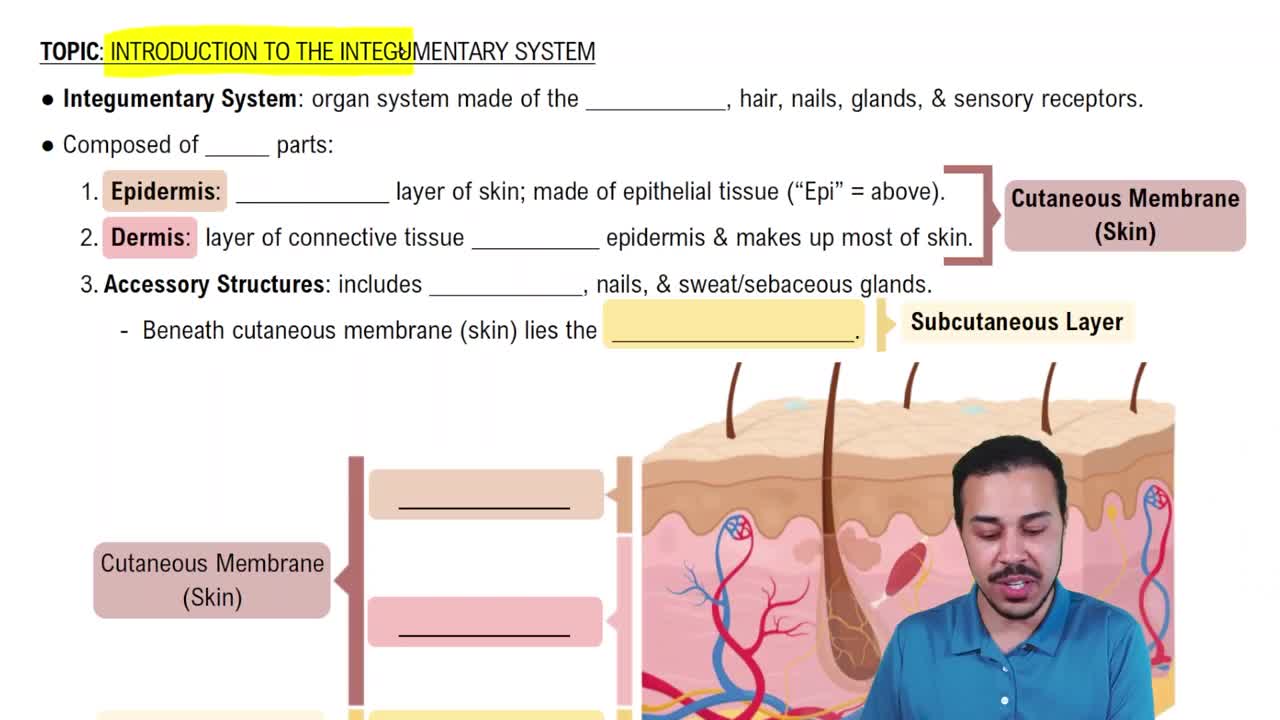
 06:54
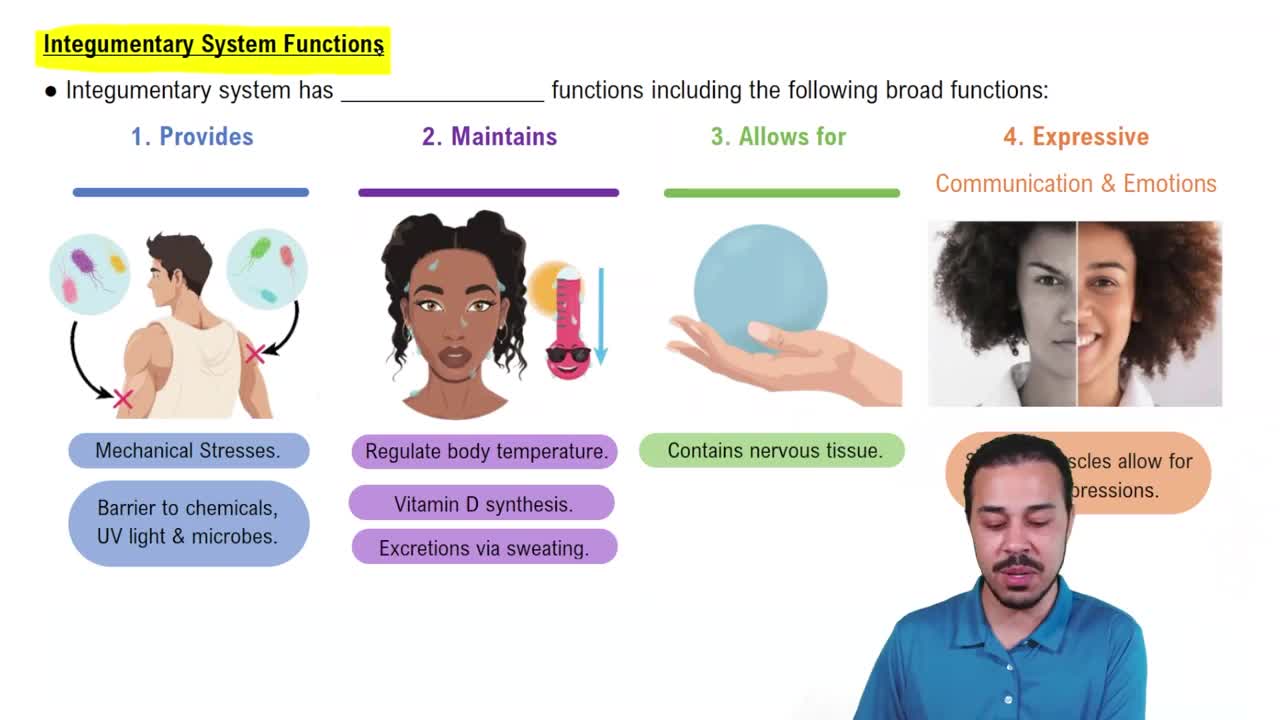
06:54
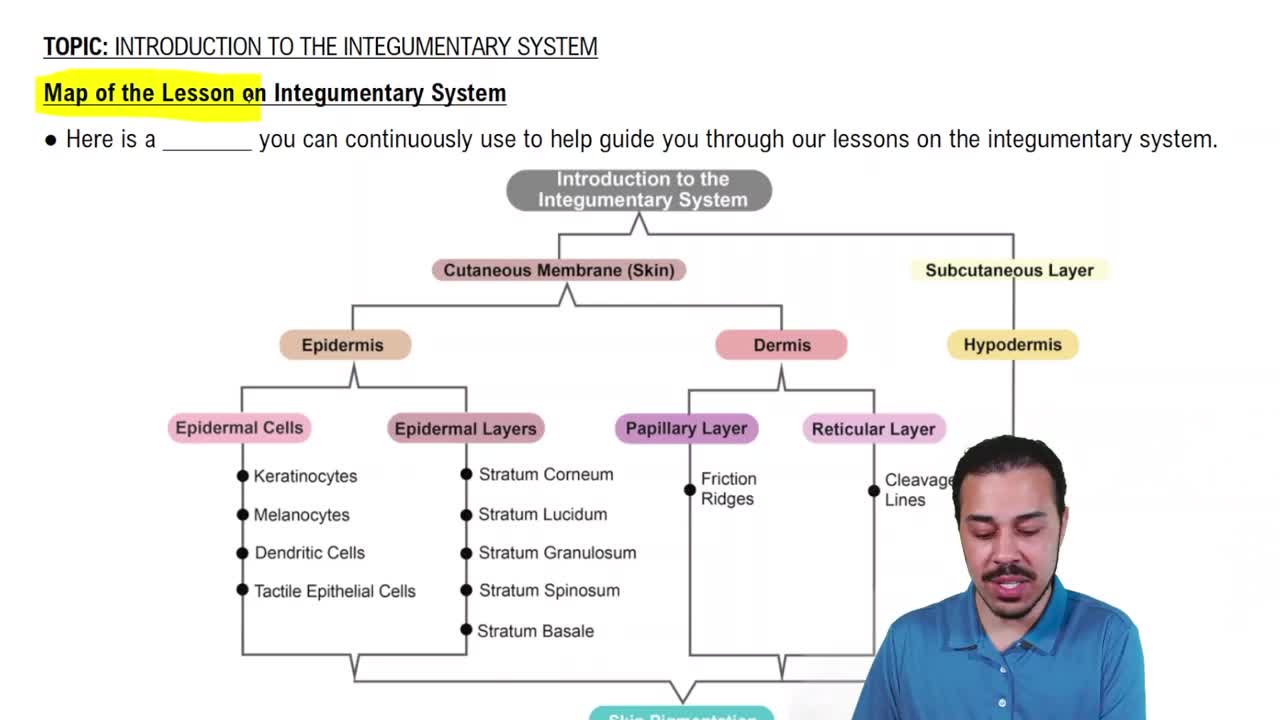
Terms in this set (20)
Stratum spinosum is most closely associated with the papillary layer of the dermis.
Langerhans cells are commonly found in the stratum granulosum.
Both layers are mainly composed of collagen and connective tissue, not melanocytes, keratinocytes, or adipose tissue.
Collagen lends strength and structural support to the skin, not elasticity or color.
The hypodermis does not help maintain body temperature directly; it protects organs and stores long-term energy.
The arrector pili muscles contract to cause hair to stand up, not secrete sebum or cause sweating.
The hair matrix contains cells that produce the hair shaft, not the follicle or glassy membrane.
Eccrine sweat glands produce sweat for thermoregulation, not sebum or acting as moisturizers.
Sebaceous glands secrete sebum, an oily substance, not sweat or watery solutions.
The eponychium (cuticle) is furthest from the nail growth center.
Exposure to sunlight is required for vitamin D synthesis, not folate production or arteriole constriction.
Merkel cells do not directly contribute to protection; they are sensory cells.
Cutting into the stratum basale causes bleeding because it contains blood vessels.
The stratum granulosum helps prevent water loss and drying out.
Keratinocytes help get rid of bacteria by producing protective proteins.
Skin cancers mostly affect the epidermis and can be serious if untreated.
Bedsores result from prolonged pressure and poor circulation, not dry skin or massages.
Both the epidermis and hypodermis are damaged in severe sunburns with blisters.
The next step is inflammation and increased activity of immune cells, not melanin production or sensory corpuscle increase.
Squamous cell carcinoma affects keratinocytes of the stratum spinosum.