 Back
Anatomy & Physiology: Integumentary System Review
 06:54

Terms in this set (24)
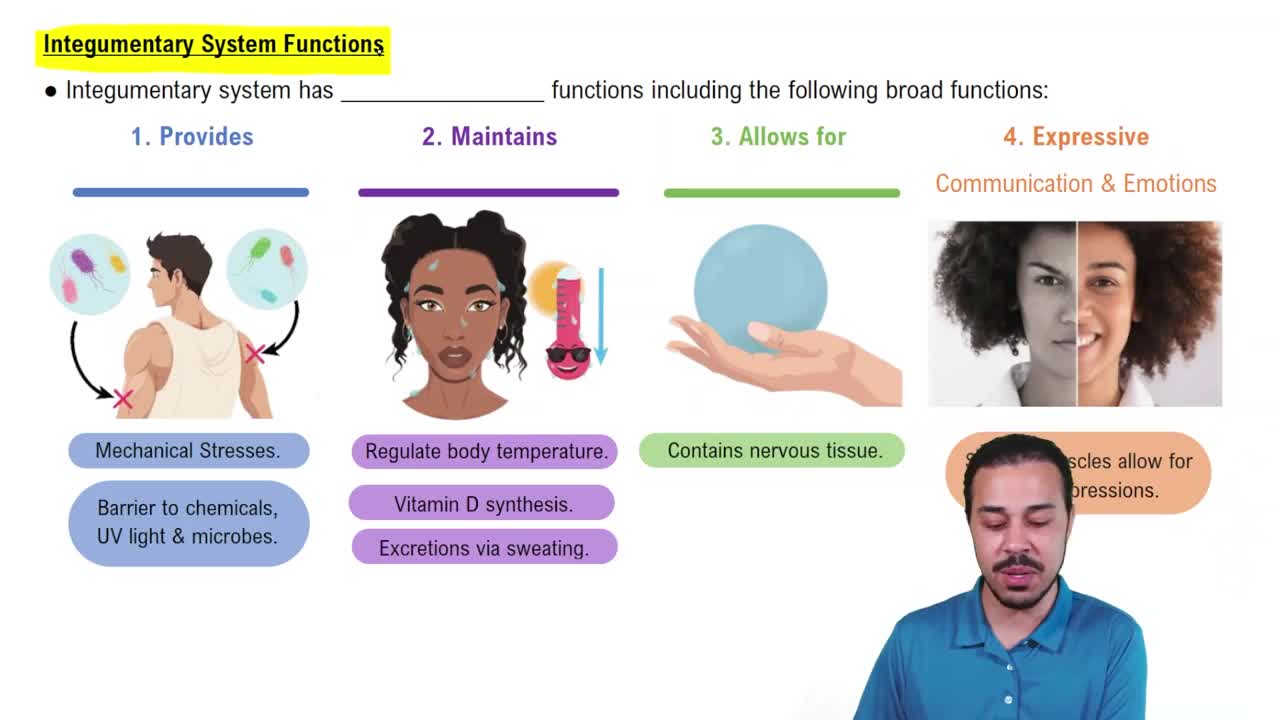
Protection, temperature regulation, sensory reception, vitamin D synthesis, and excretion of wastes.
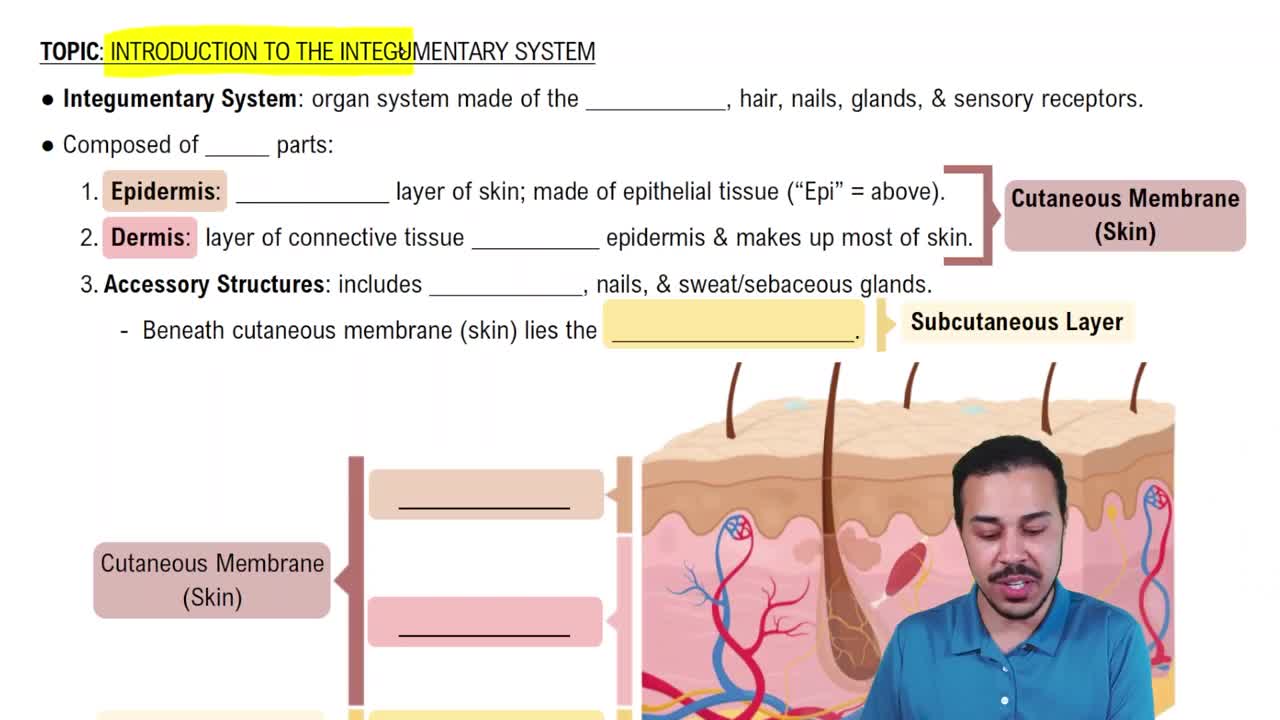
The epidermis is avascular and composed of stratified squamous epithelial cells arranged in layers.
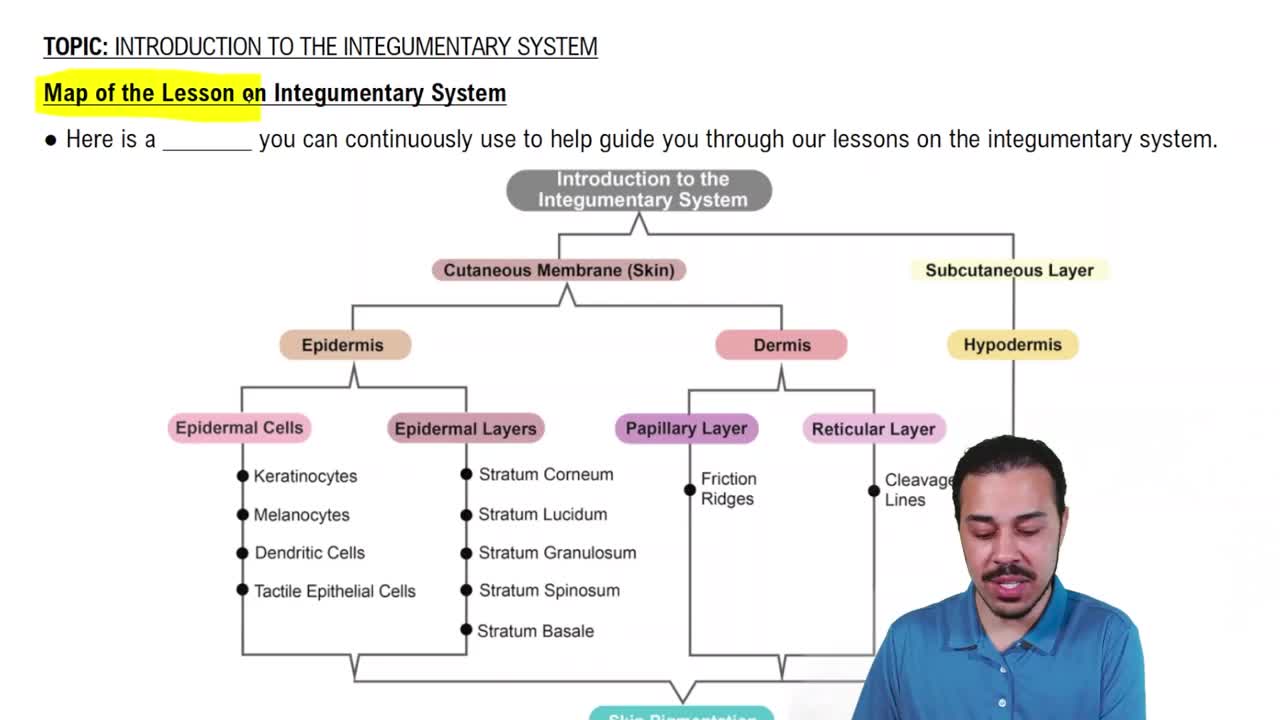
Stratum basale, stratum spinosum, stratum granulosum, stratum lucidum (only in thick skin), and stratum corneum.
Attached to the basement membrane; contains basal cells that divide to form new keratinocytes; epidermal ridges increase surface area for attachment.
Found only in thick skin areas like the palms and soles.
Keratin provides a tough, waterproof barrier protecting underlying tissues.
Skin color is influenced by melanin, carotene, and dermal blood circulation.
Produced by melanocytes in the stratum basale of the epidermis.
UV radiation converts a cholesterol derivative in skin to vitamin D3, essential for calcium absorption.
UV radiation causes DNA damage in skin cells, increasing risk of mutations and skin cancer.
Basal cell carcinoma (stratum basale), squamous cell carcinoma (stratum spinosum), and malignant melanoma (melanocytes).
Asymmetry, Border irregularity, Color variation, Diameter >6mm, Evolving shape or size.
Composed of two layers: the superficial papillary layer and the deeper reticular layer.
Hair follicles extend from the epidermis into the dermis; hair growth originates in the follicle.
Protection, sensory input, heat retention, and visual identification.
Amount and type of melanin produced by melanocytes in hair follicles.
Secrete sebum to lubricate and waterproof skin and hair.
Apocrine glands are found in armpits and groin, produce thicker sweat; merocrine glands are widespread and produce watery sweat for cooling.
Bacterial breakdown of sweat from apocrine glands produces body odor.
Made of loose connective tissue and adipose tissue, providing insulation and cushioning.
Injection administered into the hypodermis layer beneath the skin.
Inflammation, migration of cells, proliferation of new cells, and scarring/remodeling.
1st degree: epidermis only; 2nd degree: epidermis and part of dermis; 3rd degree: full thickness, destroys epidermis and dermis.
Thinning epidermis, decreased melanocytes, reduced vitamin D production, decreased gland activity, reduced elasticity, slower repair, decreased immune response, reduced blood supply, and hair thinning.