 Back
BackAnatomy & Physiology: Integumentary System Structures
 06:54
06:54
Terms in this set (20)
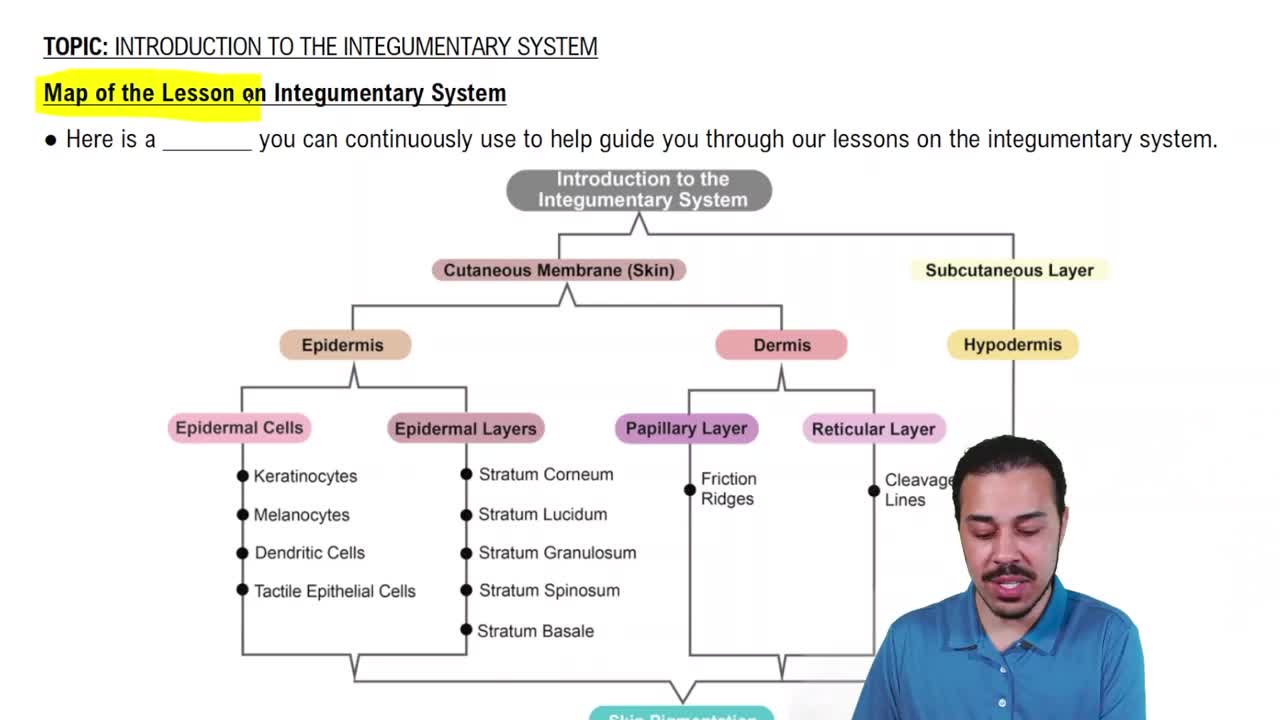
Stratum basale, stratum spinosum, stratum granulosum, stratum lucidum, and stratum corneum.
Contains dead cells filled with keratin that provide a protective barrier.
Produce melanin pigment to protect against UV radiation.
The most abundant cells in the epidermis that produce keratin, a protective protein.
Release lipids that help form a waterproof barrier in the skin.
A small muscle attached to hair follicles that causes hair to stand up, producing 'goosebumps'.
Includes the hair bulb, hair papilla, hair matrix, inner and outer root sheaths.
From inside out: medulla, cortex, and cuticle.
Secretes sebum (oil) to lubricate and waterproof the skin and hair.
Primarily adipose tissue that cushions and insulates the body.
Produces sweat to help regulate body temperature through evaporation.
A sensory receptor in the dermis that detects pressure and vibration.
Includes the nail body, lunula, eponychium, proximal nail fold, and hyponychium.
The visible, crescent-shaped whitish area at the base of the nail body.
Also called the cuticle; it protects the area between the nail and epidermis from infection.
Transmit sensory information such as touch, pain, and temperature to the nervous system.
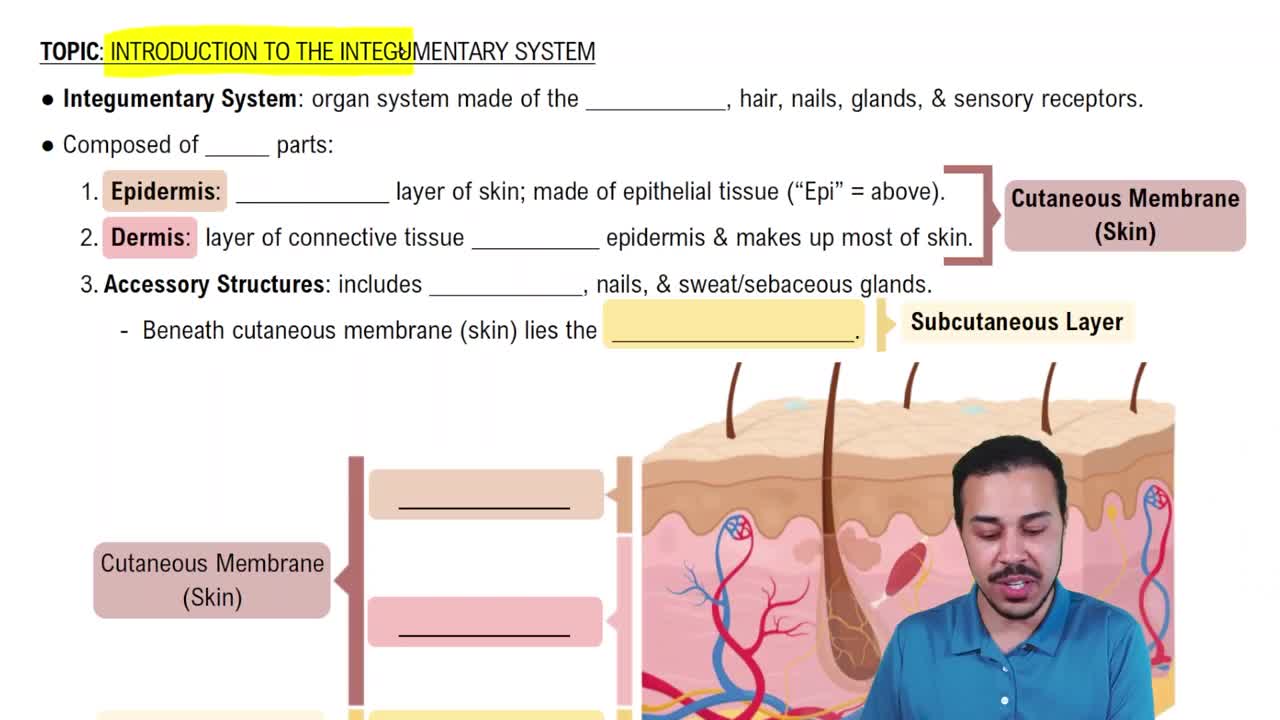
The epidermis is the outer protective layer; the dermis contains connective tissue, blood vessels, and sensory receptors.
The region of actively dividing cells in the hair bulb responsible for hair growth.
Contains blood vessels that nourish the growing hair follicle.
The outermost layer of the hair shaft made of overlapping dead cells that protect the inner layers.