 Back
Anatomy & Physiology: Integumentary System, Tissues, and Skin Repair
 06:54

Terms in this set (14)
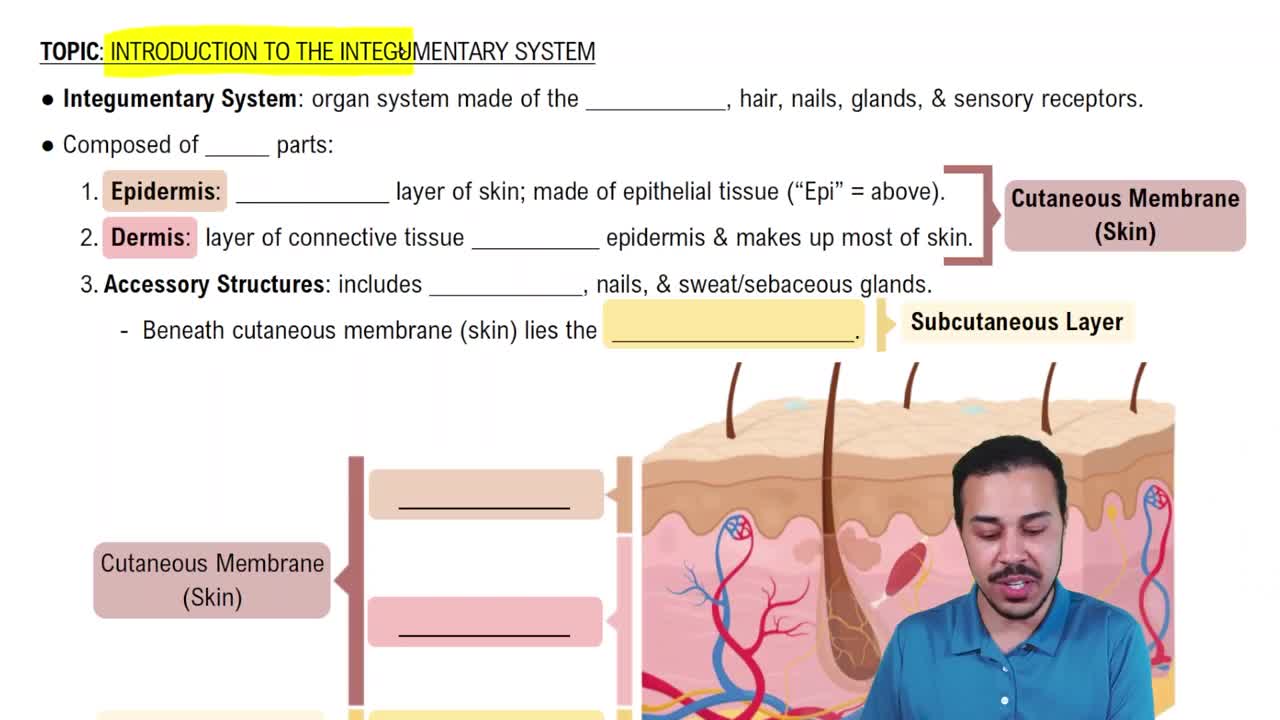
Skin, hair, nails, sweat glands, sebaceous glands, and sensory receptors.
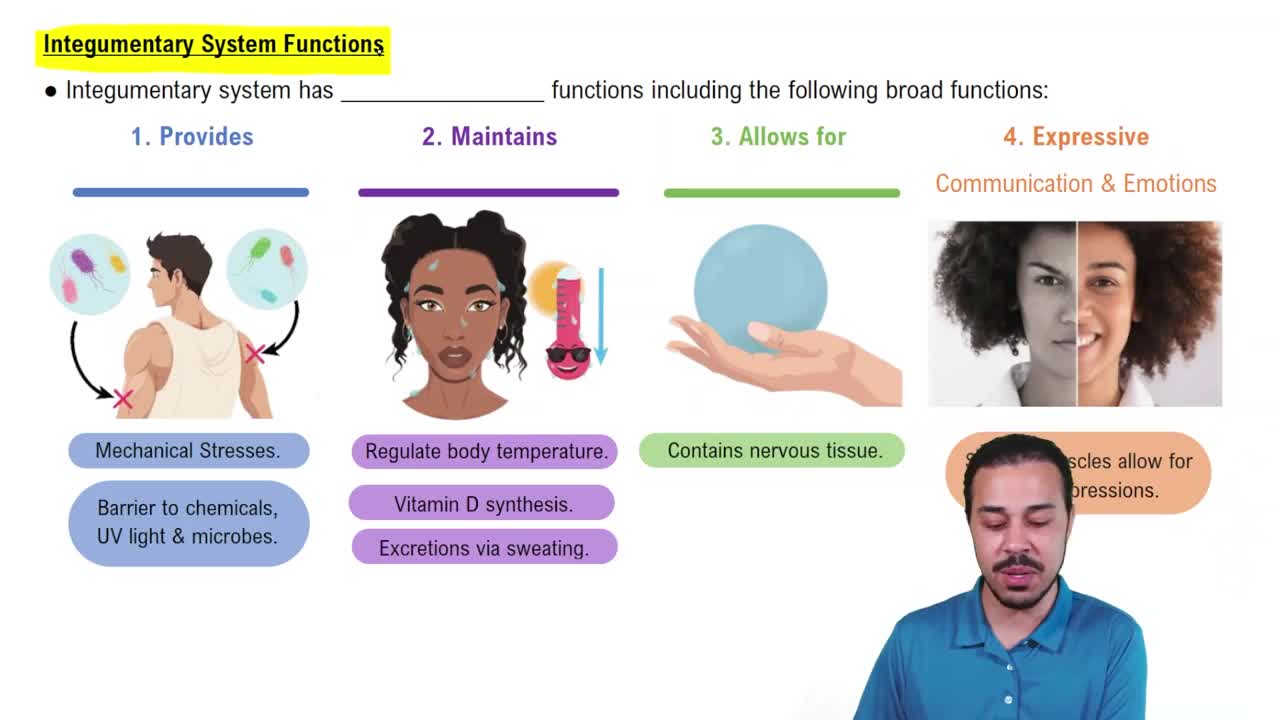
Protection, temperature regulation, sensation, vitamin D production, excretion, immune defense, and blood reservoir.
Produce keratin for protection and strength in the epidermis.
Thick skin has a thicker epidermis with a stratum lucidum, no hair follicles or sebaceous glands, found on palms and soles; thin skin covers most of the body.
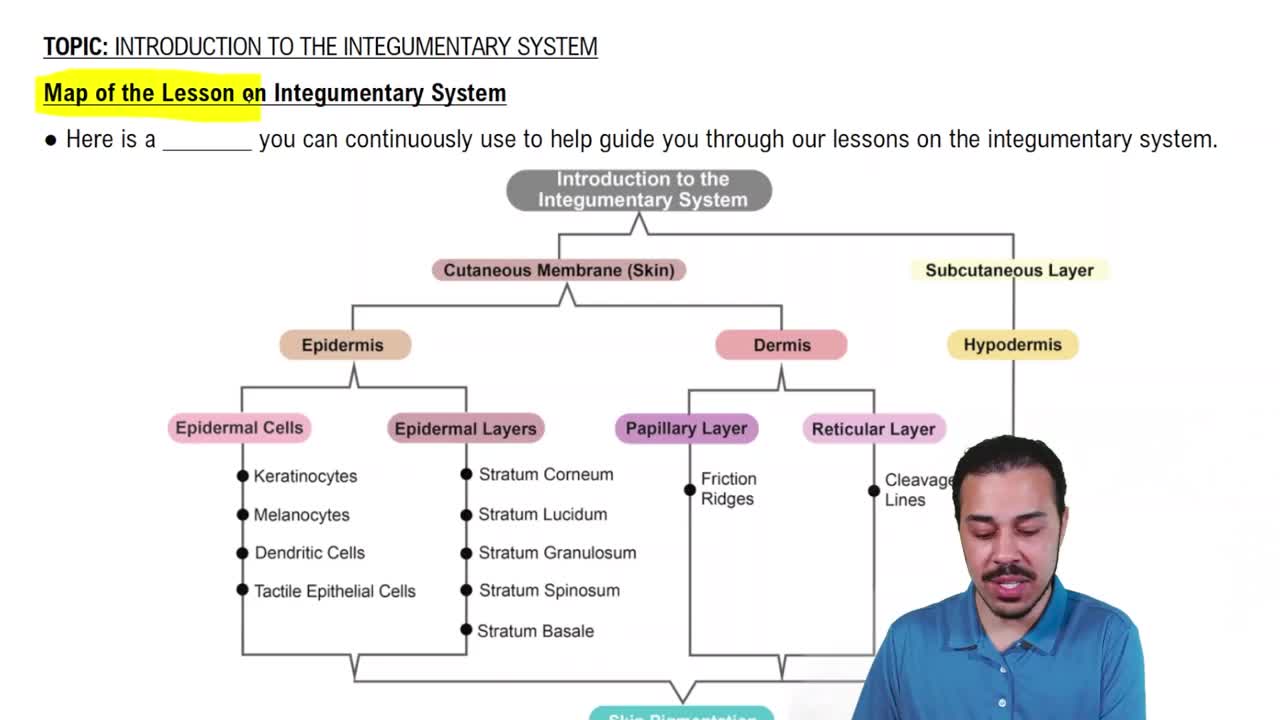
Papillary layer: superficial, areolar connective tissue with capillaries and sensory receptors.
Reticular layer: deeper, dense irregular connective tissue with collagen, elastic fibers, glands, and hair follicles.
Free nerve endings (pain, temperature), Meissner corpuscles (light touch), Pacinian corpuscles (deep pressure), hair root plexuses (hair movement), Ruffini endings (stretch).
Eccrine glands produce watery sweat for cooling; apocrine glands produce protein- and lipid-rich secretions in armpits and groin, contributing to body odor.
Inherited condition with reduced or absent melanin production, leading to pale skin, hair, and eyes, and increased UV susceptibility.
Bluish skin discoloration due to increased deoxygenated hemoglobin, indicating poor oxygenation.
Basal cell carcinoma arises from basal cells, grows slowly, rarely metastasizes; melanoma arises from melanocytes, grows rapidly, and can metastasize.
Tight junctions seal cells to prevent passage between them; desmosomes anchor cells to resist mechanical stress.
Cutaneous: skin; serous: line closed cavities; mucous: line passages open to outside; synovial: line joint capsules.
Redness, heat, swelling, and pain caused by increased blood flow and immune activity.
Eliminate harmful agents, remove damaged tissue, and initiate repair.