Back

Anatomy & Physiology: Joints and Movements
Control buttons has been changed to "navigation" mode.
1/56
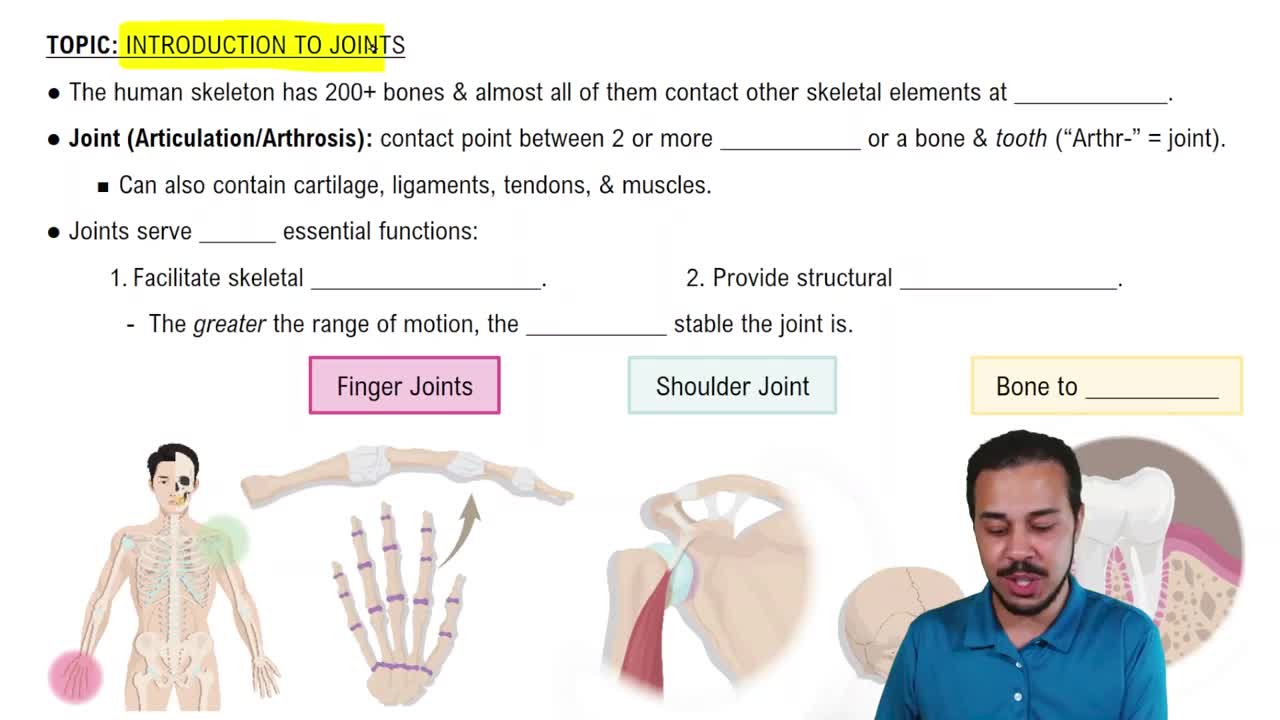
  • What are articulations?

    Joints where two bones meet.

  • What determines movement at a joint?

    Joint structure (range of motion).

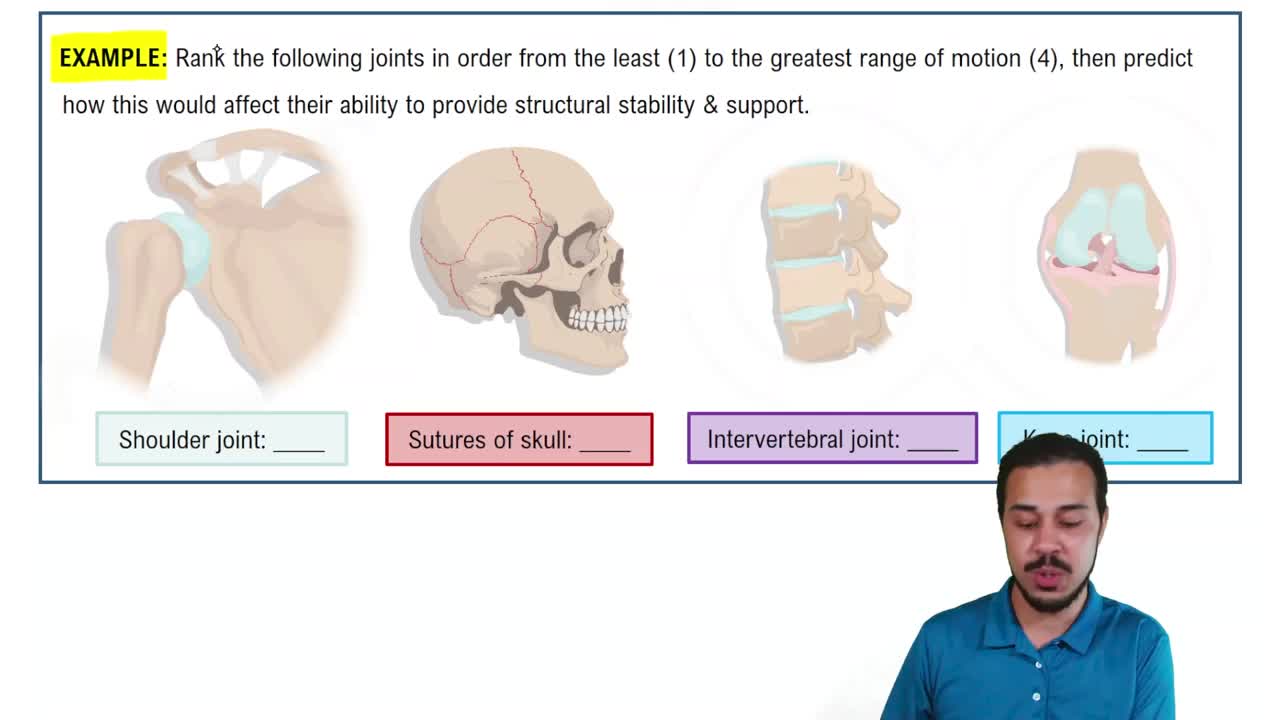
  • Relationship between mobility and strength?

    More mobility means less strength.

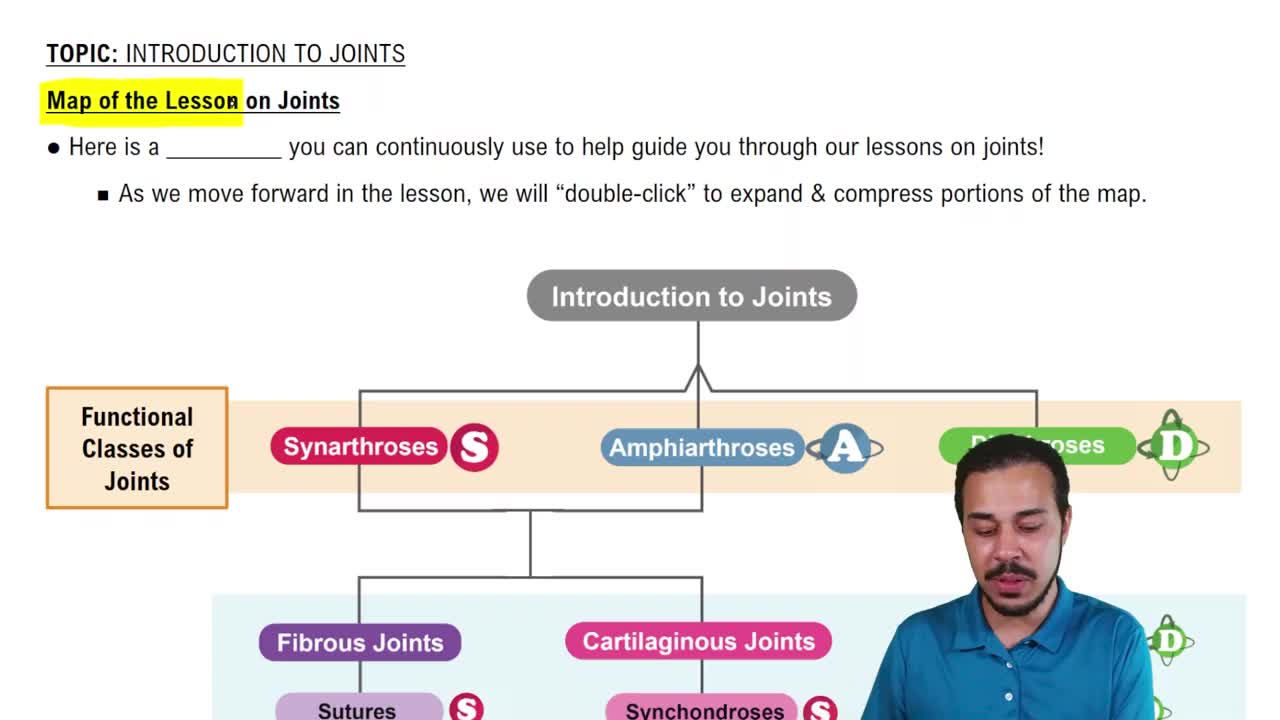
  • Functional classification of joints is based on?

    Movement.

  • What is a synarthrosis?

    Immovable joint.

  • What is an amphiarthrosis?

    Slightly movable joint.

  • What is a diarthrosis?

    Freely movable joint.

  • Structural classification of joints is based on?

    Material or structure connecting bones.

  • Name the four structural types of joints.

    Bony, fibrous, cartilaginous, synovial.

  • What is a suture?

    Immovable skull joint.

  • What is a gomphosis?

    Joint where teeth fit into sockets.

  • What is a synchondrosis?

    Cartilage joint.

  • What is a synostosis?

    Fused bone joint.

  • Movement allowed by amphiarthroses?

    Slight movement.

  • What is a syndesmosis?

    Joint connected by ligaments.

  • What is a symphysis?

    Joint with fibrocartilage pad.

  • All diarthroses are structurally what type of joint?

    Synovial joints.

  • Functions of synovial fluid?

    Lubrication, nutrient delivery, shock absorption.

  • Ligaments attach what to what?

    Bone to bone.

  • Tendons attach what to what?

    Muscle to bone.

  • What are bursae?

    Fluid-filled sacs that reduce friction.

  • What is a meniscus?

    Fibrocartilage pad in a joint.

  • What is a dislocation?

    Bones forced out of their normal position.

  • What is a subluxation?

    Partial dislocation of a joint.

  • What is gliding movement?

    Bones slide past each other.

  • Define flexion.

    Decreases the angle between bones.

  • Define extension.

    Increases the angle between bones.

  • What is hyperextension?

    Extension beyond the normal range.

  • Define abduction.

    Movement away from the midline.

  • Define adduction.

    Movement toward the midline.

  • What is circumduction?

    Circular movement of a limb.

  • Define medial rotation.

    Rotation toward the body.

  • Define lateral rotation.

    Rotation away from the body.

  • What is pronation?

    Rotation of the palm downward.

  • What is supination?

    Rotation of the palm upward.

  • Define dorsiflexion.

    Movement of toes upward.

  • Define plantar flexion.

    Movement of toes downward (tiptoe).

  • Define inversion.

    Sole of foot turns inward.

  • Define eversion.

    Sole of foot turns outward.

  • What is opposition?

    Movement of thumb to touch fingers.

  • What type of joint is a gliding joint?

    Joint with flat bone surfaces.

  • What type of joint is a hinge joint?

    Joint allowing movement in one plane (e.g., elbow).

  • What type of joint is a pivot joint?

    Joint allowing rotational movement.

  • What is a condylar joint?

    Biaxial joint allowing movement in two planes.

  • What is a saddle joint?

    Joint found in the thumb allowing wide range of motion.

  • What is a ball-and-socket joint?

    Joint with greatest range of motion, e.g., shoulder and hip.

  • What is the outer layer of an intervertebral disc?

    Anulus fibrosus.

  • What is the inner core of an intervertebral disc?

    Nucleus pulposus.

  • Which joint has the greatest range of motion?

    The shoulder joint.

  • What type of joint is the elbow?

    Hinge joint.

  • What type of joint is the hip?

    Ball-and-socket joint.

  • What type of joint is the knee?

    Complex hinge joint.

  • Function of menisci in the knee?

    Cushion and stabilize the joint.

  • What is osteoarthritis?

    Wear and tear joint disease.

  • What is rheumatoid arthritis?

    Autoimmune joint disease.

  • What is gout?

    Joint disease caused by crystal buildup.