 Back
BackAnatomy & Physiology: Joints and Movements
 04:06
04:06
Terms in this set (23)
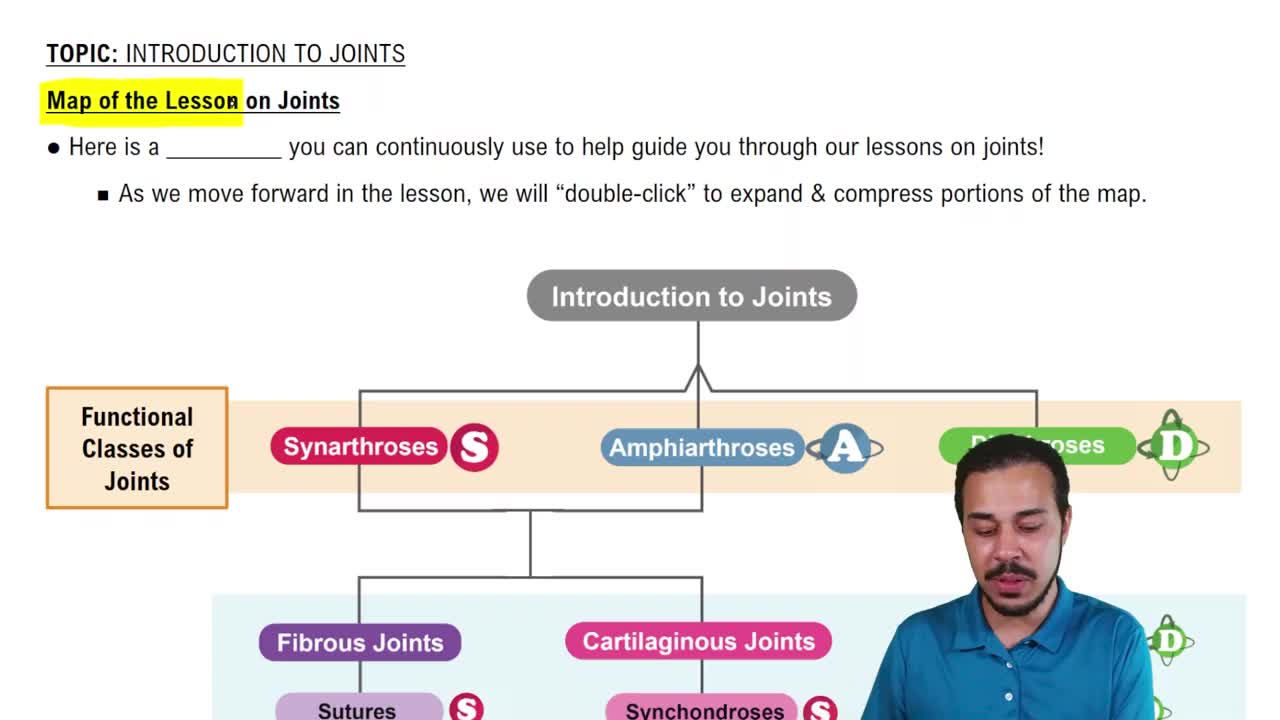
A joint where the gap between two bones ossifies into one bone, making it immovable. Examples include the mandible, frontal bone, and os coxae.
Two bones bound by collagen fibers. Includes sutures (immovable), gomphosis (slightly movable, e.g., tooth in socket), and syndesmoses (more movable, e.g., tibia & fibula).
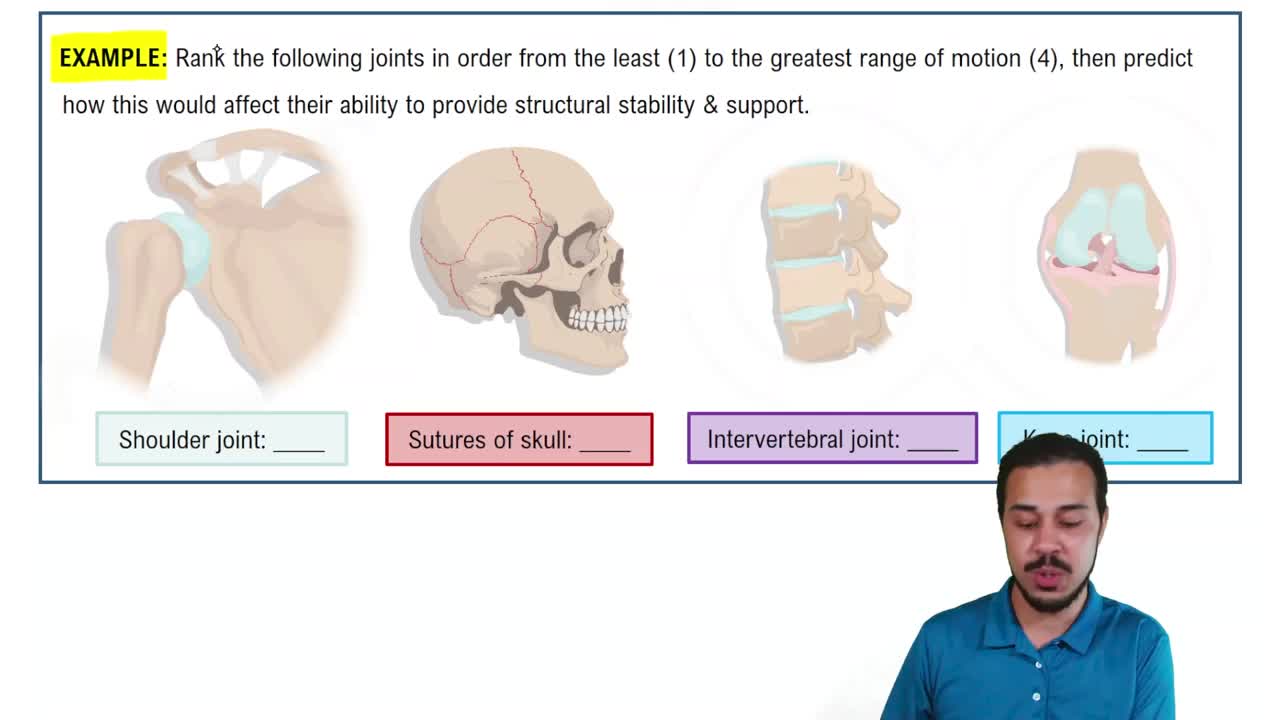
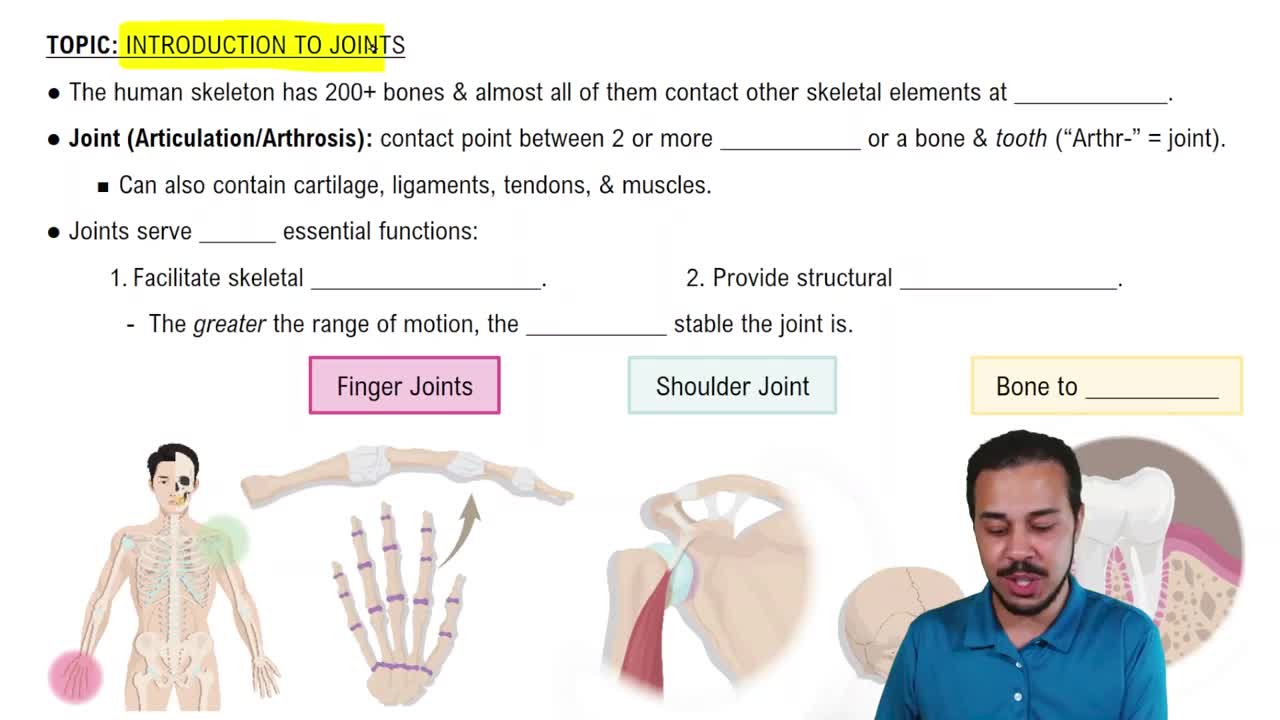
The less movement a joint has, the stronger it is; the more movement, the weaker it is.
Bones linked by cartilage. Includes synchondrosis (hyaline cartilage, e.g., epiphysis & diaphysis) and symphysis (fibrocartilage, e.g., pubic symphysis, vertebrae).
Freely movable joints where two bones are separated by a synovial fluid-filled cavity, allowing the greatest range of motion.
It nourishes joint cartilages, removes waste, and contains phagocytes that clean debris from wear and tear.
Hyaline cartilage that covers bone surfaces, providing an almost friction-free joint with synovial fluid.
A structure enclosing the joint cavity, retaining synovial fluid, with an outer fibrous capsule and inner synovial membrane that secretes synovial fluid.
C-shaped cartilages in the knee that absorb shock and prevent lateral and medial movement of the femur.
Tendons connect bone to muscle; ligaments connect bone to bone. Both are tough collagenous connective tissues.
A fibrous sac filled with synovial fluid located between muscles or between tendon and bone to cushion and reduce friction.
Flexion decreases the angle of a joint (toward 90°), while extension increases the angle (toward 180°).
Movement of a joint beyond 180°.
Abduction moves a limb away from the body midline; adduction moves it toward the midline.
Elevation raises a body part; depression lowers it.
Protraction is anterior movement of a body part; retraction is posterior movement.
Movement of a limb in a circular or conical shape.
Bone spinning on its longitudinal axis.
Supination turns the palm anteriorly ('begging for money'); pronation turns the palm posteriorly ('hand being slapped').
Tendons from four muscles (supraspinatus, infraspinatus, teres minor, subscapularis) that stabilize the shoulder joint.
A ring of fibrocartilage around the acetabulum that deepens the socket for the femur head.
The fibular (lateral) collateral ligament and tibial (medial) collateral ligament prevent knee rotation.
They prevent the femur and tibia from sliding off each other.