 Back
Anatomy & Physiology: Joints and Movements
 04:06

Terms in this set (30)
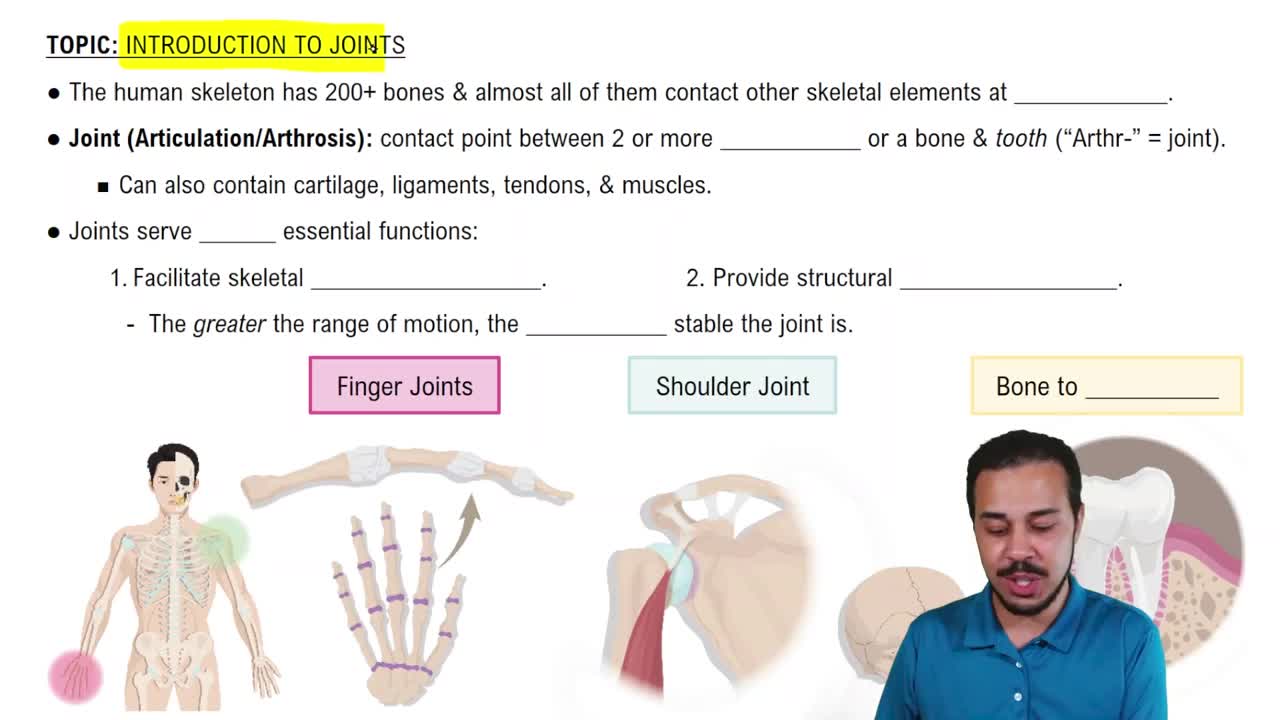
A location where two or more bones meet.
Its anatomical structure.
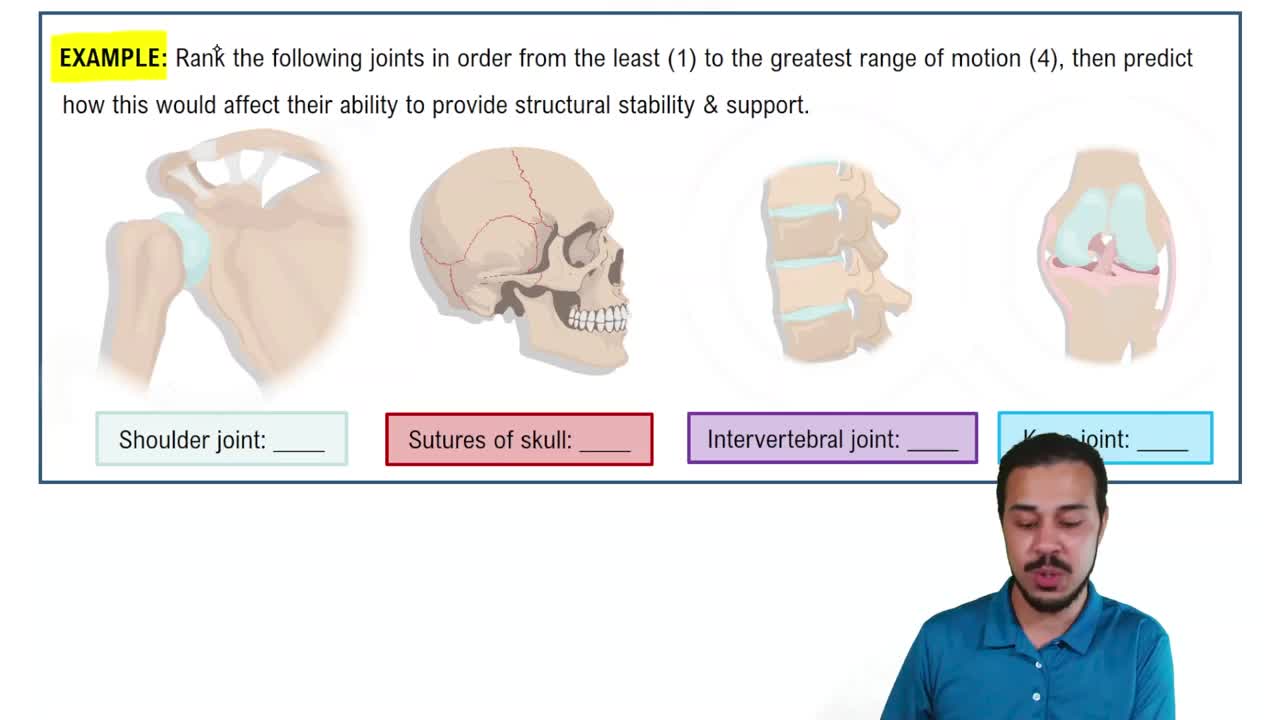
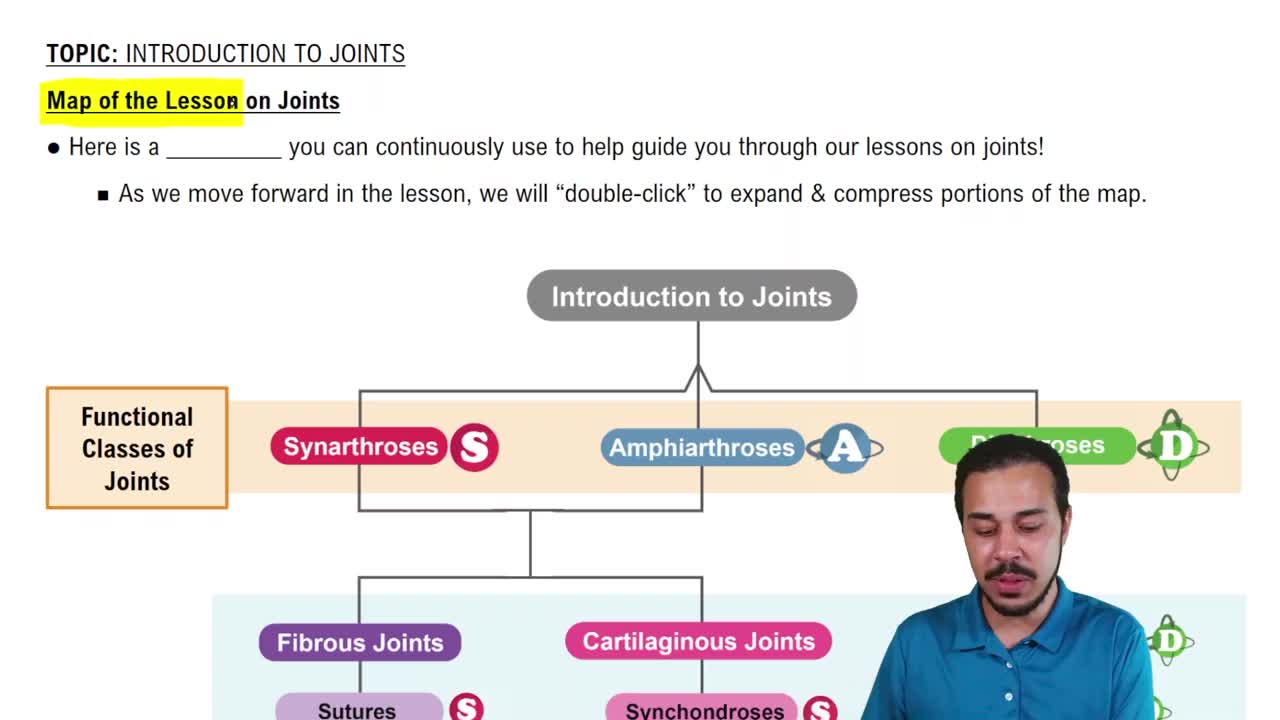
Functionally by range of motion and structurally by anatomical organization.
A joint that allows no movement and is extremely strong.
A freely movable joint.
A joint that allows limited movement; bones connected by collagen fibers or cartilage.
A joint where bones are connected by dense fibrous connective tissue.
A synarthrotic fibrous joint between bones of the skull.
A synarthrotic joint that binds a tooth to its bony socket.
An amphiarthrotic fibrous joint where bones are connected by a ligament, e.g., distal tibiofibular joint.
A joint where bones are connected by cartilage.
A synarthrotic joint formed by a rigid cartilaginous bridge between bones.
An amphiarthrotic joint where bones are separated by a pad of fibrocartilage, e.g., pubic symphysis.
A diarthrotic joint permitting a wider range of motion than other joint types.
Articular cartilage, joint capsule, synovial membrane, joint cavity, and synovial fluid.
Cartilage covering bones at a joint; resembles hyaline cartilage with a water-rich matrix.
A sac enclosing articular bone ends; reinforced by accessory structures and continuous with periosteum.
It adds strength and mobility to the joint.
The membrane lining the inside of the joint capsule that secretes synovial fluid.
Lubrication, nutrient distribution, and shock absorption.
Linear movement where relatively flat surfaces slide across one another.
Movement that changes the angle between bones.
Movement around a longitudinal axis while the bone's end remains fixed.
Movement around one axis.
A synovial joint mainly permitting flexion and extension, e.g., elbow and knee.
A synovial joint permitting movement and rotation in multiple directions, e.g., shoulder and hip.
Movement that decreases the angle of a joint.
Movement that increases the angle of a joint.
Forearm rotation that turns the palm posteriorly in anatomical position.
Forearm rotation that turns the palm anteriorly in anatomical position.