Skip to main content
Anatomy & Physiology
My Course
Learn
Exam Prep
AI Tutor
Study Guides
Textbook Solutions
Flashcards
Explore
Try the app
My Course
Learn
Exam Prep
AI Tutor
Study Guides
Textbook Solutions
Flashcards
Explore
Try the app
Back
Anatomy & Physiology: Joints and Ossification Review
You can tap to flip the card.
Joint type between adjacent vertebrae with an intervertebral disc
You can tap to flip the card.
👆
Joint type between adjacent vertebrae with an intervertebral disc
Amphiarthrosis
, a cartilaginous joint allowing limited movement.
Track progress
Control buttons has been changed to "navigation" mode.
1/28
Recommended videos
Guided course
04:06
Introduction to Joints Example 1
10564
views
246
rank
Guided course
05:29
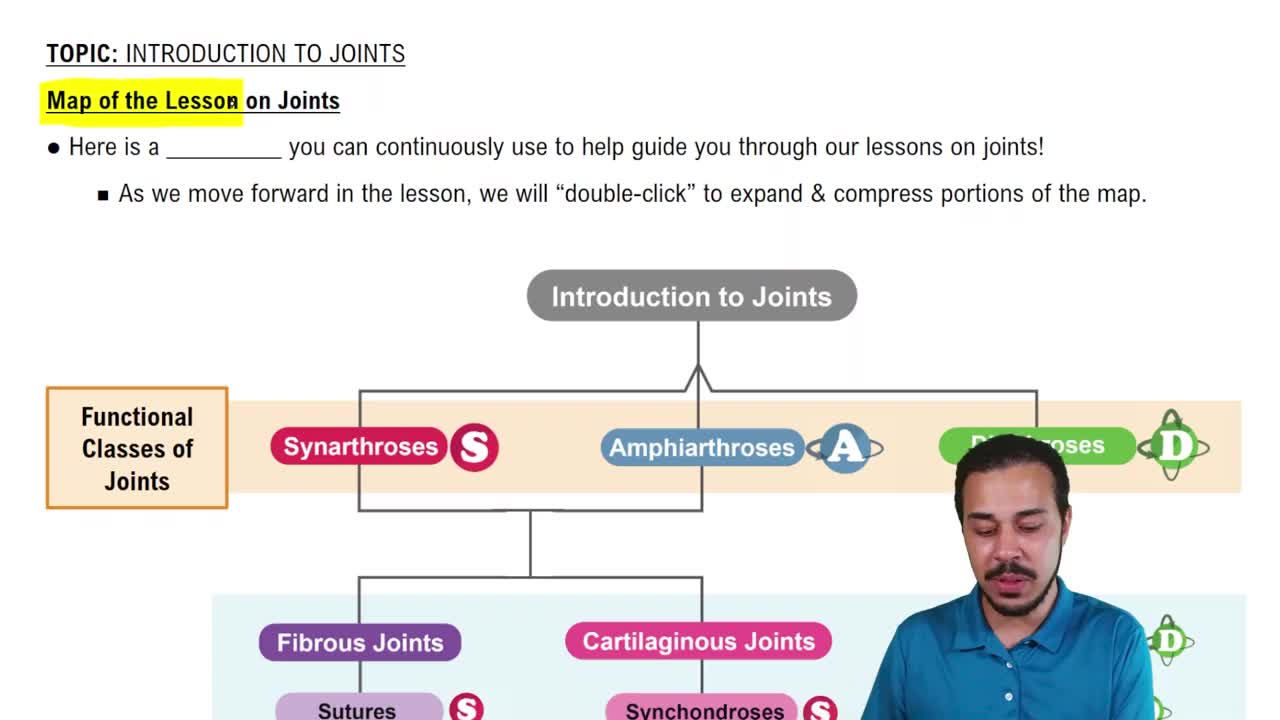
Map of the Lesson on Joints
11050
views
236
rank
1
comments
Guided course
05:39
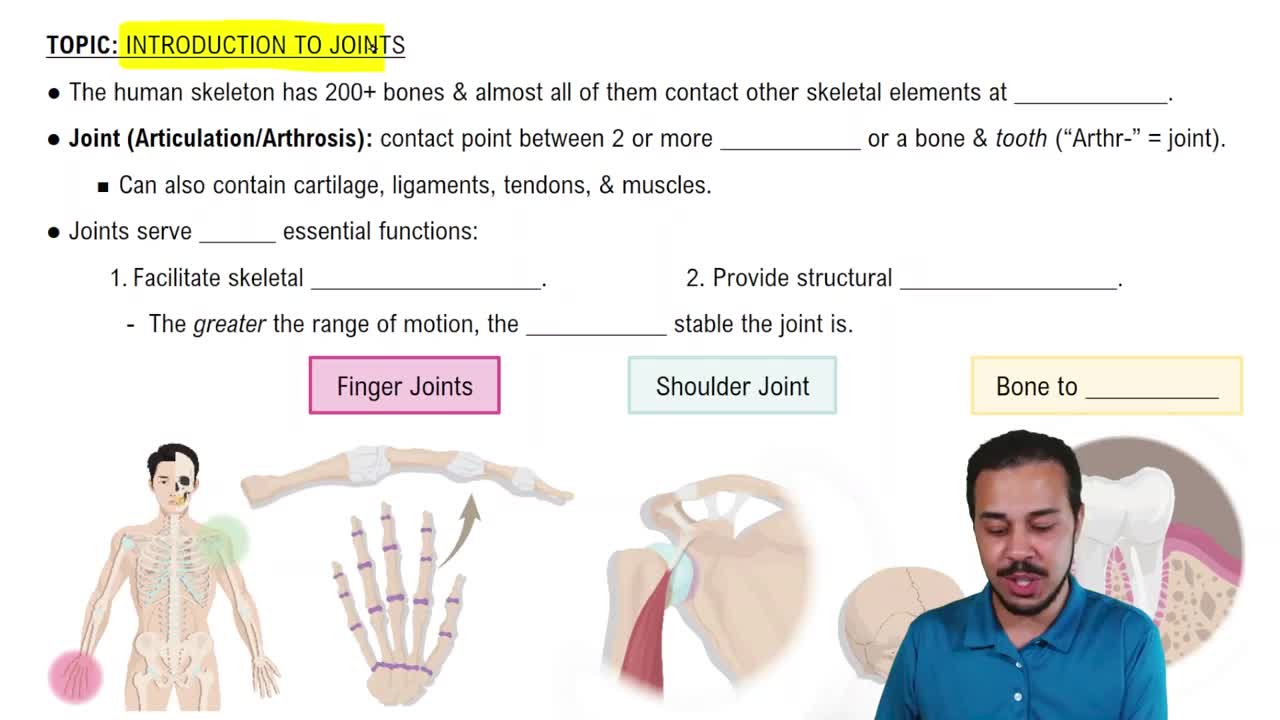
Introduction to Joints
14973
views
383
rank
Terms in this set (28)
Hide definitions
Joint type between adjacent vertebrae with an intervertebral disc
Amphiarthrosis
, a cartilaginous joint allowing limited movement.
Joint classified as a synarthrosis
A joint with no movement, such as
sutures
in the skull.
Example of a biaxial diarthrosis joint
The
elbow joint
, allowing movement in two planes.
Functional classification of synovial joints
May be classified as
amphiarthrosis
or
diarthrosis
, allowing various degrees of movement.
Fibrous joint connecting tibia and fibula
A
syndesmosis
, a narrow fibrous joint.
Wide fibrous joint example
A
suture joint
in the skull.
Definition of a gomphosis joint
A fibrous joint that
anchors teeth
into their sockets.
Definition of a syndesmosis joint
A
narrow fibrous joint
connecting bones like tibia and fibula.
Characteristic of a cartilaginous joint
Bones connected by
cartilage
without a joint cavity.
Definition of a synchondrosis
A joint where bones are connected by
hyaline cartilage
.
Joints joined by a symphysis
Bones connected by
fibrocartilage
, e.g., the pubic symphysis.
Classification of the epiphyseal plate in a growing long bone
A
symphysis
type cartilaginous joint.
Joint type with greatest range of motion
The
ball-and-socket
joint.
Joint allowing only uniaxial movement
The
hinge joint
.
Example of a synovial joint
The
shoulder joint
.
Function of a bursa
A fluid-filled sac that
reduces friction
where tendons cross joints.
Synovial membrane role
Lines the joint cavity and
produces synovial fluid
.
Definition of a meniscus
A fibrocartilage pad that
improves fit and cushions
at synovial joints.
Movement called when the foot moves away from the midline
Eversion
.
Supination motion
Rotates the hand so the palm faces
forward or upward
.
Primary ligament supporting the glenohumeral joint
The
coracohumeral ligament
.
True statement about the knee joint
The
posterior cruciate ligament
resists hyperextension.
Joint allowing inversion and eversion of the foot
The
subtalar joint
.
Vertebral region with greatest axial rotation
The
thoracic
region.
Intramembranous ossification produces
Bones of the
face and base of the skull
.
Endochondral ossification process
Bone formation from a
hyaline cartilage model
.
Synovial joints are produced by
Endochondral ossification
.
Endochondral ossification completion time
Usually
not completed before birth
.
 BackBack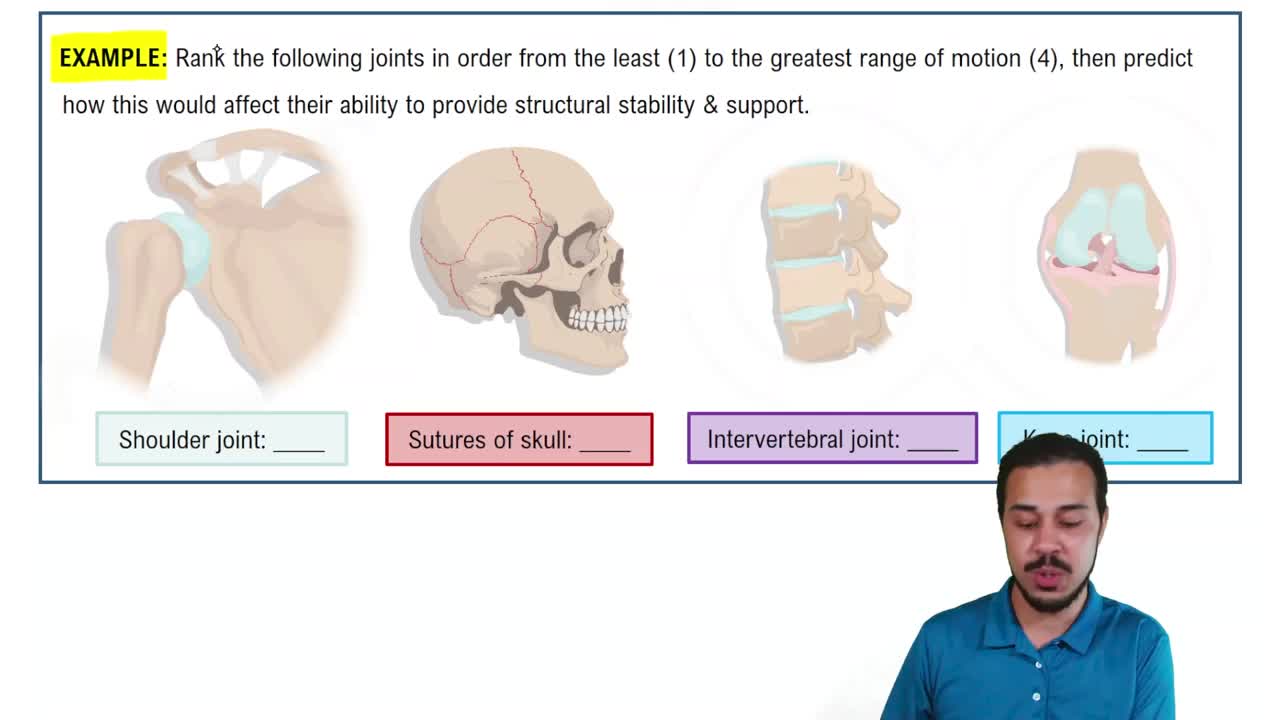
 04:06
04:06