 Back
BackAnatomy & Physiology Lab Exam One Study Guide
 02:40
02:40
Terms in this set (31)
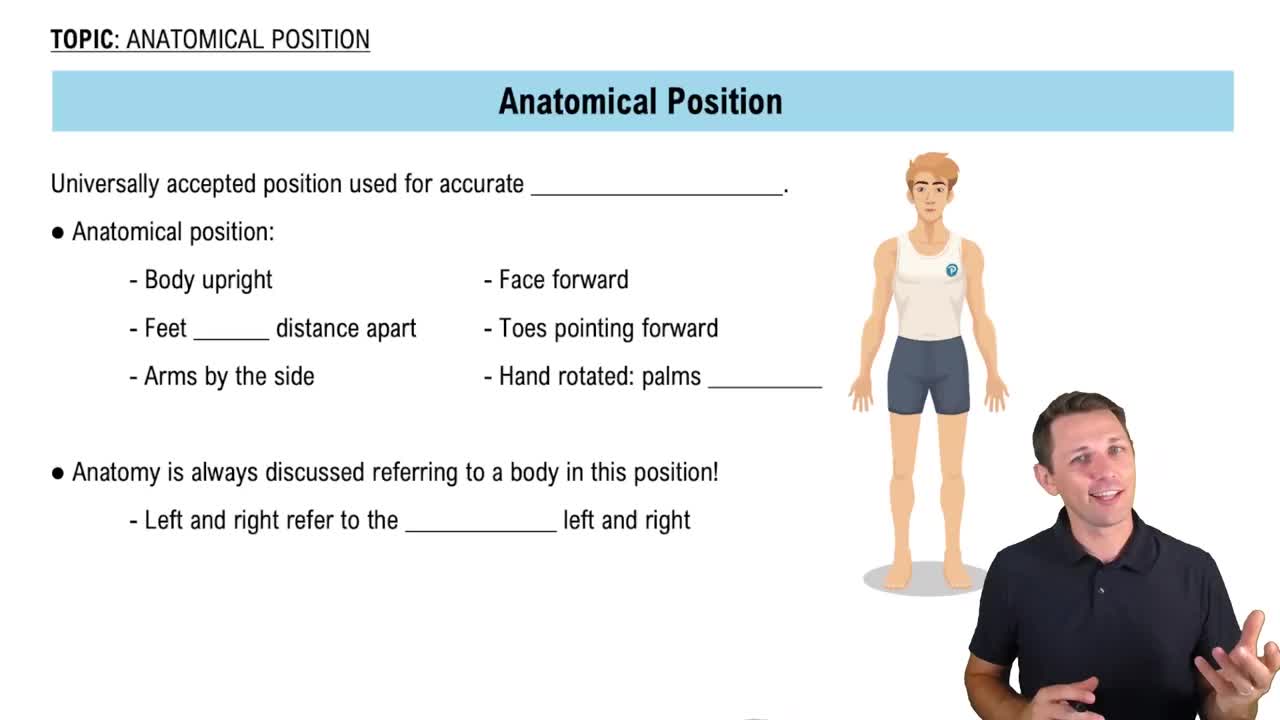
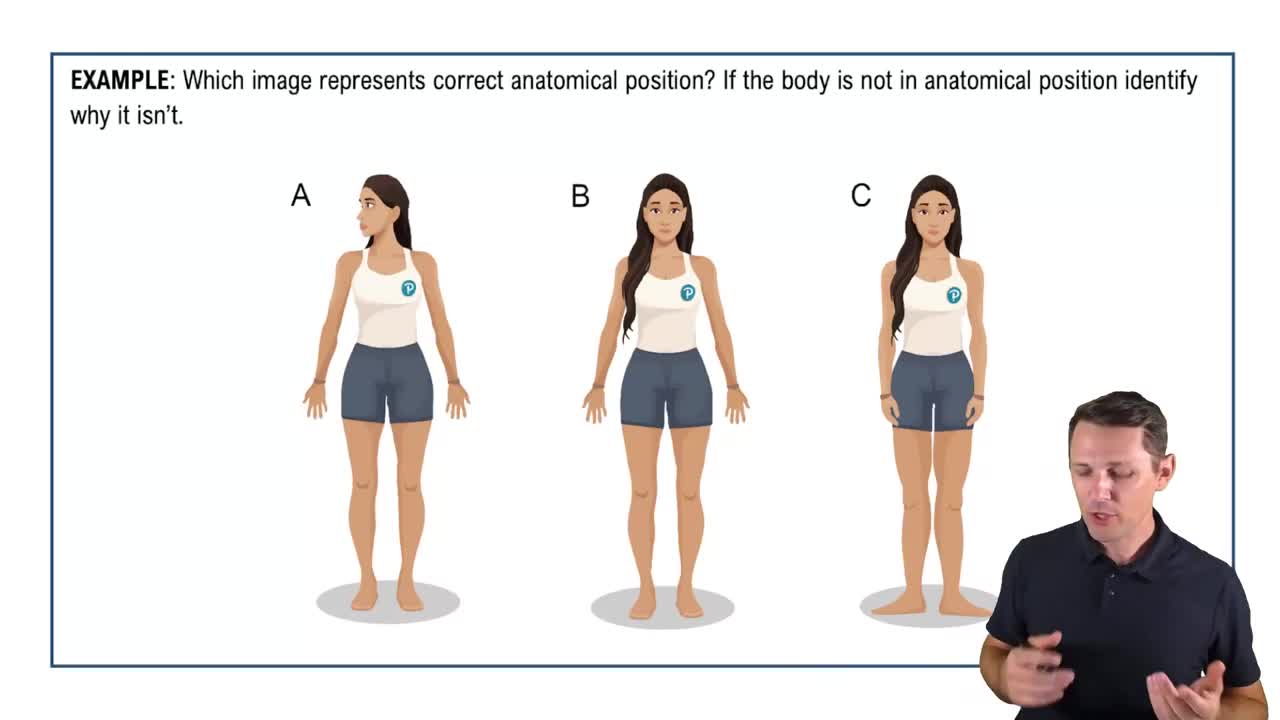
The standard reference position in anatomy where the body is standing upright, facing forward, arms at the sides with palms facing forward.
Refers to the front or belly side of the body.
Refers to the back side of the body.
Means toward the head or upper part of a structure.
Means away from the head or toward the lower part of a structure.
Closer to the point of attachment or origin.
Farther from the point of attachment or origin.
Toward the midline of the body.
Away from the midline of the body.
Closer to or on the surface of the body.
Farther from the surface of the body.
Divides the body into left and right parts.
Divides the body into equal left and right halves.
Divides the body into unequal left and right parts.
Divides the body into anterior (front) and posterior (back) parts.
Divides the body into superior (upper) and inferior (lower) parts.
Cranial, vertebral, pleural, pericardial, abdominal, and pelvic cavities.
Organelle responsible for producing energy (ATP) through cellular respiration.
Studded with ribosomes; involved in protein synthesis and transport.
Squamous (flat), cuboidal (cube-shaped), columnar (tall and column-shaped).
Simple (one layer) and stratified (multiple layers).
Single layer of flat cells; allows for diffusion and filtration.
Multiple layers of flat cells; protects underlying tissues.
Contains randomly arranged collagen fibers; cushions organs and holds tissue fluids.
Fibers tightly packed and parallel; provides strong attachment (e.g., tendons).
Hyaline (smooth, glossy), elastic (flexible), fibrocartilage (toughest, collagen-rich).
Long, cylindrical, multinucleate cells with striations; voluntary movement.
Branched, uninucleate cells with striations; involuntary, found in heart.
Spindle-shaped, uninucleate cells without striations; involuntary control.
Consists of dendrites, soma (cell body), and axon; transmits nerve impulses.
Stratum basale, stratum spinosum, stratum granulosum, stratum lucidum, stratum corneum.