 Back
Anatomy & Physiology Module 1 Study Guide
 02:40

Terms in this set (26)
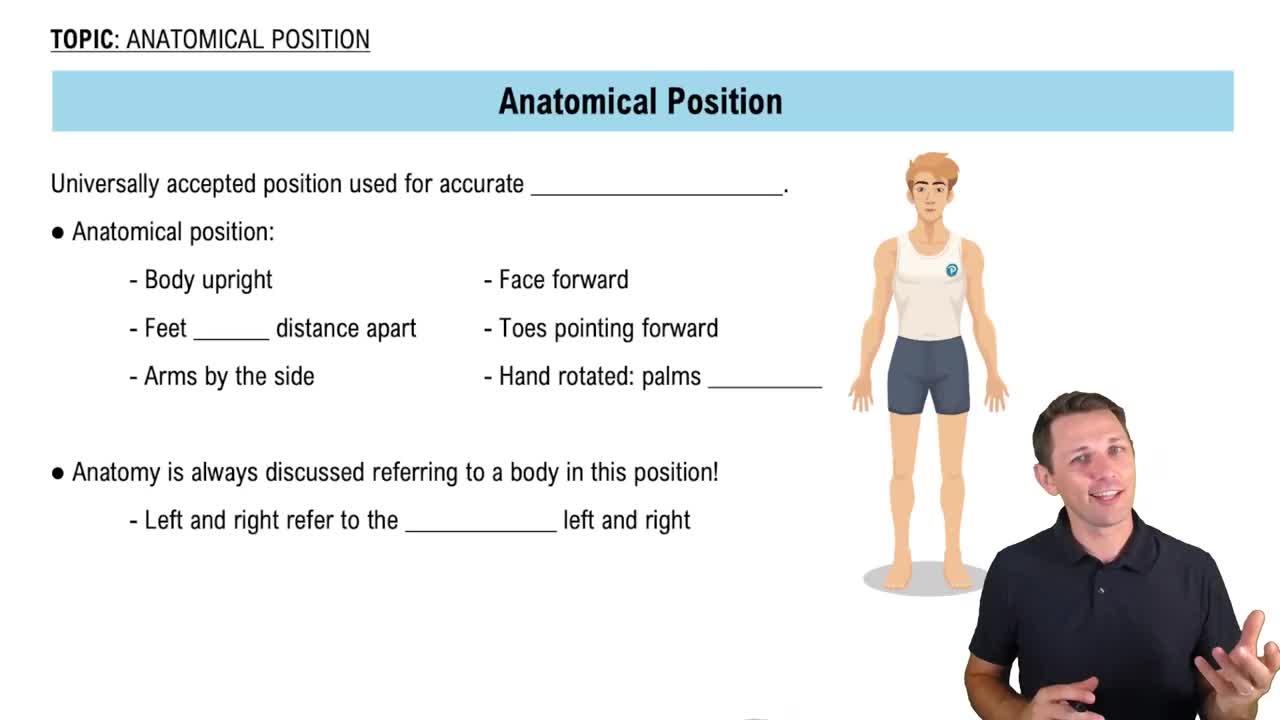
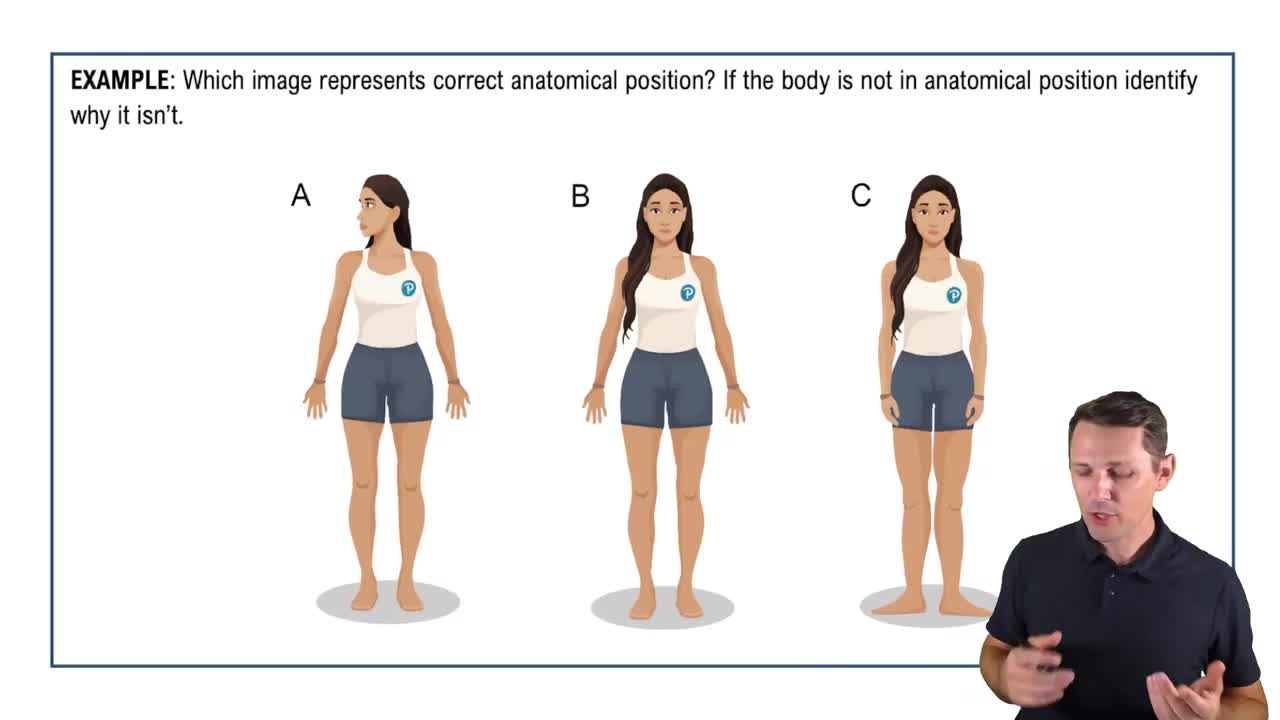
The standard body position used as a reference in anatomy: standing upright, facing forward, arms at sides, palms facing forward, and feet together.
Nucleus: controls cell activities; Mitochondria: produces energy; Ribosomes: synthesize proteins; Endoplasmic reticulum: transports materials; Golgi apparatus: processes and packages proteins.
Directional terms describe locations (e.g., anterior, posterior); laterality terms specify sides (e.g., left, right, bilateral).
Includes the mediastinum (heart, trachea, esophagus) and pleural cavities (each surrounding a lung).
Divided into the abdominal cavity (stomach, liver, intestines) and pelvic cavity (bladder, reproductive organs); includes the peritoneal cavity surrounding abdominal organs.
Right upper: liver, gallbladder; Left upper: stomach, spleen; Right lower: appendix; Left lower: descending colon.
Sagittal: divides left and right; Coronal (frontal): divides front and back; Transverse (horizontal): divides top and bottom.
Atoms → Molecules → Organelles → Cells → Tissues → Organs → Organ systems → Organism.
Intraperitoneal organs are enclosed by peritoneum and suspended in the abdominal cavity; retroperitoneal organs lie behind the peritoneum.
By cell shape: squamous, cuboidal, columnar; by layers: simple (one layer), stratified (multiple layers).
Cilia are hair-like projections on epithelial cells that move substances across the cell surface, found in respiratory tract and fallopian tubes.
Merocrine: secretion by exocytosis; Apocrine: secretion with part of cell cytoplasm; Holocrine: secretion by cell rupture.
Hemoglobin is a protein in red blood cells that binds oxygen for transport; it has a high affinity for oxygen.
Neutrophils: fight bacteria; Lymphocytes: immune response; Monocytes: phagocytosis; Eosinophils: combat parasites; Basophils: release histamine.
Loose connective: supports organs; Dense connective: provides strength; Cartilage: cushions joints; Bone: supports body; Blood: transports substances.
Water, proteins (albumin, globulins), nutrients, hormones, waste products, and electrolytes.
Appositional growth adds new layers on the surface; interstitial growth expands cartilage from within.
Skeletal: voluntary, striated; Cardiac: involuntary, striated, heart; Smooth: involuntary, non-striated, walls of organs.
Epidermis, dermis, and hypodermis (subcutaneous layer).
From deep to superficial: stratum basale, stratum spinosum, stratum granulosum, stratum lucidum (only in thick skin), stratum corneum.
Dermis contains blood vessels, nerves, hair follicles, glands; epidermis is mainly keratinized epithelial cells.
Cell body (soma), dendrites (receive signals), axon (sends signals), and synaptic terminals.
First-degree: epidermis; Second-degree: epidermis and part of dermis; Third-degree: full thickness including hypodermis.
Sudoriferous (sweat) glands: thermoregulation; Sebaceous glands: secrete oil; Ceruminous glands: produce earwax.
Nail plate, nail bed, lunula, cuticle, and nail matrix.
By presence or absence of antigens A and B on red blood cells and Rh factor, forming types A, B, AB, and O, each positive or negative.