Physiology is the study of the normal function of a living organism and its component parts, including all chemical and physical processes.
What are the levels of biological organization?
Levels include cells (smallest life unit), tissues (groups of specialized cells), organs (functional units of tissues), and organ systems (groups of organs with integrated functions).
Define homeostasis.
Homeostasis is the maintenance of a stable internal environment despite external changes, involving constant monitoring and adjustments.
What is the difference between homeostasis and equilibrium?
Homeostasis maintains a stable internal state with dynamic adjustments, while equilibrium implies no net change and balance of all forces.
What are the main components of a physiological control system?
A control system includes an input signal, integrating center (controller), and output signal to a target that produces a response.
What are covalent and non-covalent bonds?
Covalent bonds share electron pairs between atoms; non-covalent bonds include ionic bonds and hydrogen bonds, which are weaker and involve attraction without sharing electrons.
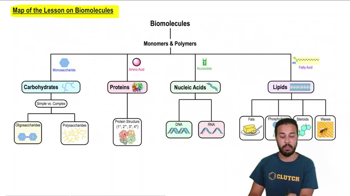
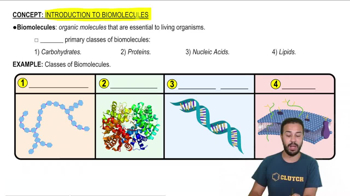
What are the four major types of biomolecules?
The four major biomolecules are carbohydrates, lipids, proteins, and nucleotides (DNA, RNA, ATP).
Describe the structure of a triglyceride.
A triglyceride consists of glycerol backbone bonded to three fatty acid chains.
What distinguishes saturated from monounsaturated fatty acids?
Saturated fatty acids have no double bonds between carbons; monounsaturated fatty acids have one double bond causing a kink in the chain.
What is the difference between starch and glycogen?
Starch is a plant polysaccharide for energy storage; glycogen is the animal equivalent, stored mainly in liver and muscle.
What are nucleotides composed of?
Nucleotides consist of a 5-carbon sugar (ribose or deoxyribose), one or more phosphate groups, and a nitrogenous base (purine or pyrimidine).
What is the primary structure of a protein?
The primary structure is the linear sequence of amino acids in a polypeptide chain.
Name the four levels of protein structure.
Primary (amino acid sequence), secondary (alpha helix or beta sheet), tertiary (3D folding), and quaternary (multiple subunits combined).
What are the main functions of proteins in the body?
Proteins act as enzymes, membrane transporters, signal molecules, receptors, binding proteins, immune defense, and regulatory proteins.
What is the role of enzymes?
Enzymes are proteins that catalyze chemical reactions by lowering activation energy without being consumed.
What factors affect enzyme activity?
Enzyme activity is affected by temperature, pH, enzyme concentration, substrate concentration, and presence of inhibitors or activators.
ATP stores and transfers energy for cellular work by breaking high-energy phosphate bonds.
What is the difference between aerobic and anaerobic respiration?
Aerobic respiration uses oxygen to produce more ATP; anaerobic respiration (fermentation) occurs without oxygen producing less ATP and lactate.
What is diffusion?
Diffusion is the passive movement of solutes from an area of high concentration to low concentration.
What is osmosis?
Osmosis is the passive movement of water across a semi-permeable membrane toward higher solute concentration.
What is the difference between passive and active transport?
Passive transport requires no energy and moves substances down their concentration gradient; active transport requires energy to move substances against their gradient.
What are the types of membrane proteins involved in transport?
Transport proteins include channel proteins (form pores) and carrier proteins (bind and transport molecules).
What is facilitated diffusion?
Facilitated diffusion uses carrier proteins to move molecules down their concentration gradient without energy.
What is primary active transport?
Primary active transport uses ATP directly to pump molecules against their concentration gradient, e.g., the sodium-potassium pump.
What is secondary active transport?
Secondary active transport uses the energy stored in ion gradients to drive the transport of other molecules, either in the same (symport) or opposite (antiport) direction.
What are the three main types of cell junctions?
Gap junctions (communication), tight junctions (barrier), and anchoring junctions (structural support).
What are the four main tissue types?
Epithelial (barrier and exchange), connective (support), muscle (movement), and nerve (signal transmission).
What is signal transduction?
Signal transduction is the process where an extracellular signal activates a membrane receptor, triggering intracellular pathways to produce a response.
 Back
 01:22