 Back
Anatomy & Physiology: Movement System and Skeletal Overview
 02:40

Terms in this set (28)
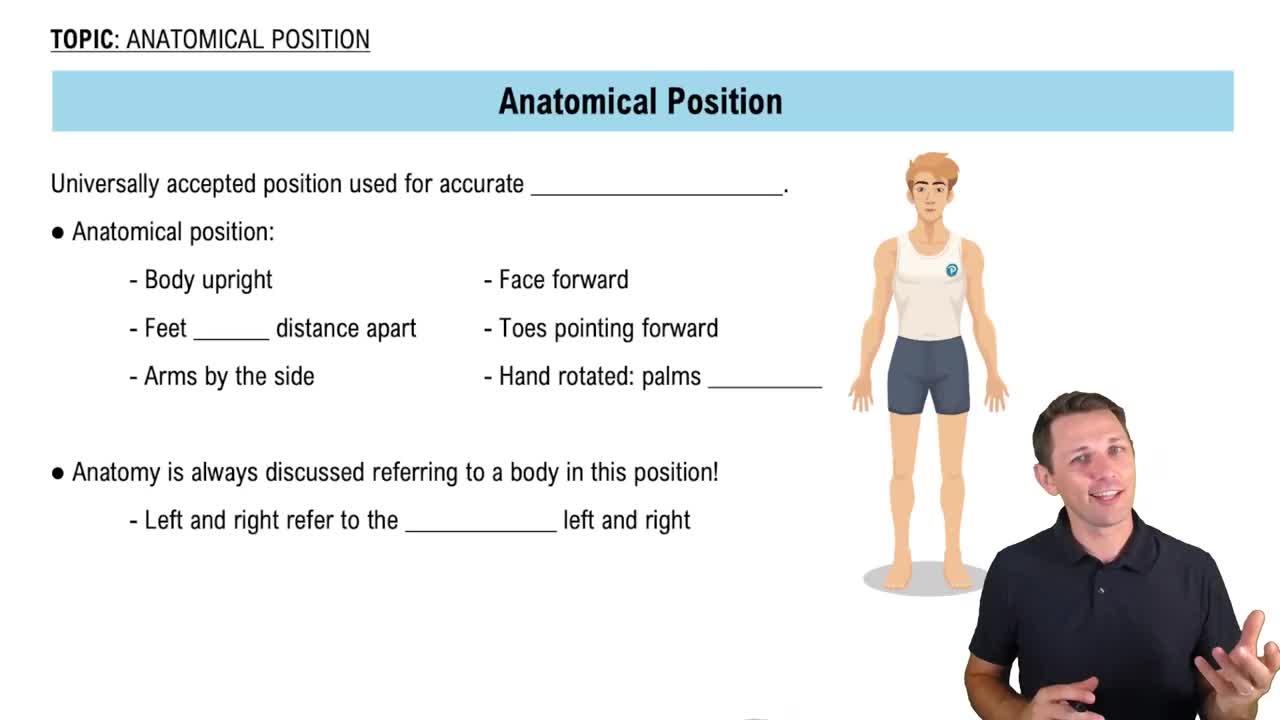
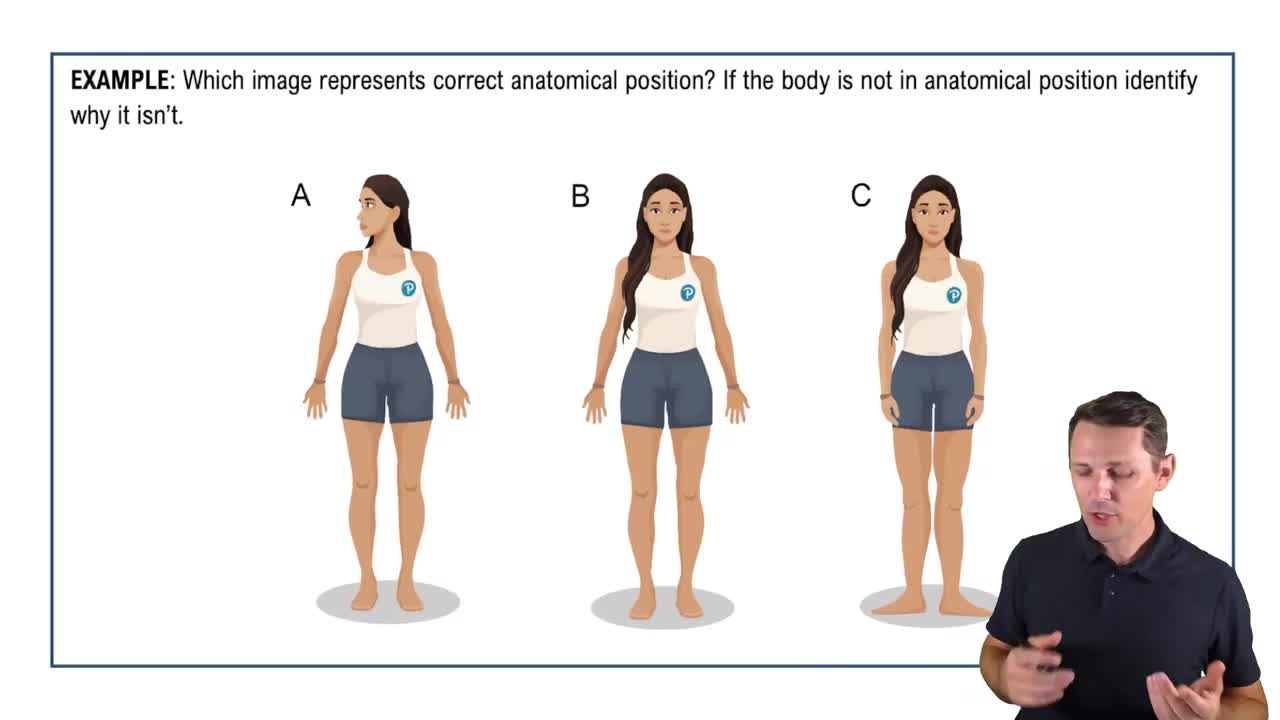
Body standing upright with heels together, head and shoulders erect, face and palms facing forward, and eyes looking straight ahead.
1. Head (Caput), 2. Neck (Collum), 3. Trunk (Thorax, Abdomen, Pelvis), 4. Upper limb (Brachium, Antebrachium, Manus), 5. Lower limb (Femur, Crus, Pes).
Vertical plane dividing the body into right and left parts, running front to back and top to bottom.
Vertical plane dividing the body into front and back parts, running side to side and top to bottom.
Horizontal plane dividing the body into upper and lower parts, parallel to the ground.
Sagittal axis (front to back), Transverse axis (side to side), Vertical axis (top to bottom).
Anterior means front, Posterior means back.
Superior means above or upper, Inferior means below or lower.
Medial means toward the midline, Lateral means away from the midline.
Proximal means closer to the point of attachment or reference, Distal means farther from it.
Cranial means toward the head, Caudal means toward the feet.
Ventral means toward the belly/front, Dorsal means toward the back.
Flexion decreases the angle between bones at a joint; Extension increases the angle.
Abduction moves a limb away from the midline; Adduction moves it toward the midline.
Combination of flexion, extension, abduction, and adduction producing a circular motion.
Turning of a bone around its own axis; includes internal (medial) and external (lateral) rotation.
Supination rotates the forearm so the palm faces up; Pronation rotates it so the palm faces down.
Inversion turns the sole of the foot inward; Eversion turns it outward.
Long, Short, Flat, Pneumatic (air-filled), Irregular, Sesamoid bones.
Consists of diaphysis (shaft), metaphysis (growth zone), and epiphysis (ends).
Support, protection, blood cell production, mineral storage, and providing attachment points for muscles.
Immovable joints connected by fibrous tissue, e.g., sutures of the skull.
Slightly movable joints connected by cartilage, e.g., intervertebral discs.
Freely movable joints with a synovial cavity, e.g., shoulder, knee.
Facies articularis, Cartilago articularis, Capsula articularis, Cavitas articularis, Ligaments, and intra-articular structures like meniscus and bursae.
Skeletal (voluntary, striated), Smooth (involuntary, non-striated), Cardiac (involuntary, striated).
Isometric: tension increases without length change; Isotonic: muscle shortens with constant tension.
Prime mover (agonist), synergist, antagonist, and fixator muscles.