 Back
Anatomy & Physiology: Nutrition and Metabolism
 03:08

Terms in this set (26)
A nutrient is a substance obtained from food that is used by the body for growth, repair, and energy.
An essential nutrient is a nutrient that the body cannot synthesize and must be obtained from the diet.
A calorie is a unit of energy that measures the amount of energy food provides to the body.
Carbohydrates, lipids, proteins, vitamins, and minerals are the five major nutrient categories.
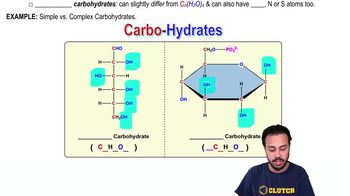
Simple carbohydrates are sugars like glucose and fructose; complex carbohydrates are polysaccharides like starch and fiber.
Saturated fatty acids have no double bonds and are solid at room temperature; unsaturated fatty acids have one or more double bonds and are liquid at room temperature.
Complete proteins contain all essential amino acids; incomplete proteins lack one or more essential amino acids.
Nitrogen balance is the difference between nitrogen intake and loss; positive balance indicates growth, negative indicates breakdown.
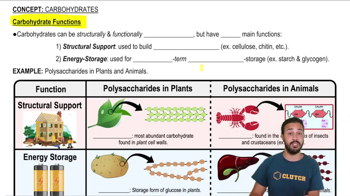
Carbohydrates primarily provide energy for cellular functions and are stored as glycogen.
Lipids serve as a dense energy source, form cell membranes, and act as hormone precursors.
Proteins are used for tissue repair, enzyme and hormone production, and as an energy source when needed.
Fat-soluble vitamins (A, D, E, K) dissolve in fats and are stored in the body; water-soluble vitamins (B-complex, C) dissolve in water and are not stored.
Vitamins A, D, E, and K are fat-soluble vitamins essential for vision, bone health, antioxidant function, and blood clotting.
Vitamins B-complex and C are water-soluble and important for metabolism and immune function.
Essential minerals include calcium, phosphorus, potassium, sodium, magnesium, iron, zinc, and iodine.
Metabolism is the sum of all chemical reactions in the body, including catabolism and anabolism.
Catabolism breaks down molecules to release energy; anabolism builds complex molecules using energy.
Oxidation is the loss of electrons; reduction is the gain of electrons; both are key in energy transfer.
Coenzymes like NAD+ and FAD carry electrons during oxidation reactions in metabolism.
Substrate-level phosphorylation directly forms ATP during glycolysis; oxidative phosphorylation produces ATP using the electron transport chain.
Glycolysis produces 2 ATP, 2 NADH, and 2 pyruvate molecules per glucose.
Glycogenesis is glycogen formation; glycogenolysis is glycogen breakdown; gluconeogenesis is glucose synthesis from non-carbohydrates.
Fatty acids are broken down by beta-oxidation into acetyl-CoA, which enters the citric acid cycle for energy.
Ketone bodies are produced during prolonged fasting or low carbohydrate intake when fatty acids are metabolized for energy.
Amino acids are deaminated, and their carbon skeletons enter metabolic pathways for energy production.
Protein synthesis is essential for cell growth, repair, enzyme production, and maintaining cellular functions.