 Back
Anatomy & Physiology: Orientation, Directional Terms, Body Planes, Cavities, Regions, and Microscope Parts
 02:40

Terms in this set (20)
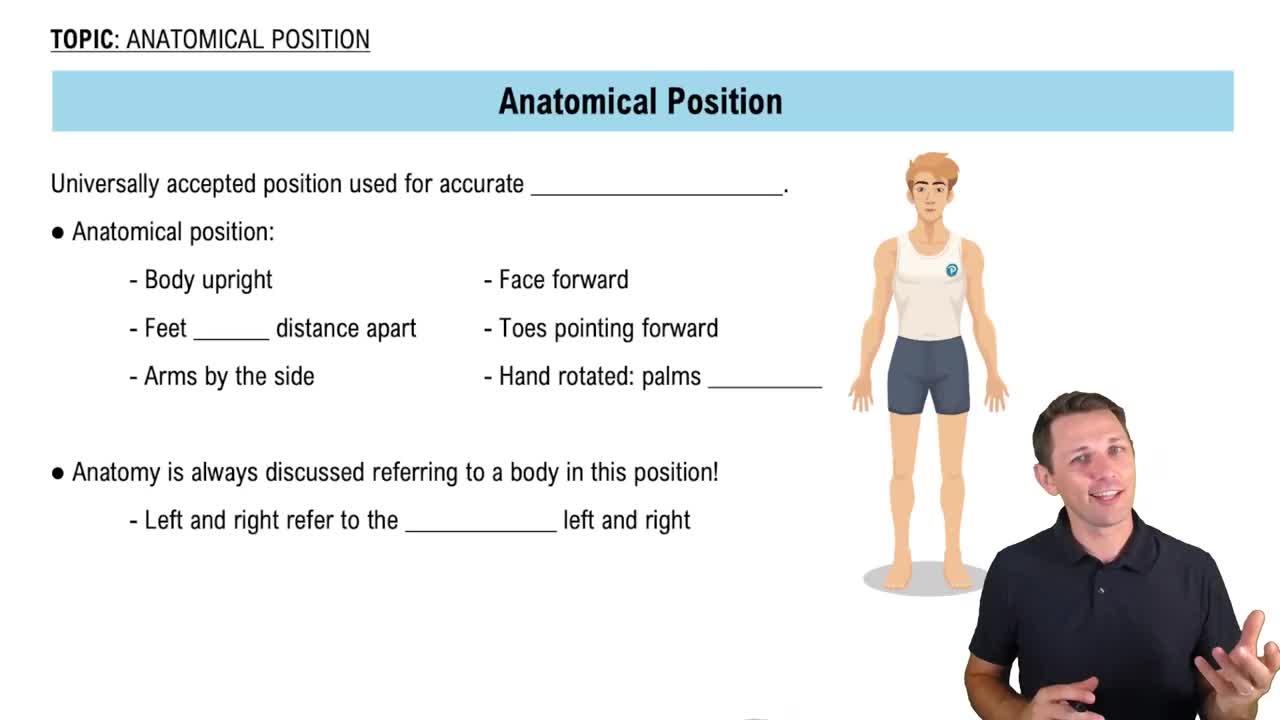
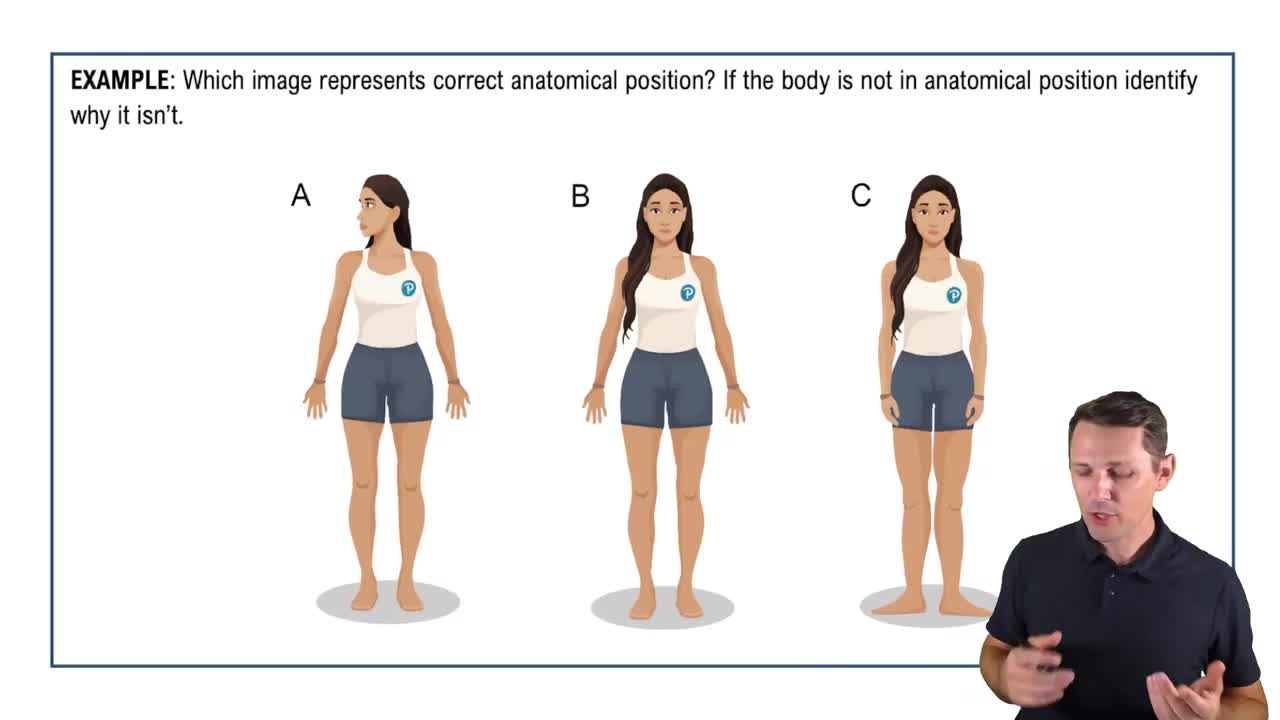
The person stands erect with feet together and eyes forward, palms face anteriorly with thumbs pointed away from the body.
Toward the head end or upper part of a structure or the body; above.
Away from the head end or toward the lower part of a structure or the body; below.
Toward or at the front of the body; in front of.
Toward or at the back of the body; behind.
Toward or at the midline of the body; on the inner side of.
Away from the midline of the body; on the outer side of.
Between a more medial and a more lateral structure.
Closer to the origin of the body part or the point of attachment of a limb to the body trunk.
Farther from the origin of a body part or the point of attachment of a limb to the body trunk.
Toward or at the body surface.
Away from the body surface; more internal.
Frontal (coronal) plane divides body into front and back; Sagittal (median) plane divides body into left and right; Transverse plane divides body into top and bottom.
Cranial cavity (contains brain) and vertebral cavity (contains spinal cord).
Thoracic cavity (heart and lungs) and abdominopelvic cavity (digestive, urinary, reproductive organs).
Cephalic (head), cervical (neck), thoracic (chest), abdominal, pelvic, pubic (genital), upper limb, lower limb.
Provides a sturdy flat surface to support and steady the microscope.
Holds the slide in position for viewing and has two adjustable knobs that control the precise movement of the slide.
Multiply the objective lens magnification by the ocular lens magnification.
The working distance gets smaller as objective lens magnification gets greater.