 Back
BackAnatomy & Physiology: Osseous Tissue and Skeletal System
 3:56
3:56
Terms in this set (29)
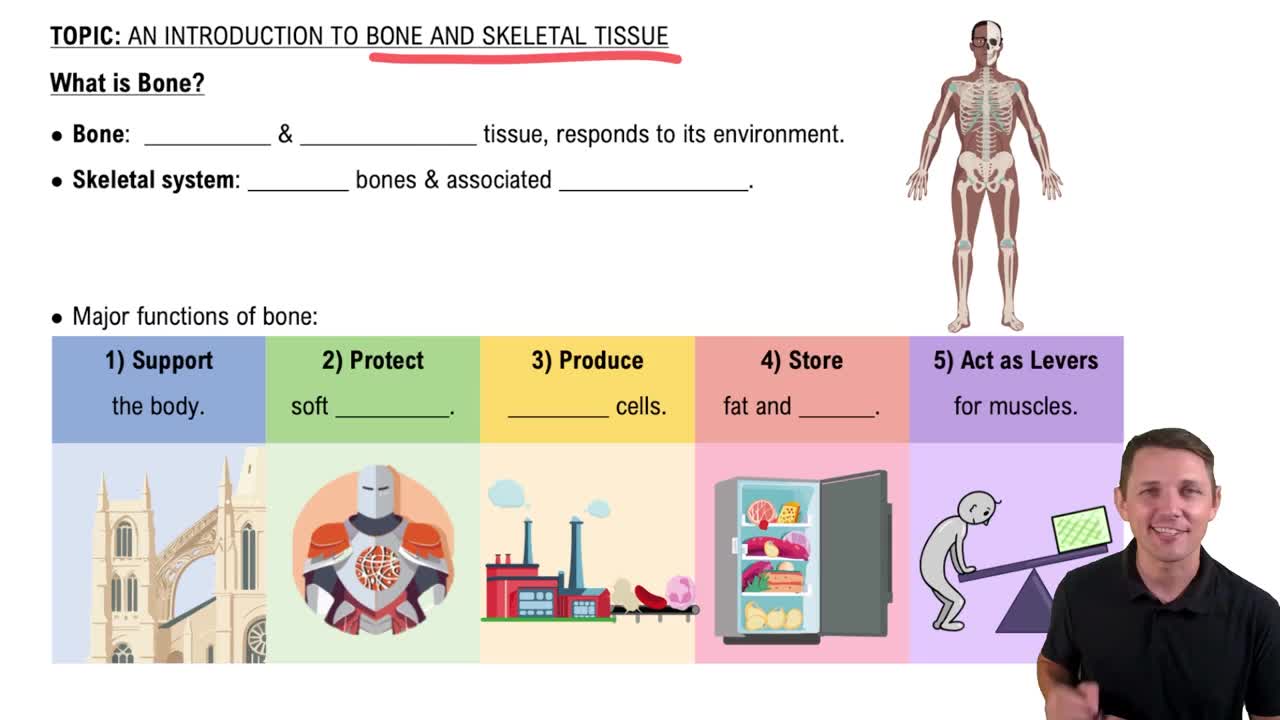
Support, storage of minerals and lipids, blood cell production (hematopoiesis), protection, and leverage for movement.
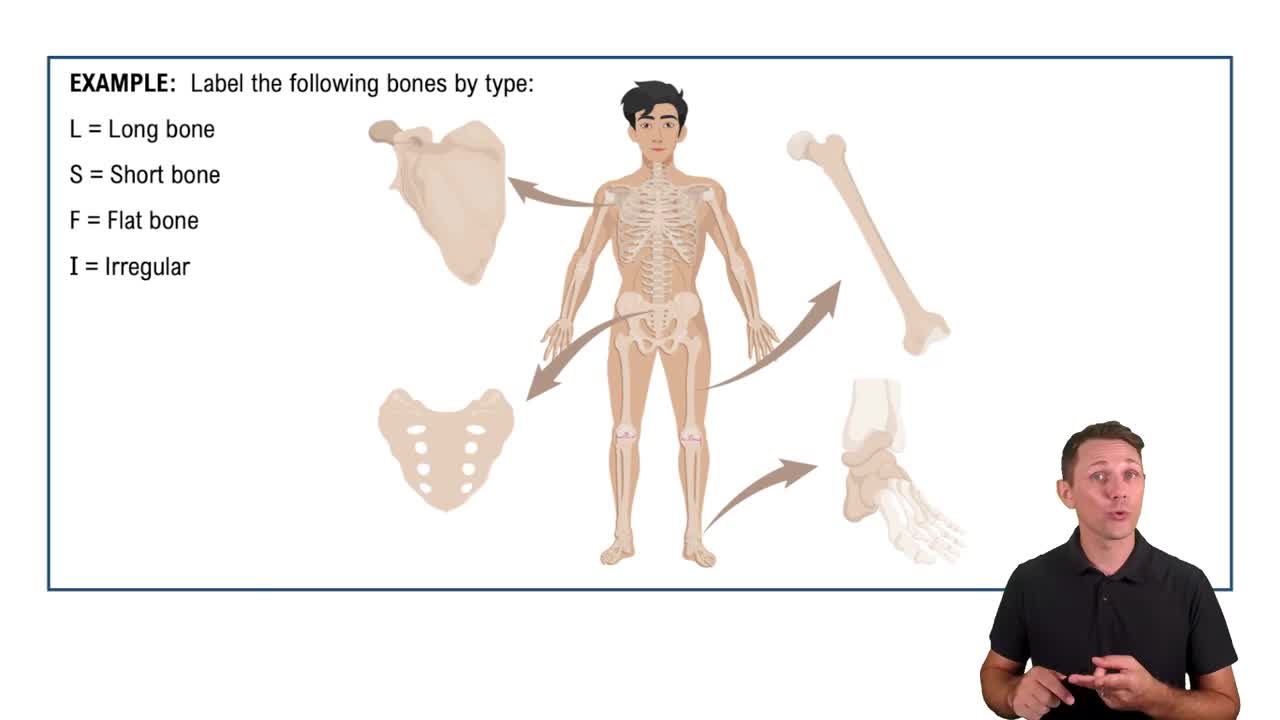
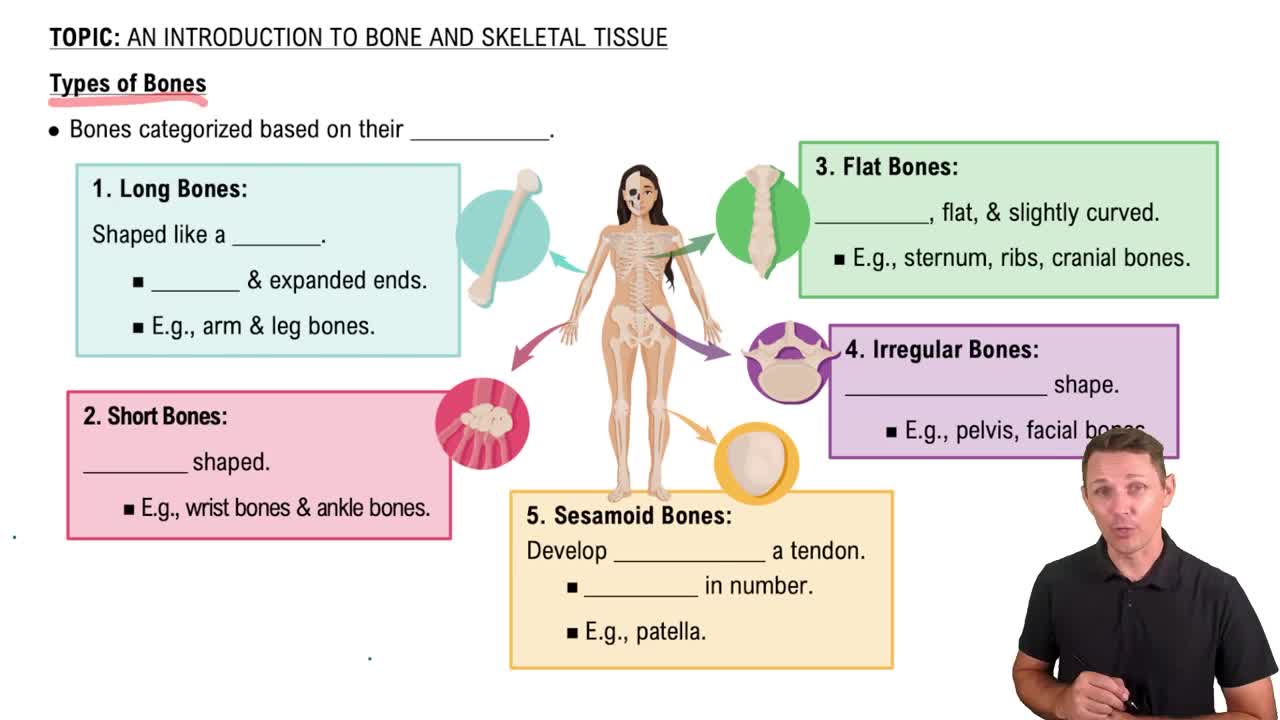
Sutural, irregular, short, flat, long, and sesamoid bones.
Projections are sites for muscle, tendon, and ligament attachment or articulations. Openings and depressions allow passage of blood vessels and nerves.
Diaphysis (shaft) with compact bone and medullary cavity; epiphysis (ends) mostly spongy bone; metaphysis where diaphysis and epiphysis meet.
Spongy bone (diploë) sandwiched between two layers of compact bone, e.g., parietal bones of the skull.
Osteogenic cells, osteoblasts, osteocytes, and osteoclasts.
Mesenchymal stem cells that divide to produce osteoblasts; located in periosteum and endosteum; assist in fracture repair.
Immature bone cells that produce new bone matrix (osteoid) during ossification; become osteocytes when surrounded by matrix.
Mature bone cells in lacunae; maintain matrix and help repair damaged bone; communicate via canaliculi.
Large multinucleate cells that absorb and remove bone matrix by secreting acids and enzymes; important for bone homeostasis.
Functional unit of compact bone; concentric lamellae surround central canal containing blood vessels; perforating canals carry vessels deep into bone.
Lacks osteons; matrix forms trabeculae network; spaces filled with red bone marrow for blood cell formation; nutrients reach osteocytes by diffusion.
Membrane covering bone surface (except joints); isolates bone, provides blood and nerve routes, and participates in growth and repair.
Incomplete cellular layer lining medullary cavity and trabeculae; contains osteogenic cells, osteoblasts, and osteoclasts; active in growth and remodeling.
Ossification is bone formation; calcification is deposition of calcium salts during ossification.
Bone develops by replacing hyaline cartilage; primary method for forming long bones.
Bone develops directly from mesenchymal tissue in the dermis; forms flat bones like mandible and clavicles.
Continuous process of bone matrix recycling involving osteocytes, osteoblasts, and osteoclasts; balances bone deposition and removal.
Stimulates osteoblast activity; heavily stressed bones become thicker and stronger through mineral recycling.
Calcium, phosphorus, magnesium, fluoride, iron, manganese, vitamins C (collagen synthesis), A (osteoblast activity), K, and B-12 (bone protein synthesis).
Calcitriol produced in kidneys promotes calcium and phosphate absorption in the digestive tract; deficiency causes soft bones (rickets, osteomalacia).
Growth hormone and thyroxine stimulate growth; sex hormones (estrogen, testosterone) stimulate osteoblasts; PTH and calcitonin regulate calcium homeostasis.
Bones store 99% of the body's calcium, vital for physiological processes like muscle contraction and nerve function.
Increases blood calcium by stimulating osteoclasts, enhancing intestinal absorption via calcitriol, and reducing kidney excretion.
Decreases blood calcium by inhibiting osteoclasts, increasing calcium excretion, reducing calcitriol secretion, and lowering intestinal absorption.
Open (compound) or closed (simple); includes transverse, displaced, compression, spiral, epiphyseal, comminuted, greenstick, Colles, and Pott's fractures.
Hematoma formation, callus formation (internal and external), spongy bone formation by osteoblasts, and compact bone formation for remodeling.
Bones become thinner and weaker (osteopenia); women lose more bone mass than men; epiphyses, vertebrae, and jaws most affected.
Severe bone mass loss compromising function; affects 29% of women and 18% of men over 45; accelerated by decreased sex hormones after menopause.