 Back
BackAnatomy & Physiology Review Chapters 1-3
 01:59
01:59
Terms in this set (29)
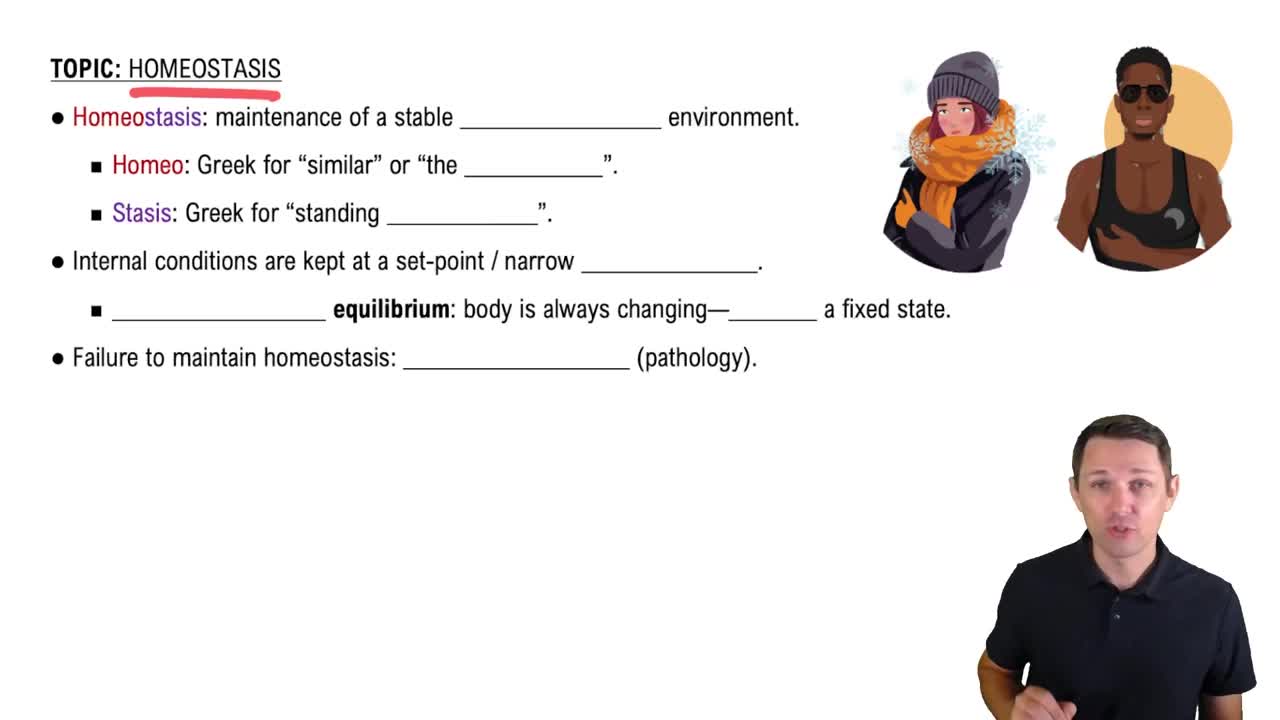
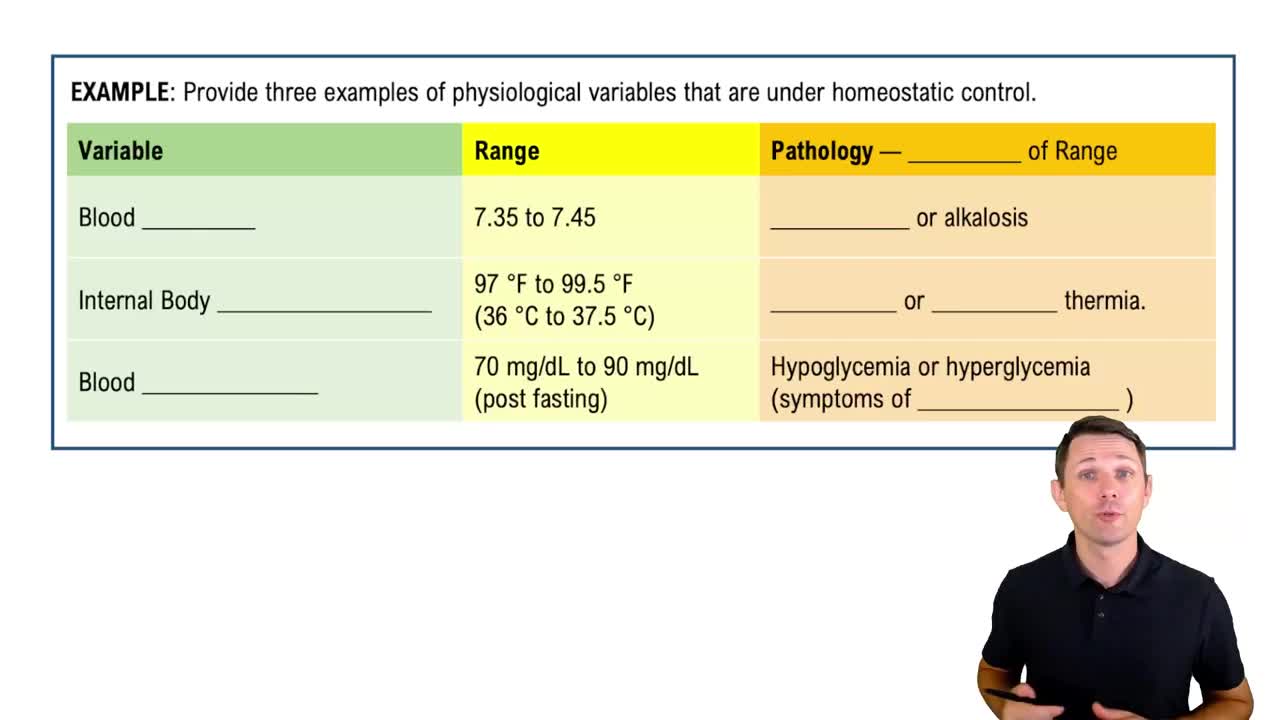
Homeostasis is the body's ability to maintain a stable internal environment despite external changes.
Components include a receptor (detects change), control center (processes info), and effector (responds to restore balance).
Negative feedback reverses a change to return to normal, e.g., body temperature regulation.
Positive feedback amplifies a change, e.g., blood clotting or childbirth contractions.
Body standing upright, facing forward, arms at sides, palms facing forward, feet flat and directed forward.
Ventral cavity includes thoracic and abdominopelvic cavities; dorsal cavity includes cranial and spinal cavities.
Contains the heart and lungs, protected by the rib cage.
Right upper, right lower, left upper, and left lower quadrants.
The bellybutton is inferior to the chin.
The palm is distal to the elbow.
Sagittal (left/right), frontal (front/back), and transverse (top/bottom) planes.
Pleura (lungs), pericardium (heart), and peritoneum (abdominal organs).
Atom → molecule → organelle → cell → tissue → organ → organ system → organism.
Atomic number = number of protons; atomic mass = protons + neutrons.
Ions are charged atoms; cations are positive, anions are negative.
The valence shell is the outer electron shell; the octet rule states atoms are stable with 8 electrons in this shell.
Synthesis: build molecules; decomposition: break down molecules; exchange: swap parts between molecules.
Enzymes are biological catalysts that speed up chemical reactions without being consumed.
Hydrophilic: water-attracting; hydrophobic: water-repelling.
Covalent (shared electrons), ionic (electron transfer), hydrogen (weak attraction), and polar covalent (unequal sharing).
High heat capacity, solvent ability, cohesion, adhesion, and chemical reactivity.
Acids release H+ ions; bases release OH- ions or accept H+.
Carbohydrates, proteins, lipids, and nucleic acids.
Monosaccharides: single sugars; disaccharides: two sugars; polysaccharides: many sugars (e.g., glucose, sucrose, glycogen).
Energy storage, insulation, cell membrane structure, and steroid hormone precursors.
A lipid made of glycerol and three fatty acids, used for energy storage.
DNA and RNA store and transmit genetic information.
ATP is the cell's main energy currency, providing energy for cellular processes.
An active transport protein that moves 3 Na+ out and 2 K+ into the cell, maintaining membrane potential.