 Back
Anatomy & Physiology: Skeletal and Integumentary Systems
 06:54

Terms in this set (20)
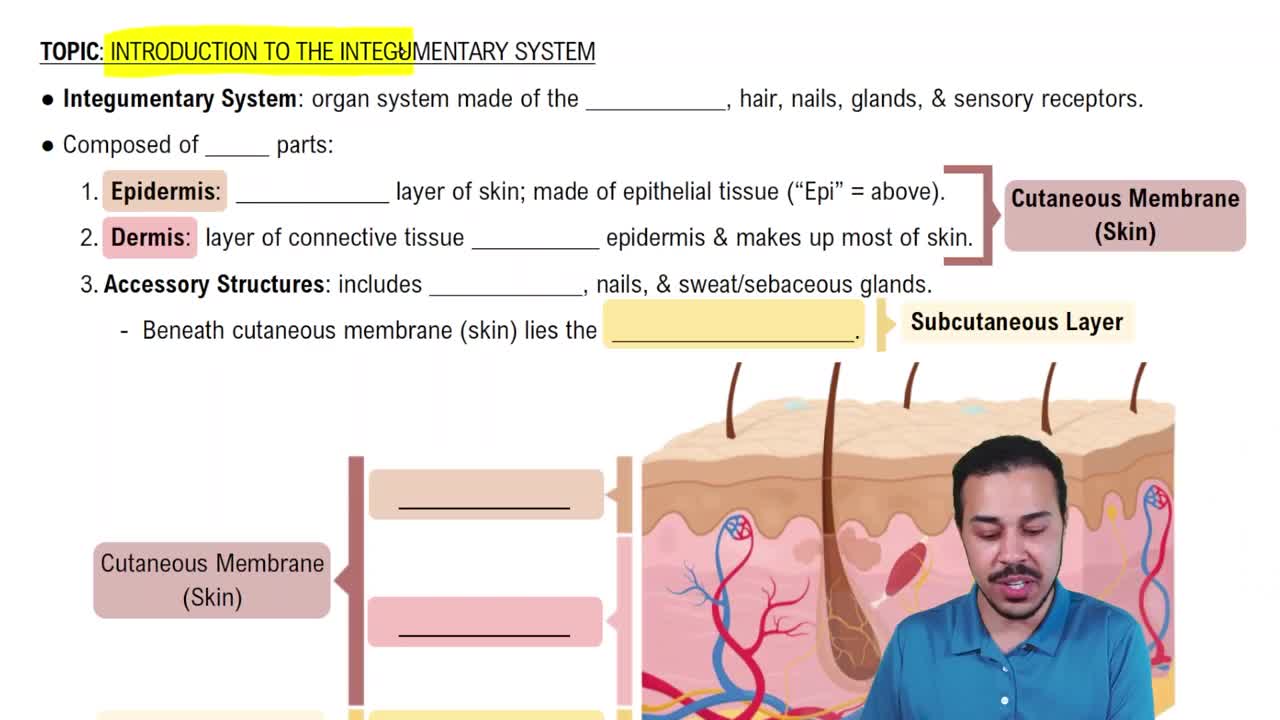
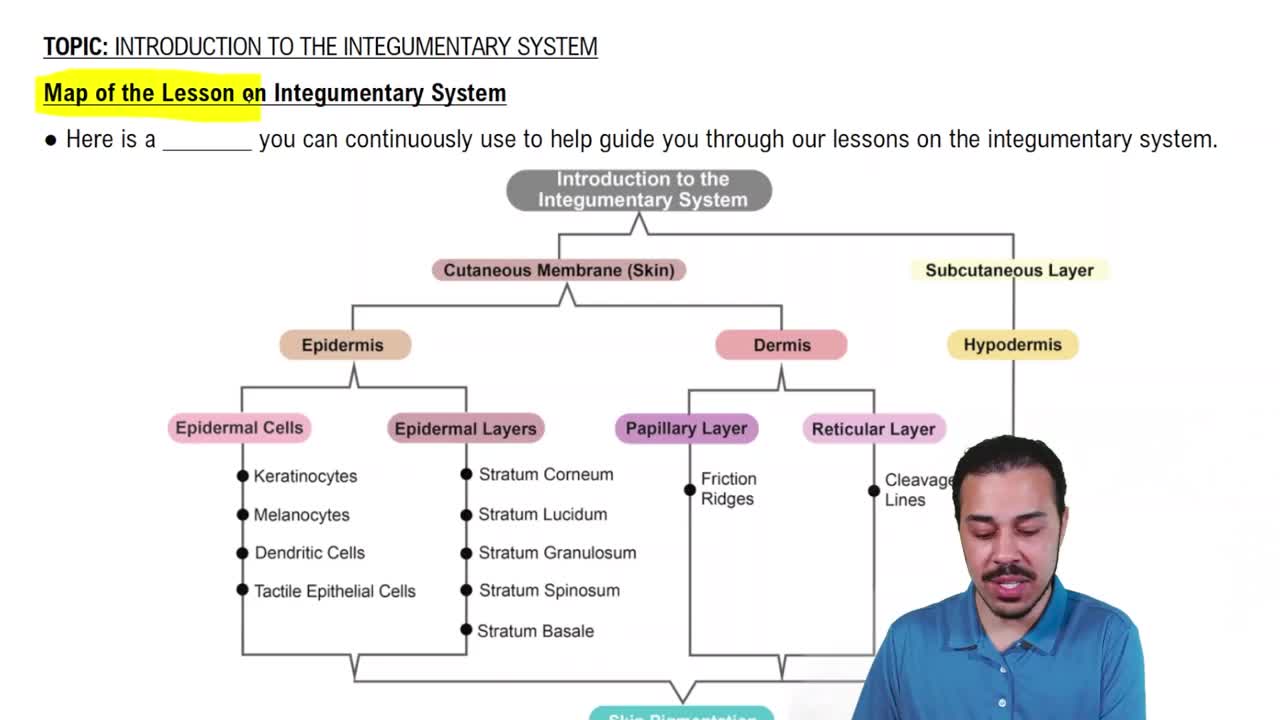
The integumentary system consists of the skin, hair, nails, and glands. The skin has three layers: epidermis, dermis, and hypodermis.
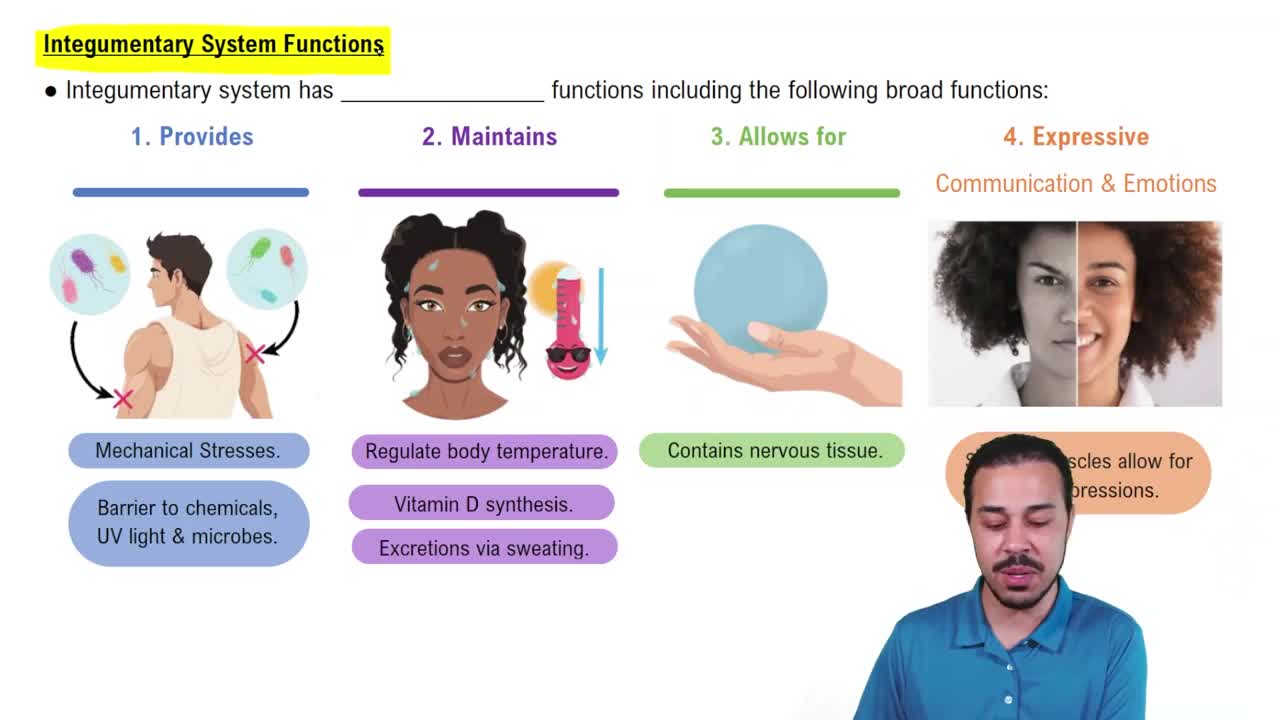
Protects against environmental damage, regulates body temperature, prevents water loss, synthesizes vitamin D, and provides sensory information.
Supports the body, protects internal organs, facilitates movement, stores minerals like calcium, and produces blood cells in bone marrow.
Long, short, flat, irregular, and sesamoid bones based on shape and function.
Femur, humerus, tibia, and fibula; characterized by a shaft and two ends.
Osteons (Haversian systems), osteocytes, lacunae, canaliculi, and the central (Haversian) canal.
Intramembranous ossification (direct bone formation) and endochondral ossification (bone replaces cartilage).
Hematoma formation, fibrocartilaginous callus formation, bony callus formation, and bone remodeling.
Fibrous, cartilaginous, and synovial joints.
Connected by dense connective tissue; mostly immovable (e.g., sutures in the skull).
Connected by cartilage; allow limited movement (e.g., intervertebral discs).
Freely movable joints with a synovial cavity filled with fluid (e.g., knee, shoulder).
Mature bone cells that maintain bone matrix and communicate with other bone cells.
Contains blood vessels and nerves supplying the osteon.
The structural unit of compact bone, consisting of concentric lamellae surrounding a central canal.
Connects skin to underlying tissues, stores fat, and provides insulation and cushioning.
Protein that strengthens the epidermis and makes it waterproof.
Osteoblasts (build bone), osteocytes (maintain bone), and osteoclasts (break down bone).
Maintains bone strength and mineral homeostasis by replacing old bone with new bone.
Skull bones, sternum, ribs, and scapulae; provide protection and broad surfaces for muscle attachment.